The future of travel beyond Earth.
Space Travel Editorial Team
Editorial Team

Space Travel Editorial Team

Editorial Team

The Space Travel Editorial Team produces Space Travel's coverage of human spaceflight and access to space. We report on launch, crewed missions and space tourism, and the propulsion, vehicles and human factors of getting people to space. Articles reflect our team's collective editorial process, source verification, drafting, technical review, and editing, rather than a single writer's work. Space Travel takes editorial responsibility for content under this byline. For more on how we work, see our editorial policy.

Legacy Reports

NASA Unveils New Budget Request For 2009

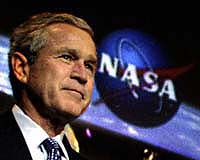
Washington DC (SPX) Feb 04, 2008 - NASA announced a $17.6 billion budget for fiscal year 2009 to continue exploring the solar system, building the International Space Station, studying Earth from space and conducting aeronautics research. NASA Deputy Administrator Shana Dale said the increase for NASA's 2009 budget demonstrates President Bush's commitment to the agency's missions. With the increase, NASA still accounts for less than 1 percent of the federal budget.

Legacy Reports

ILS To Launch Yahsat Satellite On Proton

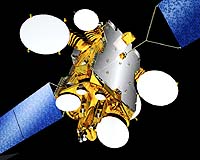
Abu Dhabi, UAE (SPX) Jan 31, 2008 - International Launch Services (ILS) of the United States, Thales Alenia Space of France and Al Yah Satellite Communications Co. (Yahsat) of the United Arab Emirates has announced an agreement to launch a Yahsat spacecraft on a Proton Breeze M vehicle. A European consortium of Thales Alenia Space and Astrium was contracted in August 2007 for the overall Yahsat communication system and is building two large Yahsat multipurpose satellites based on the Astrium Eurostar 3000 bus.

Legacy Reports

NASA Issues Environmental Impact Statement For Constellation

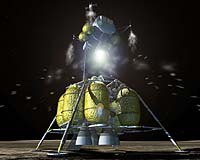
Washington DC (SPX) Jan 31, 2008 - NASA issued an environmental impact statement for the Constellation Program Jan. 10. NASA's Constellation Program is developing a space transportation system that is designed to return humans to the moon by 2020. The Final Programmatic Environmental Impact Statement concludes that localized and global environmental impacts associated with implementing the program would be comparable to past or ongoing NASA activities.

Legacy Reports

NASA Uses Vertical Treadmill To Improve Astronaut Health In Space

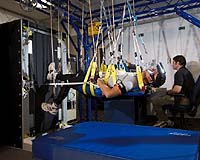
Washington DC (SPX) Jan 31, 2008 - NASA is using a new treadmill that allows people to run while suspended horizontally to help astronauts prepare for long-duration missions to the moon and beyond. A team of engineers at NASA's Glenn Research Center in Cleveland built the Standalone Zero Gravity Locomotion Simulator to imitate conditions astronauts experience while exercising in space. Exercise in microgravity helps lessen the harmful health effects of long-duration space travel, promoting astronauts' well-being and mission success.