The future of travel beyond Earth.
Space Travel Editorial Team
Editorial Team

Space Travel Editorial Team

Editorial Team

The Space Travel Editorial Team produces Space Travel's coverage of human spaceflight and access to space. We report on launch, crewed missions and space tourism, and the propulsion, vehicles and human factors of getting people to space. Articles reflect our team's collective editorial process, source verification, drafting, technical review, and editing, rather than a single writer's work. Space Travel takes editorial responsibility for content under this byline. For more on how we work, see our editorial policy.

Legacy Reports

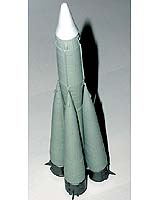
Korolev R-7 Rocket Leads The Field For Reliability

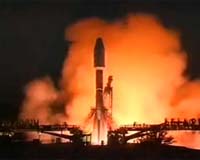
Moscow (RIA Novosti) Mar 06, 2007 - The famed R-7 Semyorka rocket (known in the West by its NATO reporting name, SS-6 Sapwood), designed by the legendary Russian engineer Sergei Korolev, has proved so dependable and sought-after that even fifty years after its first launch, it continues to be used for many jobs. One will be to launch payloads from a facility now under construction at the Courou space center in French Guiana.
Legacy Reports

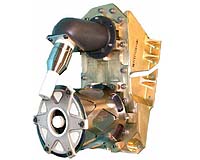
The First US Hall Thruster Is Operational In Space

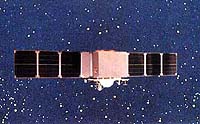
Natick MA (SPX) Mar 06, 2007 - Busek announces the historic launch and successful in-space operation of its BHT-200 Hall Effect Thruster. The Busek Thruster, part of the Microsatellite Propulsion Integration (MPI) Experiment, was integrated on the Air Force Research Laboratory's (AFRL) TacSat-2 satellite, under the direction of the DoD Space Test Program, which launched December 16, 2006 from the NASA Wallops Flight Facility on Wallops Island, VA.

Legacy Reports

Fuel To Be Removed From Space Shuttle

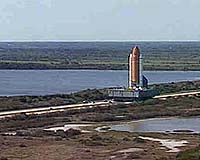
Cape Canaveral FL (UPI) Mar 02, 2007 - NASA officials decided to remove propellants from space shuttle Atlantis before returning the spacecraft to the Vehicle Assembly Building. The decision stems from a Monday severe thunderstorm that pummeled the shuttle with golf ball-sized hail, producing as many as 2,000 divots in the shuttle's external fuel tank's foam insulation and damaging about 26 heat shield tiles on the shuttle's left wing.

Legacy Reports

Impossible For Great Wall To Be Visible With Naked Eye From From Space

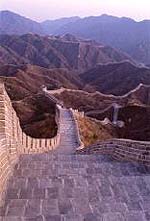
Beijing (XNA) Mar 02, 2007 - Chinese scientists have reopened the debate on whether or not the Great Wall is visible from space with the human eye, labeling it impossible. In a report published in Chinese science magazine Science and Technology Review, Dai Changda, Jiang Xiaoguang and Xi Xiaohuan, all researchers with the Chinese Academy of Sciences (CAS), argue that the claim, made by American and Russian astronauts, defies the laws of biological science.

Legacy Reports

Japanese Instant Noodle Pioneer In Final Blastoff

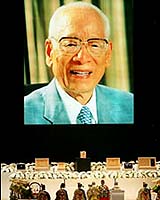
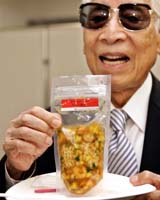
Tokyo (AFP) Mar 01, 2007 - Thousands of people bade farewell Tuesday to the Japanese inventor of instant noodles in a sci-fi funeral befitting a man whose creation has gone round the planet and into space. Momofuku Ando, who died on January 5 at age 96, was symbolically blasted off into space at a ceremony in a baseball stadium in the western city of Osaka. Ando triggered a revolution in 1958 when he created a dried noodle cake that could turn into a meal by adding hot water.

Legacy Reports

No Adjustment To ISS Orbit Due To Atlantis Launch Postponement

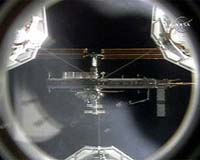
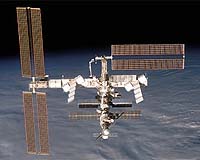
Moscow (RIA Novosti) Mar 01, 2007 - The orbit of the International Space Station will not be adjusted March 2 as planned, because the launch of the Atlantis space shuttle has been postponed, Russia's Mission Control said Wednesday. Corrections to the space station's orbit are conducted periodically before launches of Russian cargo ships and U.S. shuttles to compensate for Earth's gravity and to ensure successful dockings.

Legacy Reports

How Long Does It Take To Rebuild Bone Lost During Space Flight

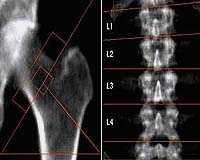
Washington DC (SPX) Feb 28, 2007 - Are bigger bones stronger bones? Not necessarily, according to a recent NASA study that seeks to ensure healthy bones in astronauts. A four-year study of the long-term effects of microgravity on the bones of International Space Station crew members showed that the astronauts, on average, lost roughly 11 percent of their total hip bone mass over the course of their mission.