
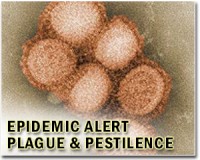
Asian countries on Tuesday ramped up measures to block the spread of a new virus as the death toll in China rose to six and the number of cases jumped to almost 300, raising concerns in the middle of a major holiday travel rush.
From Australia to Thailand and as far as Nepal, nations stepped up fever checks of passengers at airports to detect the SARS-like coronavirus, which first emerged in the central Chinese city of Wuhan.
Fears of a bigger outbreak rose after a prominent expert from China's National Health Commission confirmed late Monday that the virus can be passed between people.
Authorities previously said there was no obvious evidence of person-to-person transmission and animals were suspected to be the source, as a seafood market where live animals were sold in Wuhan was identified as the centre of the outbreak.
The confirmation of human transmission comes as hundreds of millions of people are criss-crossing China in packed buses, trains and planes this week to celebrate the Lunar New Year with relatives.
Almost 80 new cases have been confirmed, bringing the total number of people hit by the virus in China to 291, with the vast majority in Hubei, the province where Wuhan lies, and others in Beijing, Shanghai and Guangdong, according the National Health Commission. State media said one case was found in Zhejiang province.
Wuhan mayor Zhou Xianwang told state broadcaster CCTV that the death toll had risen from four to six.
China said it would attend a special World Health Organization meeting on Wednesday which will determine whether to declare a rare global public health emergency over the disease, which was detected in Thailand, Japan and South Korea among four people who had visited Wuhan.
The coronavirus has caused alarm because of its genetic similarities to Severe Acute Respiratory Syndrome (SARS), which killed nearly 650 people across mainland China and Hong Kong in 2002-2003.
– Fever checks –
At four airports in Thailand, authorities introduced mandatory thermal scans of passengers arriving from high-risk areas of China. Anyone exhibiting signs of fever will be quarantined for 24 hours for monitoring.
Around 1,300 passengers are expected each day in Thailand from Wuhan over Chinese New Year, which starts on Friday.
In Hong Kong, where memories of SARS still haunt the city, authorities said they were on "extreme high alert", with passengers from Wuhan required to fill out health declarations and face possible jail time if they do not declare symptoms.
"We are … preparing for the worst. We have not lowered our guard," Hong Kong's number two leader, Chief Secretary Matthew Cheung, told reporters.
Taiwan went onto its second-highest alert level for those travelling to and from Wuhan, advising visitors to avoid visiting any live poultry markets while screening has been stepped up at airports.
Enhanced screening measures have also been set up at airports in Australia, Bangladesh, Nepal, Singapore, and the United States.
A man showing symptoms of the disease who had travelled to Wuhan has been put in isolation in Australia as health officials await test results, authorities said Tuesday.
In China, the government announced Tuesday it was classifying the outbreak in the same category as SARS, meaning compulsory isolation for those diagnosed with the disease and the potential to implement quarantine measures on travel.
In Wuhan, authorities banned tour groups and police were conducting spot checks for live poultry or wild animals in vehicles leaving and entering the city, state media said.
Passengers were being screened for fever at the airport, railway stations and bus terminals. Those with fevers would be registered, handed masks and advised to see a doctor, and they would not have to pay to change their tickets.
– WHO meeting –
Zhong Nanshan, a renowned scientist at the National Health Commission, raised the alarm when he said on Monday that patients can contract the virus without having visited Wuhan, though he added that it was milder than SARS.
The WHO had previously identified animals as the likely primary source, but had warned of "some limited human-to-human transmission".
Doctors at the University of Hong Kong released a study on Tuesday estimating that there have been 1,343 cases of the new virus in Wuhan. Scientists at Imperial College in London said last week the number was likely closer to 1,700.
The WHO has only called a global public health emergency a handful of times, including during the H1N1 — or swine flu — pandemic of 2009 and the Ebola epidemic that devastated parts of West Africa from 2014 to 2016.
The Communist government was accused of covering up the SARS outbreak in 2003 but some foreign experts have praised the swift release of information on this new virus.
"China is willing to continue to deepen international cooperation, join hands with the international community to respond to the epidemic, and jointly maintain regional and global health security," foreign ministry spokesman Geng Shuang told reporters.
What we know so far about the new China virus
Beijing (AFP) Jan 21, 2020 –
A new SARS-like virus has killed six people in China and infected nearly 300 others.
Fears have been mounting that the virus will spread during the massive annual Lunar New Year migration. A host of Asian countries and the United States have introduced new screening checks for passengers from Wuhan, the Chinese city identified as the epicentre.
Here's what we know about the virus:
– It's entirely new –
The virus appears to be a never-seen-before strain of coronavirus — a large family of viruses that can cause diseases ranging from the common cold to Severe Acute Respiratory Syndrome (SARS), which killed 349 people in mainland China and another 299 in Hong Kong between 2002 and 2003.
Arnaud Fontanet, head of the department of epidemiology at the Institut Pasteur in Paris, told AFP the current virus strain was 80 percent genetically identical to SARS.
China has already shared the genome sequencing of this novel coronavirus with the international scientific community.
For now, it is being dubbed "2019-nCoV".
– It's being passed between humans –
The World Health Organization said Monday it believed an animal source was the "primary source" of the outbreak, and Wuhan authorities identified a seafood market as the centre of the epidemic.
But China has since confirmed that there was evidence the virus is now passing from person to person, without any contact with the market.
Doctor Nathalie MacDermott of King's College London said it seems likely that the virus is spread through droplets in the air from sneezing or coughing.
Doctors at the University of Hong Kong published an initial paper Tuesday modelling the spread of the virus which estimated that there have been some 1,343 cases in Wuhan — similar to a projection of 1,700 last week by Imperial College, London.
Both are much higher than official figures.
– It is milder than SARS –
Compared with SARS, the symptoms appear to be less aggressive, and experts say the death toll is still relatively low.
According to authorities in Wuhan, 25 of the more than 200 people infected in the city have already been discharged.
"It's difficult to compare this disease with SARS," said Zhong Nanshan, a renowned scientist at China's National Health Commission at a press conference this week. "It's mild. The condition of the lung is not like SARS."
However, the milder nature of the virus can also cause alarm.
The outbreak comes as China prepares for the Lunar New Year Holiday, with hundreds of millions travelling across the country to see family.
Professor Antoine Flahault, director of the Institute of Global Health at the University of Geneva, told AFP that the fact that the virus seems milder in the majority of people is "paradoxically more worrying" as it allows people to travel further before their symptoms are detected.
"Wuhan is a major hub and with travel being a huge part of the fast approaching Chinese New Year, the concern level must remain high," said Dr Jeremy Farrar, Director of the Wellcome Trust.
– International public health emergency? –
The WHO will hold a meeting on Wednesday to determine whether the outbreak constitutes a "public health emergency of international concern" and if so, what should be done to manage it.
The agency has only used the rare label a handful of times, including during the H1N1 — or swine flu — pandemic of 2009 and the Ebola epidemic that devastated parts of West Africa from 2014 to 2016.
The Chinese government announced Tuesday it was classifying the outbreak in the same category as the SARS outbreak, meaning compulsory isolation for those diagnosed with the disease and the potential to implement quarantine measures on travel.
But if the WHO decides to take this step, it would put the Wuhan virus in the same category as a handful of very serious epidemics.
