The future of travel beyond Earth.
Space Travel Editorial Team
Editorial Team

Space Travel Editorial Team

Editorial Team

The Space Travel Editorial Team produces Space Travel's coverage of human spaceflight and access to space. We report on launch, crewed missions and space tourism, and the propulsion, vehicles and human factors of getting people to space. Articles reflect our team's collective editorial process, source verification, drafting, technical review, and editing, rather than a single writer's work. Space Travel takes editorial responsibility for content under this byline. For more on how we work, see our editorial policy.

Space Travel

The Apollo 12 crew brought back Surveyor 3’s camera after 31 months on the Moon, and NASA reported finding live Streptococcus bacteria inside it, but later evidence pointed to contamination in Houston

In November 1969, Apollo 12 astronauts retrieved the television camera from Surveyor 3 after 31 months on the lunar surface. When NASA opened it in Houston, technicians reported finding live Streptococcus mitis inside the foam — a claim later challenged, but one that reshaped how spacecraft are built.

Space Travel

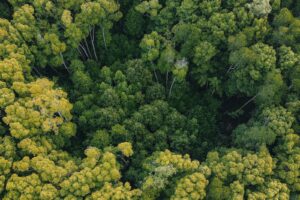
How did one half of a war-stripped Asian peninsula grow from 35 percent forest coile the other lost forests after the early 1990s?

South Korea's hills were stripped bare by 1953 after colonial logging and war. Seventy years later, forest cover stands at roughly 63 percent — one of the highest in the industrialised world — while the North remains largely denuded. The difference came down to a fuel switch, an authoritarian planting programme, and a border visible from orbit.

Space Travel

In 1928, Alexander Fleming came back from a summer holiday to find a stray mould had drifted onto a Staphylococcus plate in his cluttered London lab, and the clear ring of dead bacteria around it became the accidental beginning of the antibiotic era

In September 1928, a contaminated petri dish in a cluttered London lab produced the halo of dead bacteria that launched the antibiotic era — and the story of how Alexander Fleming's messy bench changed medicine is stranger than the schoolbook version.

Space Travel

In 1970, Soviet engineers landed a small eight-wheeled rover called Lunokhod 1 on the Moon and drove it by joystick from a bunker in Crimea, and its laser reflector sat lost on the lunar surface for nearly 40 years before a team at UC San Diego bounced a beam off it again in 2010

Lunokhod 1 rolled onto the Moon in November 1970, driven by a shift-rotating crew watching stuttering black-and-white television from Crimea. Its French-built laser reflector vanished from Earth's tracking data for nearly 40 years — until a UC San Diego team, using fresh coordinates from NASA's Lunar Reconnaissance Orbiter, bounced a beam off it in April 2010.

Space Travel

In 1957, Soviet engineers strapped a stray Moscow dog named Laika into Sputnik 2 knowing they had no way to bring her home, and telemetry later showed she died within hours of overheating, not the peaceful week the state broadcast claimed

Soviet engineers launched a Moscow stray named Laika into orbit aboard Sputnik 2 on November 3, 1957, with no plan to bring her back. Telemetry declassified decades later revealed she died of overheating within hours, not the peaceful week Radio Moscow described.

Space Travel

Margaret Hamilton wrote the Apollo 11 guidance software by hand on paper and stacked the printout taller than she was, and when the 1202 alarms started firing 40,000 feet above the Moon, her priority-scheduling code decided which tasks to drop so Eagle could keep landing

On July 20, 1969, five 1202 and 1201 alarms fired in four minutes as Apollo 11's Eagle descended toward the Moon. The onboard computer did not crash because Margaret Hamilton's team at MIT had built a priority scheduler that shed lower-priority jobs and kept the landing functions running.