Voyager 2 was built in the 1970s for a mission measured in years. On 9 July 2026, nearly 49 years after launch, it executed a new power configuration intended to preserve the last three science instruments still operating in interstellar space.
The procedure was called the “Big Bang” because several powered devices had to change state together. Commands needed about 20 hours to cross the distance from Earth, and the response took about as long to return.
There was no opportunity to watch the change in real time or send a quick correction.
A five-year spacecraft entered its 50th year
JPL has described the Voyagers as built to last five years. Another NASA account describes the original Jupiter and Saturn mission as scheduled for four. The difference is between design life and mission schedule, not a contradiction about what happened next.
Voyager 2 launched on 20 August 1977, passed Jupiter and Saturn, then continued to Uranus and Neptune. NASA’s mission history records that it entered interstellar space in November 2018. It is still the only spacecraft to have visited Uranus and Neptune.
The spacecraft that received the July commands had therefore outlived its design horizon by more than nine times. Its computers, wiring, heaters and power system were not conceived around a half-century maintenance programme. Keeping it useful now depends on finding new combinations within hardware already aboard.
The power source loses about four watts each year
Voyager 2 uses three radioisotope thermoelectric generators. They are not reactors. Heat from the natural decay of plutonium-238 crosses thermoelectric materials that convert part of the temperature difference into electricity, providing power without sunlight or moving parts.
The output declines steadily. NASA says each Voyager now loses about four watts of available electrical power every year as the plutonium produces less heat and the converters age. Four watts was a small part of the original budget. After 49 years of decline, it is enough to determine whether an instrument remains on.
Mission controllers have progressively retired instruments, heaters and other loads. In 2023, Voyager 2 began drawing on a small reserve that had been held back for a voltage-protection circuit. That move, covered in an earlier Space Travel report on Voyager’s power strategy, delayed the next instrument shutdown until 2026. Since 2024, NASA has switched off two science instruments on each probe as the margin narrowed further.
The swap had to preserve heat as well as electricity
Saving power is not simply a matter of turning equipment off. Electrical devices also produce heat, and some of that warmth helps prevent hydrazine propellant lines from freezing. If the spacecraft cannot use its thrusters to point its high-gain antenna towards Earth, the science instruments may keep working while their data becomes unreachable.
NASA’s 4 August announcement says engineers switched off certain devices and substituted lower-power alternatives while keeping Voyager 2 warm enough to operate. The coordinated change avoided an intermediate configuration that might have saved electricity in the wrong place.
That is what “all at once” means here. It was a choreographed move between two electrical and thermal states, not a single switch and not an increase in power generation. The Register’s account of interviews with the mission team says the final combination freed close to 10 watts by replacing older powered loads with lower-power devices whose waste heat fell in useful locations.
Forty hours separated a command from its answer
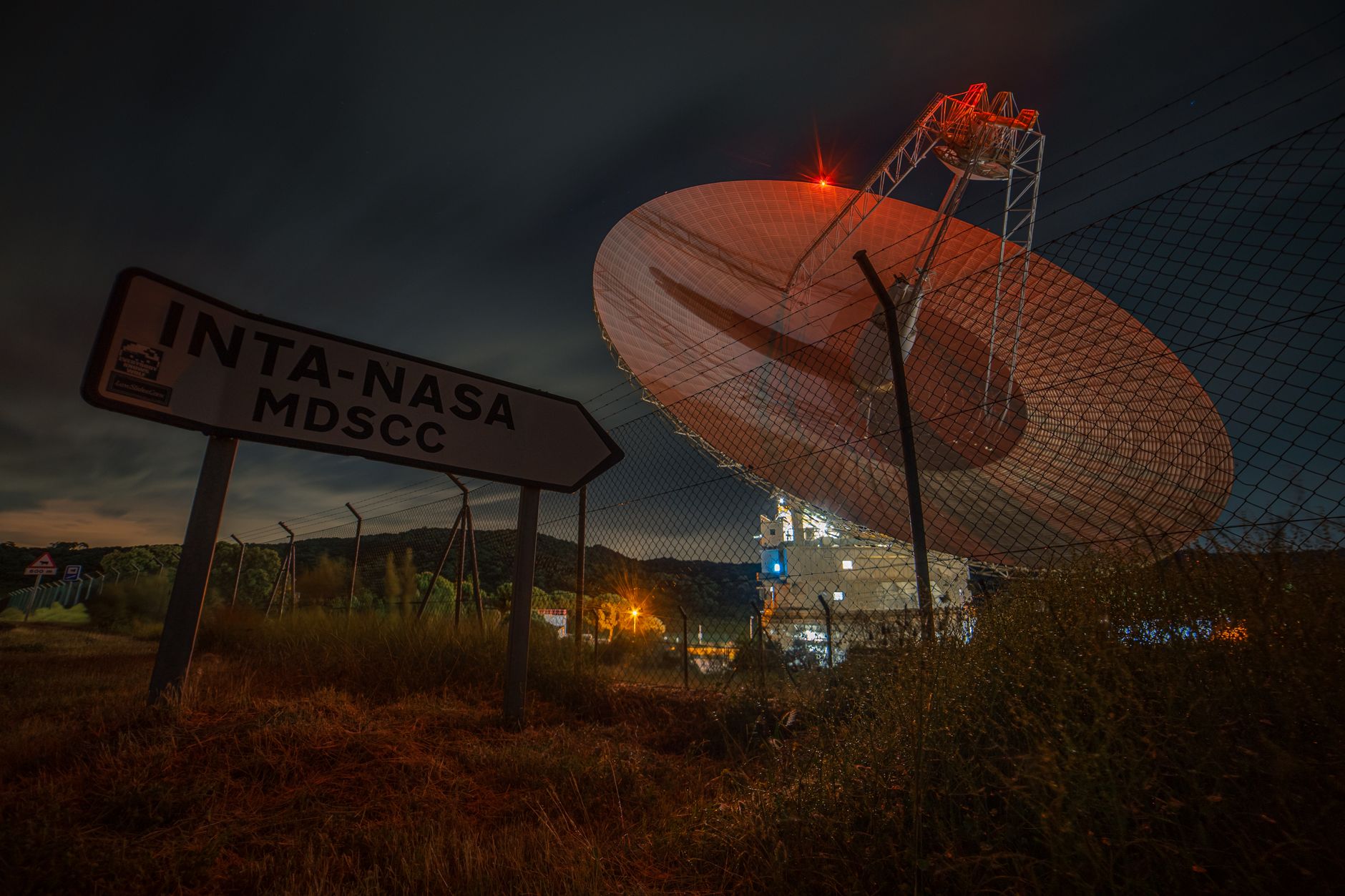
The team developed the approach while the only Deep Space Network antenna able to send commands to Voyager 2 was unavailable for an upgrade. Separate power and thermal tests followed in May and June. During one test, the spacecraft remained in the proposed configuration for six hours, long enough to reveal a temperature trend while limiting the exposure if the model was wrong.
Distance stretched every test. A command could take up to 20 hours to reach Voyager 2, followed by another 20 hours before telemetry returned. Temperatures would continue changing across that interval, so the sequence needed its limits and recovery steps before transmission.
The spacecraft itself cannot report every temperature engineers would like to know. Sensors were installed for the original planetary mission, not for managing the coldest points in propellant lines five decades later. Modern thermal models help fill the gaps, but those models describe hardware that has aged far beyond its planned service life.
Three instruments received more time
The remaining instruments are the magnetometer, plasma wave subsystem and cosmic ray subsystem. Together they measure magnetic fields, plasma conditions and energetic particles beyond the heliopause, where no other operating spacecraft has gone. Voyager 2 travels in a different direction from Voyager 1, giving researchers a second sampling line through the surrounding interstellar medium.
Without the swap, NASA expected to turn off another Voyager 2 instrument before the end of 2026. The agency now says the saving should keep all three running for at least another year. That is a conservative floor, not a warranty for the spacecraft as a whole. Declining generator output, ageing hardware or an unrelated fault could still force a different decision.
NASA plans to attempt a similar reconfiguration on Voyager 1. That probe is farther away and has followed a different thermal and operational history, so Voyager 2’s success provides evidence for the method rather than a guarantee that its twin will respond identically.
The next milestone is practical: complete the Voyager 1 swap, then watch how long each probe can preserve its remaining instruments before another irreversible shutdown becomes necessary.