Luna 9’s landing on 3 February 1966 ended one uncertainty and created another. The Soviet spacecraft had become the first machine to settle gently enough on the Moon to keep working, proving that a robotic lander could survive the descent. Now it had pictures to send, and the rest of the world had no official timetable for seeing them.
At Jodrell Bank Observatory in Cheshire, the answer arrived as sound and signal structure. The team tracking Luna 9 recognised that its unencrypted picture transmission resembled the facsimile system used by newspaper offices. A receiver borrowed from the Daily Express converted the radio signal into an image that could be printed before Moscow made its formal release.
It was a scientific first delivered through newsroom technology.
The landing was designed to bounce
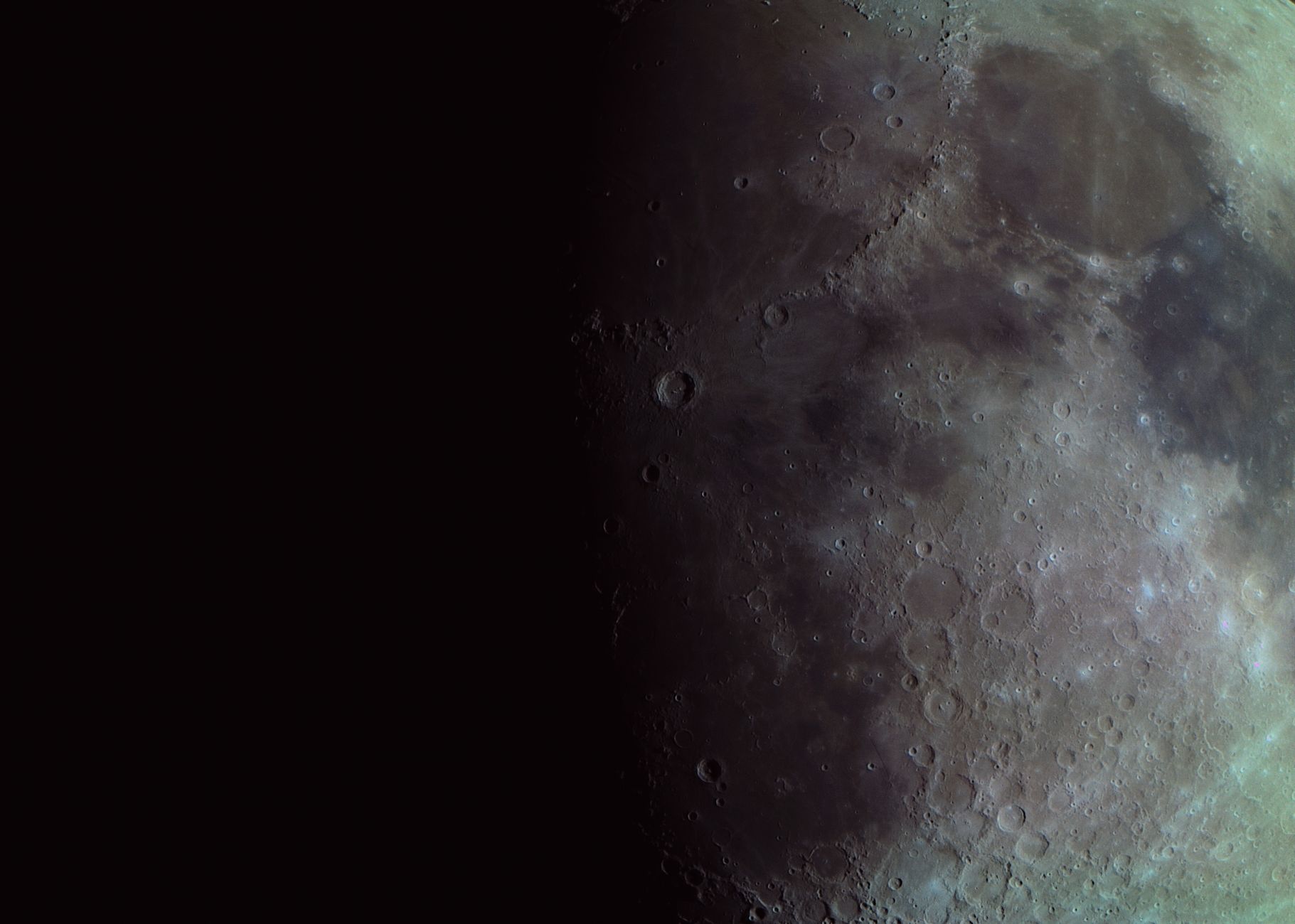
NASA’s lunar mission chronology records Luna 9 as the first successful soft landing on the Moon and the first mission to return a picture from its surface. It launched on 31 January 1966, after several Soviet landing attempts had missed the Moon or struck it too hard, and reached Oceanus Procellarum, the Ocean of Storms, on 3 February.
The term “soft landing” describes survival, not elegance. Braking rockets slowed the descent before the small spherical capsule separated inside inflated airbags. It hit the ground, bounced and rolled. Once still, four petal-shaped panels opened around the lander to stabilise it and expose its equipment.
That sequence left a working camera on another world for the first time. The lander began transmitting after the Sun had climbed high enough above its local horizon to illuminate the scene.
Jodrell Bank knew how to follow Soviet missions
Jodrell Bank was not waiting by accident. Its large radio telescope had tracked Sputnik and followed earlier Soviet lunar probes, including Luna 2 as it approached the Moon in 1959. The observatory had the sensitivity, staff and practical experience to treat a distant spacecraft as a radio source whose motion and transmissions could be measured independently.
The observatory’s World Heritage nomination dossier says the team tracked Luna 9 onto the Moon and intercepted the return signal. It identifies astronomer J. G. Davies as recognising the form of the transmission and records that an early picture receiver was borrowed from the Daily Express.
Recognition was the decisive step. The signal was not protected by encryption, but an open transmission is useful only if the receiver understands how information has been arranged inside it.
A newspaper fax machine could read the Moon
Radio facsimile systems turned pictures into a sequence of lines. Variations in brightness were encoded into an analogue signal, sent to another location, then rebuilt line by line on photographic paper. Newspapers used related equipment to move pictures between bureaux and printing operations long before digital image files existed.
Luna 9’s television system was not literally a newspaper service operating from the Moon. Its scanning geometry and mission hardware were Soviet spacecraft technology. The useful coincidence was compatibility: the signal resembled an internationally familiar Radiofax format closely enough for press equipment to produce an intelligible picture.
The Daily Express supplied a receiver, which the Jodrell Bank dossier places in the basement of the control room. The Science Museum Group’s collection record describes a surviving print as the first image received from Luna 9 by a Daily Express picture receiver rushed to the observatory on 4 February 1966.
Early British reproductions were not a perfect match to the Soviet image geometry, so the proportions could appear distorted. That did not prevent readers from making out stones, shadows and the low lunar horizon.
Britain won the publication race, not the mission
A United Press International report filed on 4 February described Jodrell Bank receiving the picture signals while TASS announced that Luna 9 had begun scanning the landscape. The British reconstruction reached the press before Soviet authorities issued their official photographs.
The distinction matters. Soviet ground stations were also receiving the data, and every part of the achievement that placed a functioning camera on the Moon belonged to the Luna 9 programme. Jodrell Bank did not command the probe or obtain a hidden onboard archive. Its team listened to a transmission crossing space, recognised a known encoding method and found a suitable machine before the official publication process caught up.
Nor was the episode an early internet leak in a modern sense. There was no compact digital file to copy. The intercepted signal had to be received with a radio telescope and physically reconstructed as a sequence of marks by specialist equipment.
The first surface view changed the next landing
NASA’s archive identifies the Luna 9 frame as the first photograph taken from the lunar surface. The low-resolution panorama showed a rough plain with rocks and shallow depressions. It added direct evidence that the regolith could support a landed spacecraft, an issue that had mattered to engineers preparing heavier robotic and crewed vehicles.
Four months later, on 2 June 1966, Surveyor 1 made the first successful American soft landing. The Soviet lunar programme went on to orbiters, sample-return craft and remotely driven rovers. Our account of Lunokhod 1 follows one of those later machines and the reflector that survived after the rover was lost to observers.
Luna 9 operated for only a few days. The path taken by its first public image was shorter: from a camera on the Moon, through Jodrell Bank’s receiver, into a newspaper machine built for photographs from Earth.