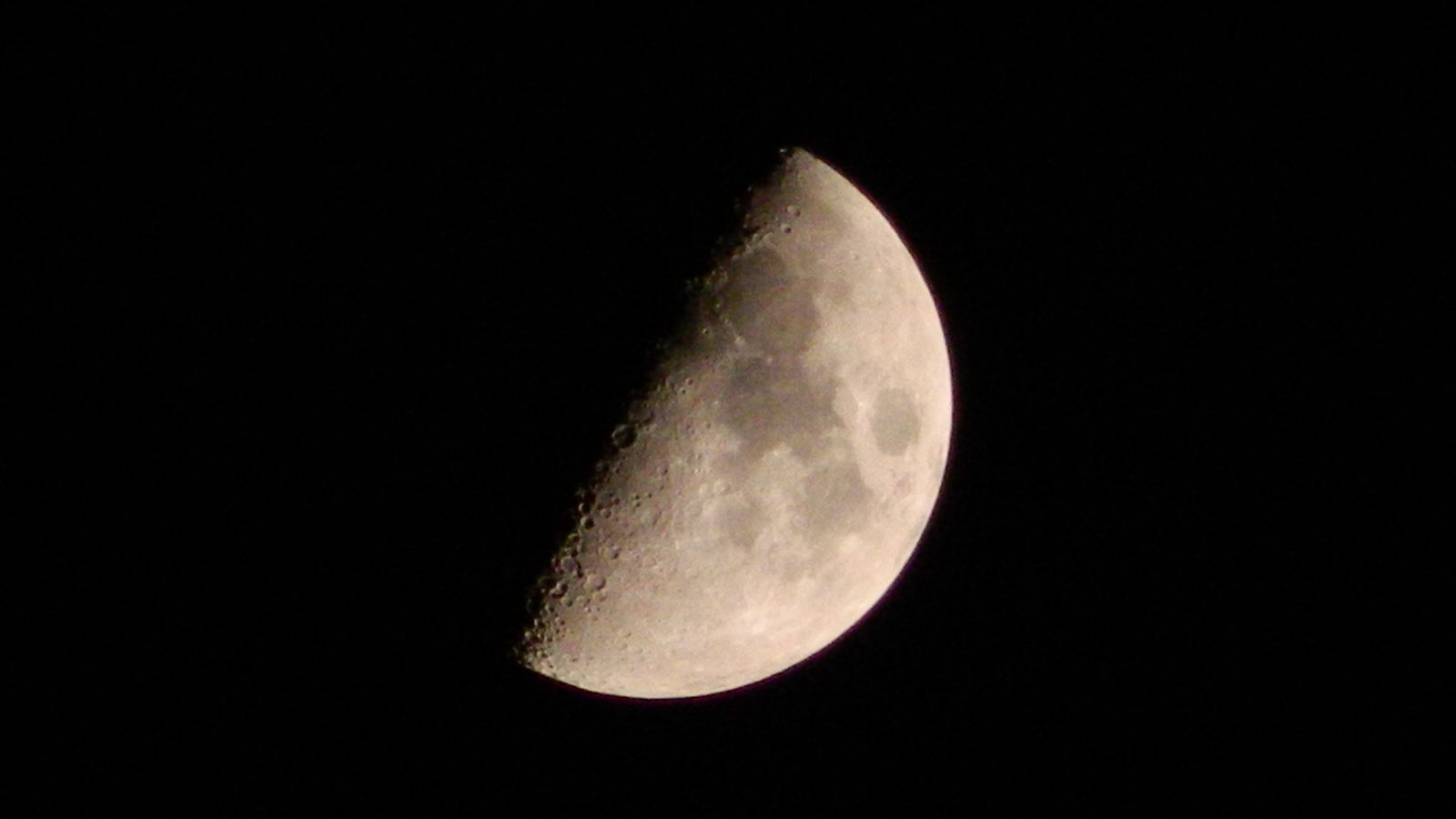
On November 17, 1970, a squat, tub-shaped robot rolled down a ramp from the Luna 17 lander into the fine grey dust of Mare Imbrium and became the first wheeled machine to drive on another world. Lunokhod 1 weighed roughly 840 kilograms, carried eight independently powered wheels, and was steered in near real-time by a five-person crew back on Earth watching low-frame-rate television from a quarter-million miles away. Bolted to its front was a French-built retroreflector — a passive grid of corner-cube prisms designed to bounce laser light straight back at whoever fired it. Then the rover went quiet in 1971, its exact resting place drifted out of the ephemeris tables, and for nearly four decades nobody on Earth could find the mirror again.
In April 2010, a team led by physicist Tom Murphy pointed a pulsed laser at a fresh set of coordinates from NASA’s Lunar Reconnaissance Orbiter — and the photons came back.
A bathtub on wire wheels
Lunokhod 1 did not look like a spacecraft. It looked like a pressurised cooking pot on a wagon chassis. The magnesium-alloy tub held the electronics in a nitrogen atmosphere, and the hinged lid — lined on its underside with solar cells — flipped open at lunar dawn like a clamshell to charge the batteries. At lunar night the lid closed, sealing in a polonium-210 heat source that kept the instruments from freezing through the two-week darkness.
The eight wire-mesh wheels were each driven by their own electric motor. Any wheel could be disengaged if it seized. The rover could pivot in place by spinning the wheels on one side backward. Top speed was about 2 kilometres per hour, which sounds slow until you remember the drivers were operating on a signal delay and could not see where the machine was actually going in real time.
Driving by television, from a room full of smoke
The control crew worked from a facility in Crimea. They watched a small black-and-white television feed that refreshed every few seconds, not the smooth video that word suggests. A frame would arrive, the driver would decide whether to steer, brake, or hold, and by the time the command reached the Moon the rover had already rolled another metre or two into terrain the crew hadn’t yet seen.
Fatigue was constant. Shifts were short. The cognitive load of piloting a vehicle you could only glimpse in stuttering stills was punishing. Over the course of its operation — the rover survived far longer than originally planned — Lunokhod 1 covered roughly 10.5 kilometres of Mare Imbrium, photographed more than 20,000 images, and returned soil-mechanics data from hundreds of test sites. Among the most iconic rovers ever sent beyond Earth, it held the record for the longest working life of any lunar rover, a longevity mark that stood until China’s Yutu-2 surpassed it in 2019 on the far side of the Moon.
The mirror on the front
Bolted near the rover’s front was a small array of corner-cube prisms. A corner cube is a piece of glass shaped like the inside corner of a box — three mirrored faces meeting at right angles. Light that enters bounces off all three faces and leaves parallel to how it came in, no matter the incoming angle. Fire a laser at one from Earth and, in principle, a fraction of the photons return along nearly the same line to your telescope.
The physics is unforgiving. The Moon is on average about 384,400 kilometres away. A laser pulse leaves a telescope as a beam a few metres wide, spreads to kilometres across by the time it reaches the lunar surface, hits a reflector the size of a paperback book, and spreads again on the return trip. Of the enormous number of photons fired in a pulse, one — sometimes zero — makes it back to the detector.
Still, that single photon is enough. Time its round trip and you know the distance to the Moon to within a millimetre. Lunar laser ranging is one of the longest-running precision experiments in physics — it has confirmed that the Moon is drifting away from Earth at about 3.8 centimetres per year, and has tested the equivalence principle to extraordinary precision.
Lost in the dust
Five retroreflectors were left on the Moon between 1969 and 1973: three by Apollo astronauts and two by Soviet Lunokhod rovers. Four of the five have been used continuously since. The Lunokhod 1 reflector was the exception.
The rover finished its mission in 1971, and controllers parked it. Then the tracking data became fuzzy. The reflector on Lunokhod 2, delivered in 1973, was easier to hit and became the workhorse. When observatories tried to range Lunokhod 1 through the 1970s and 1980s, they got nothing back. The best-guess coordinates were off by kilometres. On the Moon, kilometres of pointing error is the difference between a returned photon and a beam wandering harmlessly across grey basalt.
The image that solved it
NASA’s Lunar Reconnaissance Orbiter reached the Moon in 2009 carrying a camera capable of resolving objects less than a metre across from lunar orbit. In 2010, the LROC team released images that clearly showed the tracks of Lunokhod 1 and the rover itself, parked where it had died 39 years earlier. The coordinates were suddenly good to within tens of metres.
Murphy’s group at the Apache Point Observatory Lunar Laser-ranging Operation (APOLLO) in New Mexico plugged the new numbers into their pointing system. In April 2010, they fired. Photons came back — and not just a trickle. The Lunokhod 1 reflector returned a signal roughly as strong as any of the other four arrays on its first successful hit, and in some conditions stronger. It had been sitting in the lunar dust, untouched, in perfect working order.
The reflector’s location turned out to be about a kilometre from where earlier searches had been aiming. A kilometre. That is why nobody had heard back for four decades.
Why the found mirror matters
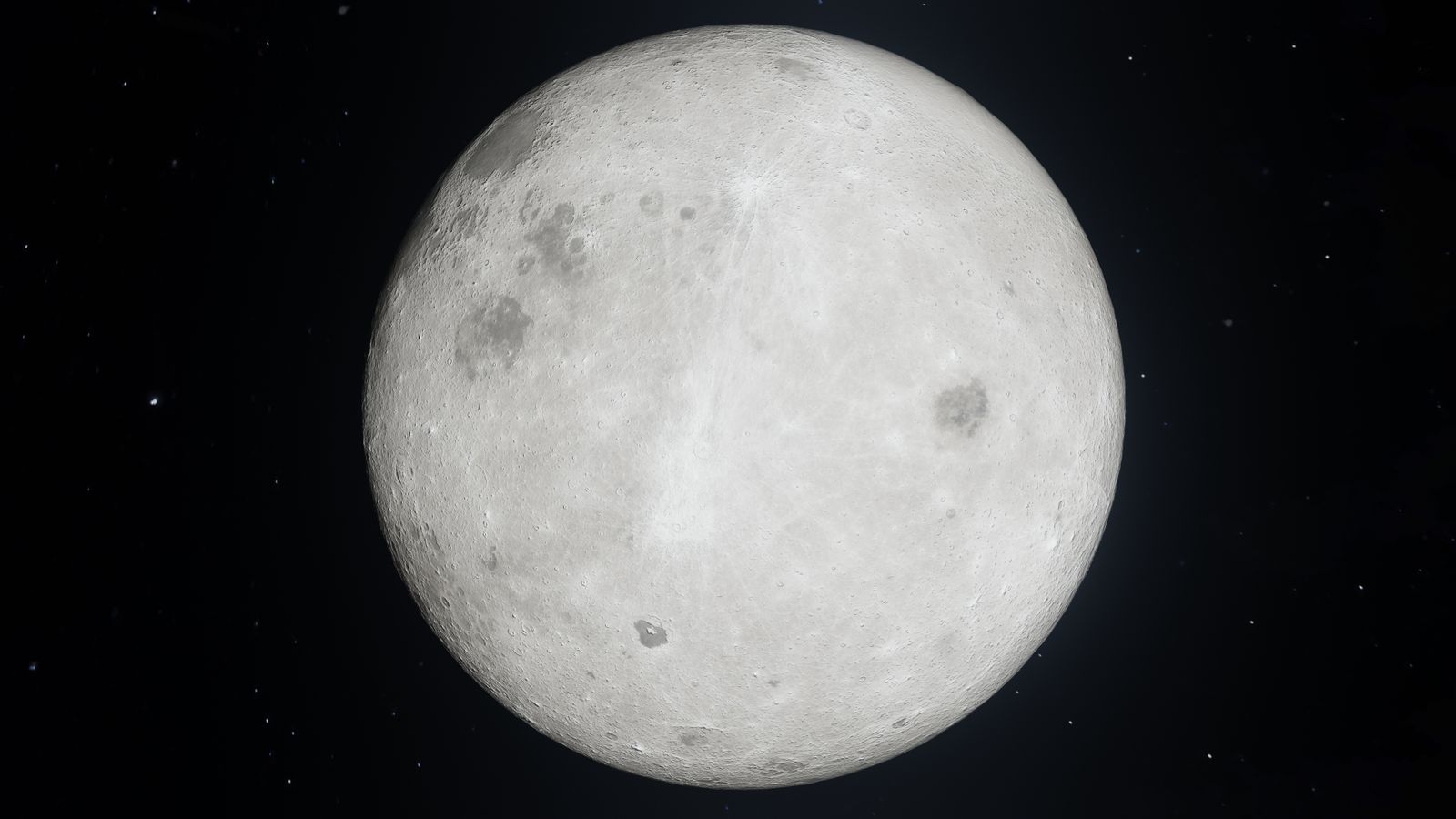
Lunokhod 1 sits far from the other four reflectors on the lunar nearside. The Apollo arrays and Lunokhod 2 cluster in a rough arc across the middle of the Moon’s Earth-facing hemisphere. Lunokhod 1 is up in the northwest, in Mare Imbrium. Geometry matters for lunar laser ranging: the more widely spaced the reflectors, the better scientists can tease apart the Moon’s rotation, its wobble, and the subtle way its solid core sloshes inside its mantle.
The recovered reflector immediately became scientifically valuable, not just historically charming. It gave researchers a fifth baseline on the lunar surface, extending the geometric leverage of an experiment that had been running on four points since 1973.
There was also a puzzle in its condition. The Apollo reflectors have been slowly losing their return signal over the decades — dust, thermal cycling, and micrometeorite pitting all degrade the glass. The Lunokhod 2 reflector performs poorly during the lunar day, when heat seems to distort its optics. The Lunokhod 1 array, by contrast, works well in daylight too. Nobody is quite sure why. One hypothesis is that because it sat unused, it accumulated less dust than expected, or that its corner-cube design ages differently.
The rover, still there
Lunokhod 1 has not moved since 1971. Its tracks are still crisp in the LROC images, because on an airless world there is no wind and no weather to erase them. The eight wire wheels sit exactly where the driver in Crimea last commanded them to stop. The polonium heater is long dead — polonium-210 has a half-life of 138 days, so it went cold within a year of landing. The batteries are frozen. The magnesium tub is coated in a thin layer of lunar dust kicked up by its own final metres of driving.
Every few weeks, at Apache Point and at other laser-ranging stations, a telescope swings to those coordinates and fires. A pulse of green light leaves Earth, spreads across kilometres of lunar surface, strikes a prism on the front of a Soviet rover parked in 1971, and hurries back. Somewhere in the returning wash of photons, one or two carry the timestamp of a mission that outlived the country that built it.
The rover still ranks among the most consequential machines ever sent beyond Earth. Every wheeled explorer since — the American Mars rovers, the Chinese Yutu vehicles, the small commercial landers now being flown by private companies — inherits something from the bathtub on eight wire wheels that a crew in Crimea drove blind across Mare Imbrium in the winter of 1970.
Space Travel has previously looked at how a single deep exposure by Hubble in 1995 reshaped what astronomers thought was empty sky, and at how China’s planetary program has grown into a serious rover-building enterprise. The Lunokhod story sits alongside those: an experiment that ran quietly for decades, went dark, and then, thanks to a new camera in lunar orbit and a laser in New Mexico, came back on the line as if no time had passed.
The photons that leave Apache Point tonight will strike a machine that is older than most of the people who will read this sentence. They will come back 2.5 seconds later, carrying a distance measurement precise to a millimetre, from a mirror that spent 39 years lost in plain sight.