
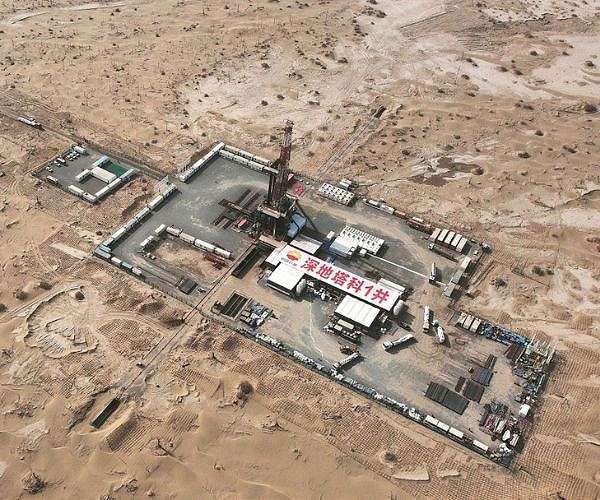
In a remarkable display of technical prowess and determination, China's latest scientific venture has surpassed a significant milestone. The Shenditake 1 drill hole, operating within the vast expanses of the Tarim Basin in the Xinjiang Uygur autonomous region, has successfully breached the 10,000-meter depth. This achievement marks the drill as China's deepest for scientific exploration, a project helmed by the China National Petroleum Corp.
This endeavor stands as a testament to China's ambitious pursuits in comprehending the Earth's deepest secrets, complementing its strides in deep-space exploration and the study of the ocean's abysses. The operation, which commenced on May 30, has seen relentless efforts from over a hundred oil workers and scientists. Braving the harsh conditions of the Taklimakan Desert, including extreme temperatures and sandstorms, the team has managed to navigate through 13 continental strata, incorporating over 1,000 drill pipes into the Earth's crust.
The significance of Shenditake 1 extends beyond its depth; it symbolizes a crucial leap in understanding our planet's complex systems. According to Luo Zuoxian of the Sinopec Economics and Development Research Institute, this project not only heralds a new era in ultradeep oil and gas exploration but also underscores China's commitment to securing its national energy needs. Furthermore, the scientific data gleaned from such depths hold the potential to revolutionize our knowledge of the Earth's evolution, life's origins, and strategies for combating climate change and managing natural disasters.
This pioneering project underlines China's role on the global stage as a leader in the multifaceted realm of scientific exploration. By pushing the boundaries of what is possible in deep-Earth studies, China is paving the way for new discoveries that could offer solutions to some of the world's most pressing challenges, from energy security to environmental preservation.
