
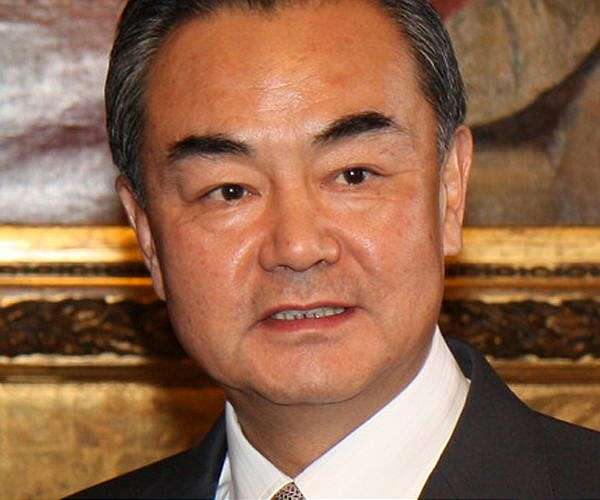
China's top diplomat warned Sunday that any steps towards Taiwan's independence would be "harshly punished", after the self-ruled island defied Beijing's warnings and chose pro-sovereignty candidate Lai Ching-te as president.
Voters on the island spurned Beijing's repeated calls not to vote for Lai, delivering a comfortable victory for a man China's ruling Communist Party sees as a dangerous separatist.
Beijing, which claims Taiwan as its territory and has never renounced force to bring it under its control, responded to Lai's victory by saying it would not change the "inevitable trend of China's reunification".
"If anyone on the island of Taiwan thinks of going for independence, they will be trying to split apart China's territory, and will certainly be harshly punished by both history and the law," Wang Yi said in a joint press conference with his Egyptian counterpart Sameh Shoukry in Cairo.
"This is a dead end," he added.
"No matter what the results of the election are, they cannot change the basic fact that there is only one China and Taiwan is a part of it," Wang said Sunday.
"Taiwan has never been a country. It wasn't in the past, and it certainly won't be in the future," he added.
Efforts to that end, Wang warned, "seriously threatens the well-being of Taiwan compatriots, seriously harms the fundamental interests of the Chinese nation, and seriously jeopardises peace and stability in the Taiwan Strait region".
China says 'strongly deplores' US statement on Taiwan election
Beijing (AFP) Jan 14, 2024 –
China said Sunday it "strongly deplored" a statement by the United States on the Taiwan election, after Washington congratulated independence-leaning Lai Ching-te on his victory in the self-ruled island's presidential poll.
Lai triumphed over his nearest rival Hou Yu-ih of the Kuomintang on Saturday by more than 900,000 votes, rounding off an election campaign marked by diplomatic pressure from Beijing and near-daily incursions by Chinese fighter jets.
China views Taiwan as part of its territory and has not ruled out using force to seize the island one day.
The US State Department on Saturday congratulated Lai on his victory and hailed the people of Taiwan "for once again demonstrating the strength of their robust democratic system and electoral process".
On Sunday, a spokesperson for Beijing's foreign ministry said the US statement "sends a gravely wrong signal to the 'Taiwan independence' separatist forces".
"We strongly deplore and firmly oppose this, and have made serious representations to the US side," the spokesperson said.
They added that Washington's statement "seriously violates the one-China principle" as well as its pledge to only maintain unofficial ties with Taiwan.
"We urge the US to stop its official interaction with Taiwan and stop sending any wrong signal to the separatist forces for 'Taiwan independence,'" the spokesperson said.
They did not mention the unofficial post-election visit of a US delegation to Taiwan announced Sunday by Washington's de-facto embassy on the island.
Taiwan tells China to 'face reality' after election
Taipei (AFP) Jan 14, 2024 –
Taiwan told China to "face reality" on Sunday after voters chose pro-sovereignty candidate Lai Ching-te as president, as Beijing issued a fresh warning that any new independence moves for the island would be "harshly punished".
Voters spurned Beijing's repeated calls not to vote for Lai, delivering a comfortable victory for a man China's ruling Communist Party sees as a dangerous separatist.
Beijing, which claims Taiwan as its territory and has never renounced force to bring it under its control, insisted that the vote did not change the fact the island was part of China.
Lai, of the ruling Democratic Progressive Party (DPP), had vowed to defend the island from China's "intimidation" and on Sunday Taipei's foreign ministry told Beijing to accept the result.
"The Ministry of Foreign Affairs calls on the Beijing authorities to respect the election results, face reality and give up suppressing Taiwan in order for positive cross-strait interactions to return to the right track," it said in a statement.
China's foreign minister Wang Yi said the vote did not change Taiwan's status and warned against steps towards formal independence for the island, which Lai had said he opposed.
"If anyone on the island of Taiwan thinks of going for independence, they will be… trying to split China, and will certainly be harshly punished by both history and the law," Wang said at a press conference in Cairo.
"Taiwan has never been a country. It wasn't in the past, and it certainly won't be in the future," he said.
An unofficial US delegation sent by President Joe Biden's administration will arrive in Taipei on Sunday, a move sure to draw condemnation from Beijing.
The delegation, including a former US national security adviser and a former deputy secretary of state, will meet "a range of leading political figures" on Monday, the island's de facto US embassy said in a statement.
Taiwan's foreign ministry, which welcomed the visit, said the delegation would be meeting "high-level officials" including President Tsai Ing-wen and will stay until Tuesday.
– 'External forces' –
After a campaign marked by diplomatic pressure from Beijing and near-daily incursions by Chinese fighter jets, Lai beat his nearest rival Hou Yu-ih of the Kuomintang (KMT) on Saturday by more than 900,000 votes.
In his victory speech, 64-year-old Lai congratulated voters for refusing to be swayed by "external forces" trying to influence the election.
He said he wanted to cooperate with China — Taiwan's biggest trade partner — and maintain peace and stability, but pledged not to be cowed by Chinese belligerence.
"We are determined to safeguard Taiwan from continuing threats and intimidation from China," he told supporters.
Four Chinese naval vessels were seen in waters around the island on polling day, according to Taiwan's defence ministry, and one high-altitude balloon passed over.
China warned Taiwan's voters in the days leading up to the election to make the "correct choice", saying that Lai would take the island closer to war.
Lai will take power on May 20 alongside his vice-presidential pick Hsiao Bi-khim, Taiwan's former representative to the United States.
Both were the targets of disinformation efforts during the campaign that experts linked to China.
The turnout of 72 percent showed an enthusiastic electorate and voter Tsai Jin-hui said on Sunday that Beijing should mind its own business.
"What China thinks is a matter for China. We are electing the president of our own country," the 62-year-old taxi driver told AFP.
– Continuity –
World powers are keen to see as much stability as possible between China and Taiwan, not least because of the vital role the island plays in the global economy.
The Taiwan Strait is one of the world's most important maritime trade arteries and the island itself is a major tech manufacturer, particularly of vital semiconductors — the chips used in everything from smartphones to missile systems.
Lai and the DPP have toned down past calls for independence, saying there is no need for a formal declaration since Taiwan is effectively independent already, defending the island's sovereignty.
But China still sees them as skirting too close to the "I-word" — a red line for the communist giant.
Beijing cut off official contact with current President Tsai of the DPP in 2016 and is not expected to budge with Lai, setting the stage for four more years of frosty cross-strait relations.
"The ruling party's unprecedented third consecutive presidential victory will disappoint China, but it is unlikely to spur any near-term change in Beijing's reunification strategy," Bonnie Glaser, a Taiwan-China affairs expert at the German Marshall Fund of the United States, wrote in an analysis piece.
The question in the coming days will be whether China decides on merely a diplomatic and rhetorical response to the election — or steps up with a big show of force.
A visit to Taiwan by then-US House Speaker Nancy Pelosi in 2022 triggered China's biggest-ever military exercises around the island, involving warships, missiles and fighter jets.
Further ahead, Lai's presidency could be affected by the US election in November, with the possible return of Donald Trump to the White House meaning the island's biggest ally could take a different stance.
