
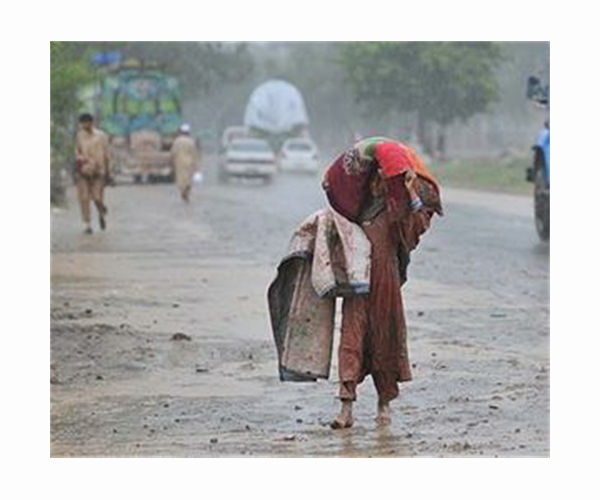
Record monsoon rains were causing a "catastrophe of epic scale", Pakistan's climate change minister said Wednesday, announcing an international appeal for help in dealing with floods that have killed more than 800 people since June.
The annual monsoon is essential for irrigating crops and replenishing lakes and dams across the Indian subcontinent, but each year it also brings a wave of destruction.
Heavy rain continued to pound much of Pakistan Wednesday, with authorities reporting more than a dozen deaths — including nine children — in the last 24 hours.
"It has been raining for a month now. There is nothing left," a woman named Khanzadi told AFP in badly hit Jaffarabad, Balochistan province.
"We had only one goat, that too drowned in the flood… Now we have nothing with us and we are lying along the road and facing hunger."
Climate Change Minister Sherry Rehman said authorities would launch an appeal for international help once an assessment was complete.
"Given the scale of the disaster there is no question of the provinces, or even Islamabad, being able to cope with this magnitude of climate catastrophe on their own," she told AFP.
"Lives are at risk, thousands homeless. It is important that international partners mobilise assistance."
Pakistan is eighth on a list of countries deemed most vulnerable to extreme weather caused by climate change, according to the Global Climate Risk Index compiled by environmental NGO Germanwatch.
– From heatwave to flood –
Earlier this year much of the nation was in the grip of a heatwave, with temperatures hitting 51 degrees Celsius (124 Fahrenheit) in Jacobabad, Sindh province.
The city is now grappling with floods that have inundated homes and swept away roads and bridges.
In Sukkur, about 75 kilometres (50 miles) away, volunteers were using boats along the flooded streets of the city to distribute food and fresh water to people trapped in their homes.
Zaheer Ahmad Babar, a senior met office official, told AFP that this year's rains were the heaviest since 2010, when over 2,000 people died and more than two million were displaced by monsoon floods that covered nearly a fifth of the country.
Rainfall in Balochistan province was 430 percent higher than normal, he said, while Sindh was nearing 500 percent.
The town of Padidan in Sindh had received over a metre (39 inches) of rain since August 1, he added.
"It is a climate catastrophe of epic scale," Rehman said, adding three million people had been affected.
The National Disaster Management Authority said in a statement that nearly 125,000 homes had been destroyed and 288,000 more were damaged by the floods.
Some 700,000 livestock in Sindh and Balochistan had been killed, and nearly two million acres of farmland destroyed, officials added.
Nearly 3,000 kilometres of roads had also been damaged.
Worsening flood costs could rival New Zealand's quakes: study
Nelson, New Zealand (AFP) Aug 24, 2022 –
Increasingly severe floods driven by climate change could soon cost New Zealand as much as destructive earthquakes, a study warned Wednesday.
The country is still reeling from floods that hit its South Island last week.
Experts have warned that climate change could make flooding "as destructive to New Zealand as earthquakes", according to Wednesday's report.
The average annual cost of repairing homes damaged by river floods in New Zealand is set to rise after reaching $62 million, according to research firm CoreLogic and insurance provider Munich Re.
"New Zealand will see an increase in both the frequency and severity of weather events due to climate change," Munich Re Australia managing director Scott Hawkins said.
Annual building repair costs could increase by more than 20 percent by 2050, and 30 percent by 2100, according to the research.
Flooding has wreaked havoc in South Island communities in recent years, with Prime Minister Jacinda Ardern warning that flood-prone areas are not ready to cope with the climate crisis.
New Zealand's largest insurer, IAG, has called for an end to building houses in flood-prone areas, saying 10 major floods over the last two years have led to total losses of around $248 million.
But that figure pales in comparion to the devastation caused by the 2011 Canterbury earthquake, which decimated the country's second-largest city of Christchurch and claimed 185 lives.
The earthquake triggered around $25 billion in property claims, according to insurance company Swiss Re, making it by far the country's most costly natural disaster.
On Monday, Ardern said the New Zealand government would put in place a national adaptation plan to better prepare the country for the effects of climate change.
