
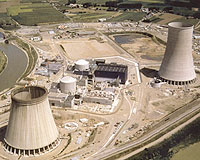
Construction on a new-generation French nuclear reactor has run into technical trouble, raising concerns for the project after the first such plant, in Finland, was plagued by major delays.
Work began in December on the European Pressurised water Reactor (EPR) in the northern town of Flamanville, the world's second so-called third-generation reactor which is expected to enter service in 2012.
But concrete-pouring operations at the site had to be suspended on May 21 after France's Nuclear Security Authority (ASN) detected several "anomalies".
"The ASN has observed a certain number of anomalies on the EPR construction site in Flamanville," the authority said on Tuesday.
Specifically, it said several sections of iron frame were not set up according to specification, and that it had found cracks in the concrete reactor platform.
Utilities giant Electricite de France (EDF), which is building the plant, said neither problem would cause delays to the construction of France's 59th nuclear reactor.
"At this point, it is far too soon to start speaking of potential delays to our project," said Bernard Salha, EDF's director of nuclear engineering.
But Greenpeace activist Yannick Rousselet repeated calls for the project to be "definitively abandoned", saying it was "constantly piling up extremely serious malfunctions that genuinely affect the security of the reactor."
The first EPR, under construction in Finland by French nuclear giant Areva, has suffered repeated major delays linked to the quality of the concrete used, and is now expected to become operational in 2011 instead of 2009.
The world's second producer of nuclear energy after the United States, France is vying to lead a worldwide revival of the industry, fuelled by worries about global warming and rising energy prices.
French Prime Minister Francois Fillon told parliament Tuesday that boosting France's nuclear sector remained the best answer to soaring oil costs.
Nuclear currently accounts for 87 percent of French electricity production, according to EDF.
