
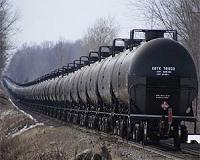
The National Transportation Safety Board called on the rail industry to act quickly to replace or retrofit cars designated to carry crude oil.
The NTSB said it can't "wait a decade" for safer rail cars while crude oil delivery by rail increases at an exponential rate.
"That is why this issue is on our Most Wanted List of safety improvements," NTSB Chairman Christopher Hart said in a statement. "The industry needs to make this issue a priority and expedite the safety enhancements, otherwise, we continue to put our communities at risk."
The increase in U.S. crude oil production is more than the existing network of pipelines can handle, leaving the energy industry to rely on rail as an alternate shipping method. Federal data suggested some domestic grades of crude oil, such as the type extracted in North Dakota, may be more prone to detonation than others.
The NTSB said older rails classified as DOT-111 may rupture too quickly when exposed to fires associated with derailments.
A CSX Transportation oil-train derailment in West Virginia last month involved newer CPC-1232 model rail cars. New model CPC-1232 cars are "not satisfactory," the board said.
Last week, BNSF Railway announced it will require trains hauling crude oil reduce their speeds in communities with more than 100,000 residents and work to remove all rail cars designated DOT-111 from service within a year and phase in newer CPC 1232 models.
The American Petroleum Institute, which represents the business interests of the oil and gas sector, said its review of a federal report on rail found kinetic energy built up during a derailment may play a greater role than cargo in any detonations.
