
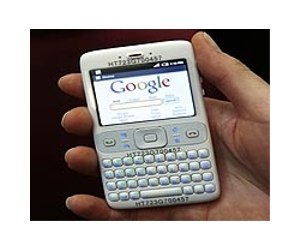
Smartphones running on Google-backed Android software are gaining ground in a hot US market, according to figures released Monday by industry-tracker Nielsen Company.
"While the iPhone has been the headline grabber over the last few years in the smartphone market, Google's Android OS (operating system) has shown the most significant expansion in market share among current subscribers," Nielsen said in a release.
Android smartphones surged to 13 percent of the market, Nielsen reported.
The gain appeared to come at Microsoft's expense, with handsets based on Windows Mobile software dropping from 27 percent to 15 percent of the US market during the same one-year period.
Android handsets appeared to be on a hot streak, accounting for 27 percent of the smartphones activated in the United States in the first half of this year while iPhones accounted for 23 percent, according to Nielsen.
BlackBerry handsets from Research In Motion continued to be the most popular smartphones with 35 percent of the market while iPhones were second with 28 percent at the end of June, according to the results.
Smartphones capable of data connections such as e-mail and Internet browsing made up 25 percent of the US market at the end of June and Nielsen predicted they would surpass the number of feature phones by the end of 2011.
earlier related report
Connecticut attorney general probing digital book deals
San Francisco (AFP) Aug 2, 2010 –
The attorney general of the state of Connecticut announced Monday that he is investigating whether Apple and Amazon digital book deals with publishers thwart market competition.
Amazon has deals with book publishers to sell digital versions of works for its popular Kindle electronic readers while Apple has struck similar business partnerships to provide titles for iPad tablet computers.
Prior to the iPad debut this year, Amazon was able to use its dominance of the e-reader market to offer best-selling works for 9.99 dollars each, a price that publishers complained was too low.
The makers of e-readers typically make deals with publishers to get permission to sell works and to convert works into digital formats compatible with devices.
Attorney General Richard Blumenthal said he grew concerned after finding no difference in price for digital versions of New York Times best-seller list books at Amazon, Apple, Borders, and Barnes & Noble.
"These agreements among publishers, Amazon and Apple appear to have already resulted in uniform prices for many of the most popular e-books — potentially depriving consumers of competitive prices," Blumenthal said.
Share This Article With Planet Earth
