
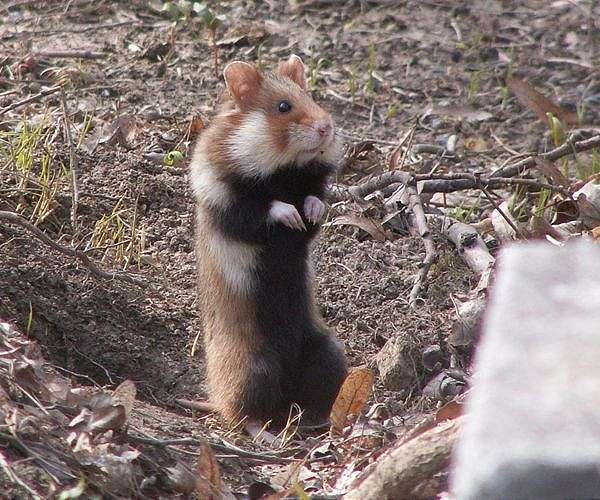
Time was running out for Pudding.
The hamster, a new addition to the Hau family, was to be given up to Hong Kong authorities for culling after rodents in a pet shop tested positive for coronavirus — leaving Pudding's 10-year-old owner wailing in grief.
"I don't want to, I don't want to," the boy cried, his head buried in his hands as he crouched next to Pudding's pink cage, according to a video shown to AFP by his father.
But the older Hau, who would only provide his last name, said he was worried about his elderly family members who live in the same household.
"I have no choice — the government made it sound so serious," he told AFP, shortly before entering a government-run animal management centre to submit Pudding.
He was among a steady trickle of Hong Kong pet owners arriving outside the facility on Wednesday afternoon to give up their unsuspecting furry friends.
Hong Kong on Tuesday ordered 1,000 animals in a pet shop to be culled, along with another 1,000 hamsters in other shops across the city.
Authorities also urged owners to turn in any hamsters purchased after December 22 to be put down.
The decision comes after the discovery of Covid-positive hamsters in the store. Authorities said an employee had contracted the Delta variant — now rare in the territory — and they ordered the cull as a "precautionary measure".
– 'Process my emotions' –
Like mainland China, Hong Kong adheres to a staunch "zero-Covid" policy, intolerant of even the merest appearance of the virus in the population of more than seven million.
But the government's latest target appears especially harsh, and swift rebukes from outraged animal lovers have pinged across social media pages.
The mood Wednesday among parents waiting to give up their pets for "humane disposal" was more forlorn.
"It began as something happy, we bought (the hamster) so the kid can have some company," a father, who provided only his surname Tsui, told AFP.
"Now it has come to this."
He and his wife had gifted "Marshmallow" — a grey twitchy-nosed hamster scurrying through plastic tubes — to their five-year-old son.
"It feels like I'm ending a life," Tsui said, adding that he did not dare break the news of Marshmallow's fate to his son.
"I need to process my own emotions before I know what to say to my kid."
He added he was disappointed the government did not offer alternatives, such as teaching people how to properly quarantine their pets.
– 'Save as many as we can' –
Hong Kong's hamster hunt has led activists and animal lovers to fret over pets being dumped on the streets en masse for fear of contracting the virus.
Cheung, 32, is part of an online community of Hong Kong hamster owners who have volunteered to foster any abandoned due to the policy.
"It's devastating. I couldn't sleep last night, because I really love small animals," he told AFP, providing only his last name over fears about criticising the government's policy.
Hong Kong already has a problem with overwhelmed first-time pet owners deserting their furry companions, and Cheung said the numbers are likely to spike after the policy.
His own two-year-old hamster, Ring, is safe for now, and may soon be joined by others.
"We want to save as many as we can," he said.
Fury over Hong Kong's mass cull of hamsters and small pets
Hong Kong (AFP) Jan 19, 2022 –
Hong Kong's government faced outrage Wednesday over its decision to cull thousands of small animals after hamsters in a pet store tested positive for Covid-19.
Like China, Hong Kong maintains a "zero-Covid" policy, stamping out the merest trace of the virus with contact tracing, mass testing, strict quarantines and prolonged social-distancing rules.
Their latest measures target hamsters and other small mammals — including chinchillas, rabbits and guinea pigs — which authorities on Tuesday said will be culled as a "precautionary measure".
The move came after hamsters sold at the Little Boss pet shop, as well as an employee, tested positive for the Delta variant — now rare in Hong Kong.
Officials dressed in full PPE gear carried red garbage bags marked with biohazard warnings out of the shop on Tuesday night.
Authorities "strongly encouraged" anyone who bought a small mammal after December 22 — right before Christmas — to give up their pet for culling.
Outside a government-run animal centre Wednesday, a man surnamed Hau told AFP his 10-year-old son was inconsolable about culling "Pudding", a recently bought hamster, but that he was worried about the health of his elderly parents living in the same household.
"I have no choice — the government made it sound so serious," Hau told AFP, showing videos of his son wailing in front of Pudding's pink cage.
One hamster lovers' group said it received more than 20 inquiries about whether owners had to give up their furry friends.
Authorities said Tuesday the Covid-positive creatures were believed to be imported from the Netherlands, with Hong Kong's health secretary defending the move as part of "precautionary measures against any vector of transmission" — despite a dearth of evidence showing animal-to-human transmission.
About 1,000 animals sold at Little Boss and another 1,000 hamsters in dozens of pet shops will be culled, authorities said.
The import of small mammals has also been halted.
– 'No one can take my hamster' –
Animal lovers across Hong Kong reacted with alarm: a Change.org petition garnered more than 23,000 signatures in less than a day, and the Society for the Prevention of Cruelty to Animals (SPCA) denounced the decision.
"The SPCA is shocked and concerned over the recent announcement about the handling of over 2,000 animals," it said in a statement sent to AFP Wednesday.
One owner — who bought her pet on January 1 — was defiant, pushing back on the government's cull.
"No one can take my hamster away unless they kill me," she told local media outlet The Standard on Wednesday.
She recalled a recent birthday party attended by officials that resulted in multiple Covid infections and left Hong Kong's leadership redfaced.
"Will they also kill all infected Covid-19 patients and their close contacts?" the owner demanded.
"If all people who attended the birthday party are culled then I will hand my hamster to the government."
A grim humour settled on Hong Kong-centric social media accounts, with netizens publishing illustrations of hamsters wearing surgical masks or facing off with the Grim Reaper.
The city's largest opposition party also waded into the controversy, saying the "indiscriminate killing" policy will only cause "public resentment".
"If cats, dogs or other animals get infected in the future, will they also be targeted for 'humane dispatch'?" wrote Felix Chow, the animal rights spokesperson for The Democratic Party, on the group's official Facebook page.
– 'An unpopular decision' –
But the government's decision has some supporters.
Top microbiologist and government advisor Yuen Kwok-yung had praised the measure Tuesday as "decisive" and "prudent".
On Wednesday he told local radio that his defence of the policy had earned him "some emails telling me to go to hell".
Yuen said the Agriculture, Fisheries and Conservation Department did not have enough staff to quarantine hamsters and test them daily, "so they had no choice but to make such an unpopular decision".
When questioned about Hong Kong's hamster cull, the World Health Organization said some animal species can be infected with the coronavirus, and animals can reinfect humans.
"That risk remains low but it is something that we are constantly looking at," said the WHO's Maria Van Kerkhove.
