
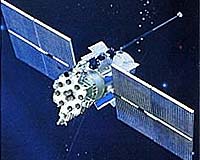
The Reshetnev Research and Production Association of Applied Mechanics (Reshetnev NPO PM) in Zheleznogorsk near Krasnoyarsk is hosting a national scientific conference entitled Navigation Satellite Systems and Their Practical Role in Modern Life reports Itar-Tass. Taking part in the conference are top managers and leading specialists of space companies, representatives of the Defense Ministry and members of the Russian Academy of Sciences' Siberian branch.
Participants in the forum will hear some 70 reports mainly focussed on global space navigation systems, technical aspects of satellites capable of operation in orbit for more than a decade as well as on ways of upgrading control of global navigation satellite systems.
The general designer and general director of the Reshetnev NPO PM, Nikolai Testoyedov said, "of the four current subprogrammes of the global navigation satellite system (GLONASS) one works for the Defense Ministry and three others for civil users."
The GLONASS system, earlier designed as a military component, is currently used for such civil needs as cargo tracking and the development of cadastre, geodesic and land measuring plans. In the near future citizens may use it in their cars and hard-to-access areas.
According to Testoyedov, special attention is paid to the receiving equipment, because it should be able to pick up the GLONASS signal and be compatible with the U.S. global positioning system (GPS).
"Replenishment, upgrading and development of the GLONASS system as well as the Europeans' efforts to create the Galileo positioning system bring us ever closer to ending the era of U.S. monopoly in space navigation," Itar-Tass reported Testoyedov as saying.
The GLONASS system is designed to provide an unlimited number of ships, aircraft, spacecraft and ground-based users with positioning information and standard time signals all over the world and in extraterrestrial space.
The nominal strength of the GLONASS group – 24 satellites – will be reached by 2009-2010.
