
Growing international sensitivity about air quality, combined with the potential of IoT (internet of things) technology, has opened the door to an array of gadgets to satisfy fussy breathers everywhere.
ibebot Limited has tapped into this vein of interest with some innovative designs to allow quick and easy monitoring of indoor atmospheric conditions. The company's current fleet of portable devices fill specialized tasks, including the measuring of temperature and humidity, CO2, VOCs (volatile organic compounds), and so-called PM2.5 pollution.
All of the palm-sized gadgets use low-power Bluetooth 4.0 software to transmit data via smartphone app, where the user can assess the information. Battery life for each of the units is about a year with normal usage.
"Air quality has for a long time been one of those things about daily life that people sort of took for granted," says ibebot rep Ryan Yuen. "But now we can measure environmental health with some accuracy, which is especially useful for protecting children and the elderly."
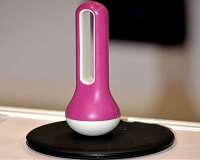
The simplest of the units is the 35-gram thermometer-shaped Aircomfort, which measures temperature and humidity. It can store up to 100 days of data and create graphical views of current and historical readings.
The leaf-shaped AirQuality unit adds CO2 and VOC measuring capabilities. VOCs include both man-made and naturally occurring chemical compounds that may have long-term effects on health, such as formaldehyde, which is released from drying paint.
Finally, the AirHealth combines the capabilities of both the AirQuality and Aircomfort devices, adding PM2.5 detection. Particulates measuring around 2.5 microns have garnered increased attention in recent years due to their ability to permeate lung tissue, and include fine particles produced from motor vehicles, power plants, and from burning wood and coal.
Ibebot has garnered prestigious international recognition for its products, including design awards from Red Dot, IDA, HKSGDA, and K-Design.
A growing body of research also supports the argument for better air quality awareness. In a paper published in the journal Environmental Health Perspectives, Harvard researchers found that people working in buildings with below-average indoor air pollution and carbon dioxide showed better cognitive functioning than workers in offices with typical VOC and CO2 levels.
