
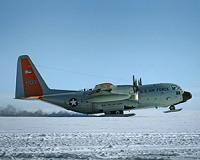
The New York Air National Guard's 109th Airlift Wing is training with ski-equipped LC-130 Hercules cargo planes at Raven Camp, Greenland, for landing operations in remote snow and ice bound areas.
The 109th deploys 10 of the LC-130 aircraft, also known as the Skibird, in support of the National Science Foundation's remote research stations in Antarctica and Greenland in the Arctic Circle.
The Skibird is the primary mode of U.S. transportation within Antarctica and northern Greenland and also provides airlifts between McMurdo Station in Antarctica, and New Zealand.
Landing the ski-equipped aircraft on unimproved surfaces requires specialized training. Even pilots with experience flying C-130s, the ski-less version of the LC-130, find ski-landings to be a different way of operating.
"There's no way to change the steps that we follow or the procedures or the sequence of events — but you can't prepare for landing on skis," Air Force C-130 pilot Maj. Dia Ham said after completing her first Skibird landing Jun. 27.
In addition to operating the LC-130 in extreme weather and terrain conditions, prospective Skibird pilots must undergo arctic survival training under freezing conditions.
The LC-130 can carry up to 45,000 lbs. of cargo or 60 passengers. It can use Jet Assisted Take Off modules to provide extra thrust for operations on short runways. The U.S. Air Force is the sole operator of the LC-130.
NASA flights gauge summer sea ice melt in the Arctic
Earlier this year Arctic sea ice sank to a record low wintertime extent for the third straight year. Now NASA is flying a set of instruments north of Greenland to observe the impact of the melt season on the Arctic's oldest and thickest sea ice.
Operation IceBridge, NASA's airborne survey of polar ice, launched a short campaign on July 17 from Thule Air Base, in northwest Greenland. Weathe … read more
