
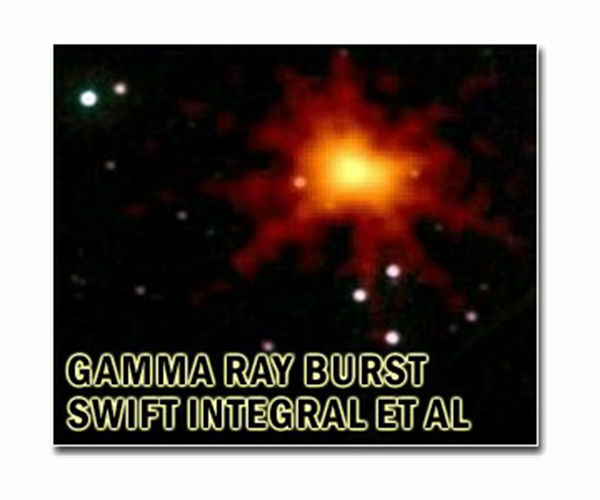
Gamma-ray bursts (GRBs), known for their immense bursts of gamma radiation, are among the universe's most intense phenomena, with energy outputs surpassing the sun's expected lifetime production in mere seconds. Originating from the research team at The University of Alabama in Huntsville (UAH), Dr. Jon Hakkila has spearheaded new findings published in The Astrophysical Journal, along with co-authors Dr. Timothy Giblin, Dr. Robert Preece, and Dr. Geoffrey Pendleton of deciBel Research, Inc.
"GRBs have remained a significant enigma in astrophysics for decades, evading full explanation since their discovery in 1967," said Hakkila. The research focuses on the jet dynamics where these gamma-ray bursts originate, potentially clarifying the nature of these cosmic events. The study posits that the movement within the jets plays a critical role in the observed light phenomena of GRBs, specifically the time-reversible patterns in their light curves.
The light curve of a GRB, which charts the intensity of light over time, showcases unique, energetic pulses-each marking a phase where the GRB brightens then fades. Hakkila points out an unusual feature: "These pulses can exhibit reversibility, akin to palindromic sequences, which is a complex characteristic given the unidirectional flow of time."
The team's hypothesis introduces lateral movement in the jets as a solution to the reversibility observed in GRB light pulses. Hakkila explains, "This lateral movement across our line of sight would mean that light from the jets is seen sequentially: from one side, moving through the center, and then the other, making the brightness increase and then decrease in a mirrored fashion."
These findings not only enhance our understanding of how gamma-ray bursts function but also offer a new perspective on the mechanics of light production within these powerful astronomical phenomena. "If we visualize the jet as a spraying nozzle, much like a fire hose, the material spray and its behavior under the laws of special relativity become key to deciphering the structure and timing of the light we observe," added Hakkila.
Research Report:Gamma-Ray Burst Pulses and Lateral Jet Motion
