
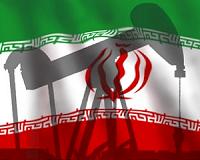
Caveats to a proposed freeze in oil production from Iran pushed crude oil prices sharply lower, moving Brent to below $40 per barrel after last week's rally.
An expected downturn in U.S. crude oil production through 2016 helped push crude oil prices higher last week, sending Brent above $40 per barrel for the first time this year. Oil prices have been under pressure because soft global economic recovery wasn't enough to take on soaring inventories, tilting the market balance heavily toward the supply side.
Iranian Oil Minister Bijan Zangeneh said his country would consider a cap on production levels once his country regained a stronger position in the post-sanctions era. Rival producers like Saudi Arabia have called for a freeze to January production levels in order to stabilize the markets.
"I have already announced my view regarding the oil freeze and I'm saying now that as long as we have not reached 4 million [barrels per day] in production, they should leave us alone," he was quoted by Iranian broadcaster Press TV as saying.
The U.S. Energy Information Administration said in January, when sanctions pressure started to ease for Iran, that production should average about 3.1 million bpd this year and grow to almost 3.6 million bpd by 2017.
The minister's statement erased much of last week's momentum. Brent crude oil lost 2.8 percent at the start of trading in New York to open at $39.26 per barrel. West Texas Intermediate, the U.S. benchmark price for crude oil, lost about 2.9 percent to start the day at $37.39 per barrel.
Russian Energy Minister Alexander Novak arrived Monday in Tehran to review production levels. Novak met last month with his counterparts from Qatar, Saudi Arabia and Venezuela to consider market proposals.
Zangeneh in February said any calls on Iran to scale back production at a time when sanctions pressures are easing are "a joke."
Iran welcoming to U.S. energy companies
Tehran (UPI) Mar 14, 2016 -Energy companies with U.S. headquarters are welcome to do business in Iran, though sanctions may be prohibitive, the country's oil minister said.
Iranian Oil Minister Bijan Zangeneh confirmed the state-run National Iranian Oil Co. was in talks with General Electric on the possibilities in the Iranian oil and gas sector.
"In general, we have no problem with the presence of American companies in Iran," Iran's Press TV quoted the minister as saying. "But it is the American government that is creating restrictions for these companies."
A July nuclear agreement between the five permanent members of the U.N. Security Council, plus Germany, and Tehran could eventually release full sanctions pressure on the Iranian oil sector. The minister said following the deal that "all international" energy companies were welcome in Iran, though few U.S. companies had expressed interest.
As U.S. legislators debated the agreement last year, Iranian Supreme Leader Ali Khamenei warned no U.S. company would be allowed to establish a foothold inside the country.
Sanctions were relaxed earlier this year by Europe, giving several regional companies an opportunity to get an early start on establishing business ties with Iran. Existing U.S. sanctions restrict financial mechanisms for working with the Islamic republic, however.
"Iran is a big market from an oil and gas perspective," Iran's oil minister said. "We will abide by the sanctions."
There was no comment from GE Oil & Gas on the potential for work in Iran's energy sector. A 2011 profile of the company's available services outlined operations in a steel plant in Iran related to the metals industry.
