
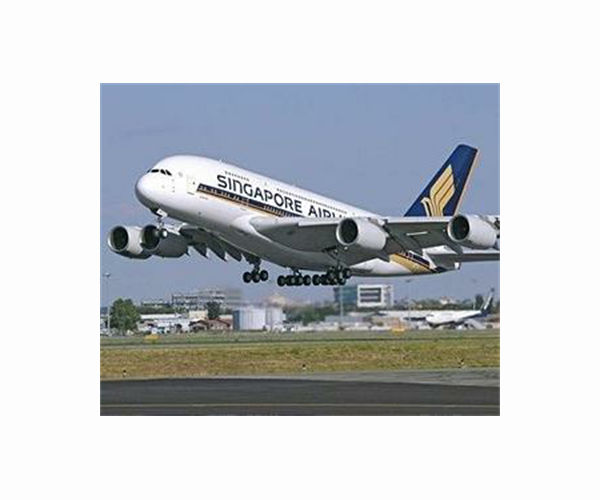
Singapore will allow visitors from mainland China and an Australian state hard-hit by Covid-19 from next month in a further easing of pandemic border restrictions, authorities said Thursday.
Visitors will be required to take a virus test upon arriving in Singapore and will not need to quarantine if they record a negative result when the new rules take effect on November 6.
Both mainland China and Victoria state in Australia "have comprehensive public health surveillance systems and displayed successful control over the spread of the COVID-19 virus," a press release from the Civil Aviation Authority of Singapore (CAAS) said.
"The risk of importation from these places is low."
Singapore had earlier lifted restrictions for visitors from other parts of Australia, Brunei, New Zealand and Vietnam.
None of the 602 arrivals so far from those destinations had tested positive for the coronavirus after arriving in Singapore, CAAS added.
Singapore closed its borders in March to tourists and short-term visitors and later implemented a partial lockdown as coronavirus outbreaks swept through dormitories housing hundreds of thousands of migrant workers.
The city-state has recorded nearly 58,000 Covid-19 cases but only 28 deaths, and is gradually reopening its borders as it seeks to revive an economy battered by the pandemic.
It has already announced quarantine-free "green lane" arrangements for essential business and official travel with several countries including Japan, Malaysia, South Korea and Indonesia.
Singapore also announced a "travel bubble" with Hong Kong earlier this month, though a start date has not yet been announced.
Coronavirus: latest global developments
Paris (AFP) Oct 29, 2020 –
Here are the latest developments in the coronavirus crisis:
– Viruses will get worse, says UN –
Future pandemics will happen more often, kill more people and wreak even worse havoc than Covid-19 without a fundamental shift in how humans treat nature, the United Nations said.
A special report by its biodiversity panel said animal-borne diseases are far more likely to make the jump to people in future because of deforestation and habitat destruction that also drive climate change.
– France's new lockdown –
Bars, restaurants and services prepare to shut down in France and Germany as lockdown measures return to Europe.
Starting Friday, France will bar people from leaving home without authorisation, bars and restaurants will close until at least December and travel between regions will be limited.
Factories and building sites will remain open, as will nurseries and schools, but children as young as six will be required to wear masks.
– Sweden's new infection record –
Sweden — known for its light touch approach to the virus — records its highest ever number of infections for a second day in a row.
People living in the capital Stockholm and the more densely populated south of the country are urged to avoid social interaction and going into shops, libraries and other closed public spaces.
Neighbouring Denmark has also made masks obligatory in enclosed public spaces.
– Zlatan the masked crusader –
AC Milan star Zlatan Ibrahimovic sends up his superhuman image in a new ad to promote mask wearing in Italy.
"You are not Zlatan, you cannot defy the virus. Respect the rules and wear a mask always," the footballer — who tested positive for Covid-19 a few weeks ago — says in the public information video for the Lombardy region, which was badly hit by the first wave of the virus.
– Marshall Islands fall –
The Marshall Islands chain in the Pacific, one of the last places on the planet spared by the virus, has recorded its first two cases.
Their island neighbours in the Federated States of Micronesia, Samoa, Tonga, Kiribati, Tuvalu, Nauru, Palau and Vanuatu have yet to be touched.
– Infections top 44 million –
The virus has claimed at least 1,175,992 lives worldwide since it first emerged in China late last year, according to an AFP tally on Thursday at 1100 GMT based on official sources.
At least 44,561,263 cases have been registered across the globe.
The United States is the worst-affected country with 227,701 deaths, followed by Brazil with 158,456, India with 120,527, Mexico with 90,309 and Britain with 45,675.
– Britain upholds local measures –
With more than half the country already in lockdown, the British government vows to persist with localised restrictions, despite fresh data showing surging numbers of cases and deaths across the country, and national lockdowns in Europe.
Ministers still believe targeted action is "the best way forward" given varying rates of infection, says Communities Secretary Robert Jenrick.
– India tops eight million –
India surpasses eight million cases and is bracing for a new surge after Diwali, one of the most important Hindu festivals on November 14.
Experts say crowds gathering for Diwali and other festivals, colder temperatures and the annual winter pollution crisis could worsen the impact of cases in Delhi.
– Sri Lanka capital lockdown –
Colombo will go back into lockdown from Friday following a surge in cases, authorities say.
Around 5.5 million people living in the Sri Lankan capital and two neighbouring districts will only be allowed to move about for essential services, health officials said.
– Tunisia toughens measures –
Tunisia says it will impose a nationwide curfew, shutting schools and banning inter-regional travel to halt a resurgence of cases, without outlining how long the measures would be in place.
– Masks, curfew in Pakistan –
A mandatory mask order comes into force in Pakistani cities to prevent a second wave as cases have risen steadily in recent weeks.
burs-eab/fg/pvh
