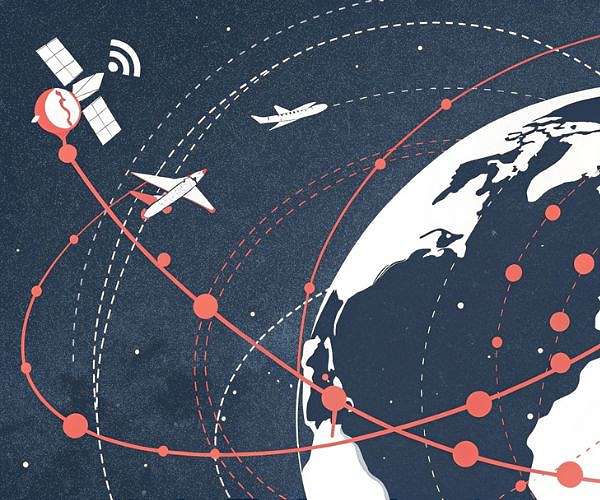
Satellite navigation has become so deeply integrated into daily technology that many people rarely consider how complex the underlying systems are. By 2026, global geolocation is entering a new stage where accuracy, speed, and reliability are improving simultaneously. The evolution is driven by new satellite constellations, stronger ground infrastructure, and advances in spatial data processing.
Professionals entering the geospatial field are also expanding their expertise through specialized training and academic programs. Many explore advanced educational pathways here to understand how modern geographic information systems are shaping industries that rely on location intelligence.
Satellite Constellations Are Expanding
The future of GPS involves more than a single navigation network. Devices in 2026 increasingly receive signals from several satellite constellations at once. These include systems operated by different regions around the world.
Receiving multiple signals improves reliability. When one signal is obstructed by buildings or terrain, another system can compensate. This redundancy creates a more stable positioning experience for users.
As additional satellites enter orbit, positioning accuracy continues to improve.
Precision Location Is Reaching New Levels
Accuracy has become one of the most important aspects of modern geolocation technology. In earlier generations, positioning errors of several meters were common. By 2026, many systems aim to achieve accuracy within centimeters under optimal conditions.
This precision matters for industries that require exact positioning. Construction, surveying, agriculture, and aviation all benefit from improved spatial accuracy.
With better correction systems and signal processing techniques, positioning technology becomes more reliable in dense urban environments.
Urban Infrastructure Is Becoming Location-Aware
Cities increasingly rely on geolocation data to operate efficiently. Transportation authorities monitor vehicle movement to reduce congestion. Municipal planners analyze spatial patterns to guide infrastructure development.
Location intelligence helps cities respond dynamically to changing conditions. Traffic signals can adjust in real time. Public transit systems provide accurate arrival predictions. Emergency services reach incidents faster because navigation systems supply detailed location information.
The integration of GPS into urban management continues to expand as data becomes easier to analyze.
Autonomous Systems Depend On Geolocation
Automation is another major force shaping the future of GPS. Autonomous vehicles, robotic delivery systems, and aerial drones require constant location awareness to operate safely.
These systems combine satellite navigation with onboard sensors and digital maps. The combination allows machines to understand their surroundings and navigate complex environments.
Reliable positioning enables automated systems to function efficiently while minimizing operational risk.
Global Logistics Is Becoming More Transparent
Geolocation technology also transforms how goods move around the world. Shipping companies track cargo throughout the entire transportation process, from production facilities to delivery points.
Businesses use positioning data to optimize routes, reduce delays, and predict arrival times more accurately. Customers benefit from detailed shipment tracking and improved delivery reliability.
As global trade expands, precise location tracking becomes increasingly valuable.
Why The Future Of GPS Matters
The changes expected by 2026 demonstrate how essential geolocation technology has become. Navigation apps represent only one small part of a much larger ecosystem supported by satellite positioning, mentioned https://www.directionsmag.com/.
From autonomous vehicles to smart city planning, location intelligence provides the spatial awareness that modern digital systems require. The future of GPS lies in deeper integration across industries that depend on accurate geographic data.
As satellite networks expand and positioning accuracy improves, geolocation technology will continue shaping how people move, how cities function, and how global systems remain connected.