
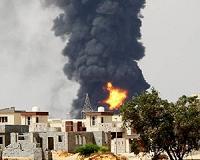
The parliament in Tripoli rejected Tuesday a UN proposal to resolve Libya's political crisis but said it wanted to press on with talks toward reaching an accord with its rival in the east of the country.
Plunged into chaos after the 2011 overthrow of dictator Moamer Kadhafi, Libya has two parliaments and governments vying for power, one in Tripoli and one in the eastern port city of Tobruk, which is recognised by the international community.
On June 29, delegations from both sides headed home from the Moroccan resort of Skhirat after holding their first direct talks in months but failed to agree on UN proposals for a united government.
UN envoy Bernardino Leon had appealed to them to endorse his proposals for a merged administration to tackle a growing jihadist presence in the North African nation, which has cast a shadow over its neighbours, especially Tunisia.
Omar Hamidan, spokesman for Tripoli's General National Congress, said "this draft accord is not the satisfactory state (necessary) for us to initial it."
The GNC called on the UN envoy to "reopen the debate," and said its team was "ready to head (to the table of) dialogue immediately, once a date is decided, to "discuss modifications the GNC wants to introduce in the text."
Among these are a called for "respecting the judiciary," a possible reference to a Supreme Court decision invalidating the parliament in the east, which was elected in June 2014.
The GNC is close to Fajr Libya, an alliance of Islamist militias that controls the capital, and which called the proposal a betrayal of those who "fought for the liberation of Libya and the preservation of its sovereignty".
A surge of jihadist violence across the region, including the killing of 38 people, most of them British tourists, at a Tunisian beach resort last month, has prompted mounting international pressure for a deal.
Colombia conflict needs 'urgent de-escalation': mediators
Havana (AFP) July 7, 2015 –
Four countries supporting peace talks between the Colombian government and FARC rebels called Tuesday for an "urgent de-escalation" of armed conflict in the South American nation.
The appeal comes after clashes resumed in mid-April, following an ambush by the Revolutionary Armed Forces of Colombia (FARC) that left 11 soldiers dead. Each side blames the other for the escalation.
Cuba and Norway are acting as so-called "guarantor" countries in the peace talks that began in November 2012. Chile and Venezuela are acting as "escort" countries.
"We urge the parties to strictly restrict any actions that cause victims or suffering in Colombia, and to step up the implementation of confidence-building measures," Norway representative Idun Aarak Tvedt said in a statement to journalists.
"We consider these steps to be essential in order to guarantee the conditions for and create a climate conducive to achieving agreement."
Despite the appeal two soldiers were killed, two wounded and a fifth reported missing in southern Colombia Tuesday following attacks that were believed to have been carried out by the FARC.
The group's chief negotiator, Ivan Marquez, welcomed the appeal.
He accused government forces of stepping up attacks on rebel camps while the guerrillas were observing a unilateral truce, which they ended in May after five months of relative calm.
Since then, about 30 rebels have been killed in army operations and recent surveys show the public to be wary about the peace process.
Colombia's civil strife dates back to 1964 and has drawn in left-wing guerrillas, right-wing paramilitaries and drug gangs, killing more than 220,000 people and uprooting as many as six million.
Despite the renewed bloodshed the Colombian government said for the first time Saturday that it was potentially open to a bilateral ceasefire.
So far, the two sides have agreed on three points of a six-point agenda for the peace process.
