
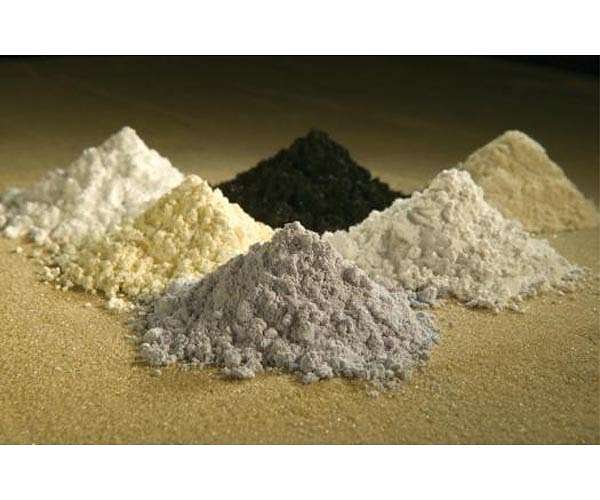
Two US senators have proposed a law aiming to end China's alleged "chokehold" on rare-earth metal supplies, a statement by the lawmakers said Friday.
The law — proposed by Democrat Mark Kelly and Republican Tom Cotton — would aim to ensure the United States can guarantee its supplies of rare-earth minerals.
"The Chinese Communist Party has a chokehold on global rare-earth element supplies, which are used in everything from batteries to fighter jets," Cotton said in the statement.
"Ending America's dependence on the CCP for extraction and processing of these elements is critical to winning the strategic competition against China and protecting our national security," he said.
Eighty percent of the United States' rare-earth imports in 2019 were from China, according to the United States Geological Survey (USGS).
The bill aims to "protect America from the threat of rare-earth element supply disruptions, encourage domestic production of those elements, and reduce our reliance on China", the statement said.
The law would require the departments of the Interior and Defense to create a "strategic reserve" of rare earth minerals by 2025.
That reserve would be tasked with responding to the needs of the army, the tech sector and other essential infrastructure "for one year in the event of a supply disruption".
It also aims to ensure greater transparency on the origins of the components, restricts the use of rare-earth minerals from China in "sophisticated" defense equipment, and urges the Commerce Department to investigate Beijing's "unfair trade practices" and impose higher customs duties accordingly.
"Our bipartisan bill will strengthen America's position as a global leader in technology by reducing our country's reliance on adversaries like China for rare earth elements," Kelly said in the statement.
With 44 million tons of reserves, China possesses some of the largest deposits of rare-earth metals, according to the USGS, and benefits from looser environmental regulations than many of its competitors.
Beijing has used these deposits to exert political pressure. In 2010, China halted rare-earth exports to Japan in retaliation over a territorial dispute.
Chile court freezes multi-million dollar lithium deal
Santiago (AFP) Jan 14, 2022 –
A Chilean appeals court on Friday suspended a million-dollar state lithium tender issued two days earlier that had generated controversy for coming just two months before the end of conservative President Sebastian Pinera's term.
"Bearing in mind that the contested act is in full execution, it is agreed not to innovate, paralyzing the bidding and award process for the lithium, while this appeal is resolved," said the court in Copiapo in the north of the country, according to documents seen by AFP.
China's BYD Chile SpA and Chile's Servicios y Operaciones Mineras del Norte S.A. were awarded the right to extract 80,000 tons of lithium each over 20 years, the minerals ministry said Wednesday.
Leftist president-elect Gabriel Boric's team had asked the government to postpone the tenders and set up a "roundtable" to discuss various conditions to apply to the contracts.
Mining minister Juan Carlos Jobet had said Wednesday the government would work with the successful companies to ensure that "a portion of the payments they must make be used to support local communities and to invest in research and development."
And on Friday, the mining ministry said the tender has not been the subject of a "definitive cancellation" and that the process had been "open, informed, transparent and has complied with all current legislation."
The court accepted an appeal for protection filed by the governor of Copiapo, Miguel Vargas, together with a group of Aymara and Diaguita Indigenous communities that inhabit a salt flat in the Atacama desert.
Although the government tender does not stipulate the place of extraction of the lithium, the salt flats of northern Chile are where the main deposits of the mineral are to be found.
According to the mining ministry, the tender process seeks to restore Chile's position in the world lithium market. Until 2016, the country was the world's largest producer with 37 percent of the market, but today it ranks second behind Australia, with 32 percent.
If the country fails to increase its production, by 2030 its share would fall to 17 percent, according to official statistics.
