
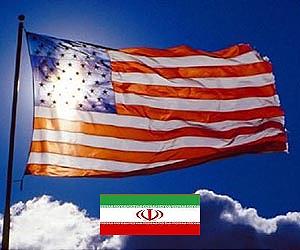
The top US military officer says he has a plan to attack Iran if needed to prevent it from getting nuclear weapons, but is "extremely concerned" about the possible repercussions of such a strike.
Admiral Mike Mullen, chairman of the Joint Chiefs of Staff, said military action against Iran could have "unintended consequences that are difficult to predict in what is an incredibly unstable part of the world."
But, speaking on Sunday's "Meet the Press" program on NBC, Mullen said allowing Iran to develop a nuclear weapon was also unacceptable.
"Quite frankly, I am extremely concerned about both of those outcomes," he said.
Mullen held out hope that a combination of international diplomatic efforts and sanctions against Iran would lead Tehran to suspend a nuclear enrichment program that many believe is a clandestine bid to develop nuclear arms.
"I am hopeful (it) works," he said.
At the same time, though, he said "the military options have been on the table, and remain on the table".
"I hope we don't get to that, but it's an important option and it's one that's well understood," he added.
Asked if the military has a plan to strike Iran, Mullen replied, "We do".
He did not elaborate.
Iran insists its uranium enrichment program is for peaceful purposes only.
earlier related report
Israel's Barak fears Turkey spy chief is 'supporter of Iran'
Jerusalem (AFP) Aug 1, 2010 –
Israeli Defence Minister Ehud Barak has expressed concern over Turkey's appointment of a new spy chief he called a "supporter" of the Jewish state's archfoe Iran, army radio reported Sunday.
"Turkey is a friendly country, a strategic ally, but the nomination in recent weeks of a new chief of the Turkish secret services who is a supporter of Iran worries us," he told a meeting of his centre-left Labour party.
Barak added that the appointment could result in "the Iranians having access to secret information," in a recording of his remarks broadcast by military radio.
The Turkish official, Hakan Fidan, 42, was appointed to head the National Intelligence Organisation, known by its Turkish acronym MIT, on May 27 after serving as undersecretary for foreign affairs to the prime minister and representing Turkey at the International Atomic Energy Agency (IAEA).
The latter position placed him at the forefront of Turkey's efforts to resolve the international standoff over Iran's nuclear programme, according to the Turkish press.
Israel has viewed Turkey's efforts with suspicion, especially a deal brokered with Iran and Brazil in May that would have seen Iran ship some of its low-enriched uranium to Turkey in exchange for high-enriched uranium.
The deal was promptly rejected by other world powers, which backed a fourth round of sanctions against Iran on June 9 over its refusal to halt its controversial uranium enrichment programme.
Turkish-Israeli relations plunged to an all-time low following the deadly May 31 Israeli raid on a Gaza-bound aid flotilla in which naval commandos shot dead nine Turkish activists, one of whom was also a US citizen.
Israel views Iran as its greatest strategic threat because of the nuclear programme, which it believes is aimed at developing weapons, and the frequent predictions of the demise of the Jewish state by Iran's leaders.
Like the United States, Israel has said it prefers to resolve the nuclear standoff peacefully but has not ruled out a military strike.
Iran has always said its nuclear enrichment programme is for purely civilian purposes.
Share This Article With Planet Earth
