
Russia's military agenda and reaction to offers brought by US Secretary of State Condoleezza Rice and Secretary of Defence Robert Gates to Moscow this week will show Washington if Moscow means to fight or talk, Rice told the ABC television Saturday.
"We have put some new proposals on the table at the conceptual level. And if Russia is indeed seeking cooperation, not confrontation, then these proposals should deal with their stated concern, and we'll see," Rice said.
The proposals in question included analysis on Iran, to which Russia still sells weapons despite US objections.
Russia, a veto-wielding member of the UN Security Council, has also been reluctant to back US-led calls for tougher sanctions aimed at forcing Iran to halt nuclear activities that Washington and EU capitals say are designed to build an atomic arsenal.
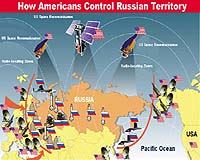
Rice and Gates also sought to explain the US rejection of a Russian call to freeze a planned anti-missile defence system in central Europe, despite a warning from Moscow that it would move to "neutralise" the threat from such a system.
The US offers "should really address the concerns that (Russians) repeatedly cite, about how a missile defense might relate to the Russian strategic deterrent in the future," Rice said.
"I don't think even the Russians have been able to hold the line that nine interceptors in Poland and a few radars in the Czech Republic are going to disable thousands of Russian nuclear warheads," she added.
Rice also voiced concern about Russia's growing military budget despite Moscow's assurances that the boost was largely due to the difference between current oil-swollen revenues and lean budgets of the 1990s.
"I think the rapid growth in Russian military spending definitely bears watching. It's also important that there be transparency about what is going on in this regard. And frankly, some of the efforts, for instance Bear flights in areas that we haven't seen for a while, it's really not helpful to security," she said.
"We don't have an adversarial relationship with Russia any longer, and I would sincerely hope that Russian military activities as well as Russian military expenditures would reflect that," Rice added.
