
On the night of November 3, 1957, a small mongrel terrier picked up as a stray from the streets of Moscow was welded inside a pressurized aluminum capsule perched atop an R-7 rocket at the Baikonur Cosmodrome. Her name was Laika, she weighed about 13 pounds, and Soviet engineers had already decided she would die in orbit. What the state did not admit for another 45 years was that she was almost certainly dead within five to seven hours of launch, cooked alive when the thermal control system failed — not peacefully euthanized on day six or seven, as Radio Moscow told the world.
The lie held for most of the Cold War. The truth came out at a scientific conference in Houston in 2002.

A stray plucked off a Moscow street
Laika — Russian for “barker” — was a mixed-breed dog, roughly three years old, part husky, part terrier, weighing about six kilograms. Soviet scientists deliberately chose strays over pedigreed dogs. The reasoning was blunt: an animal that had already survived Moscow winters on scraps and frozen pavement would tolerate hunger, cold, and confinement better than a pampered kennel dog. The Soviet program flew multiple dogs on suborbital and orbital missions between 1951 and 1966, most of them pulled directly off the street.
Her real name, before the program renamed her, was Kudryavka — “Little Curly.” American newspapers, straining for a joke about Sputnik, dubbed her Muttnik.
She was one of three finalists selected for the mission. Laika was chosen for the orbital flight because she was calm, described by those who worked with her as quiet and charming. In the final days before launch, she was taken home by one of the scientists to play with his children — a small kindness for the dog, because she had so little time left.
Four weeks to build a coffin with a window
The reason Laika was doomed before she left the ground is a matter of Soviet political theater. Nikita Khrushchev, elated by the success of Sputnik 1 on October 4, 1957, demanded a second, more spectacular launch to coincide with the 40th anniversary of the Bolshevik Revolution on November 7. Engineers had roughly four weeks to design, build, and fly a spacecraft carrying a live animal.
There was no time to design a reentry system. Due to the lack of adequate development time, no provisions were made to recover Laika. The capsule was pressurized, padded, and fitted with an oxygen regenerator, a fan that switched on above 15°C, food in gelatinized form, and a bag to collect waste. Electrodes stitched to her skin monitored her heart rate, breathing, and blood pressure. She was fitted with a harness that allowed her to lie down or stand, but not turn around.
The plan, such as it was, called for her to orbit for about a week on stored oxygen, then be euthanized by poisoned food in her final meal. That was the story Radio Moscow told. It was not what happened.
What the telemetry actually showed
Before launch, Laika’s resting heart rate was 103 beats per minute. During the ascent, as the R-7 punched through the atmosphere at three times the force of Earth’s gravity, her heart rate spiked to 240. After reaching orbit and experiencing weightlessness for the first time in the history of any living creature, it took her three hours to settle back to 102 beats per minute — still elevated, but no longer panicked.
Then the temperature inside the capsule began to climb.
Sputnik 2 had failed to separate cleanly from the R-7’s core stage. The booster was still attached, blocking part of the thermal control system’s radiator surface. Some of the capsule’s thermal insulation had also torn loose during launch. With the fan unable to dump heat fast enough, the cabin temperature climbed past 40°C. According to a BBC report from 2002, when Russian scientist Dimitri Malashenkov finally revealed the truth at the World Space Congress in Houston, Laika died between five and seven hours into the flight from overheating and stress. She completed perhaps four orbits alive.
The telemetry kept transmitting her vital signs, flatlined, for days afterward.
The cover story, and why it held for 45 years
The Soviet Union announced that Laika had survived for several days, had been comfortable, had eaten her meals, and had been humanely put to sleep before her oxygen ran out. The state issued postage stamps. Radio Moscow broadcast updates on her supposed condition long after she was dead. The Romanian postal service printed a commemorative stamp in 1957 showing her alive and alert inside the capsule.
Western reporting mostly accepted the timeline, though it was never quite consistent. Some early reports estimated she died on the sixth day from hypoxia. Later analysis came closer to the truth, noting that Later analysis indicated that Laika died when the capsule overheated after failing to separate from its booster, which rendered the thermal control system inoperative.
The definitive confirmation came in 2002 from Malashenkov, one of the scientists who had worked on the mission. He presented a paper describing the actual telemetry: a rapid rise in cabin temperature, a dog whose heart rate never fully recovered, and a death within hours, not days. An earlier 1993 interview with Oleg Gazenko, another senior figure in the program, had already hinted at the same conclusion. Gazenko told his interviewer that Laika had perished soon after launch and that the cabin temperature had climbed past 40°C.
Gazenko went further. Addressing a press conference in Moscow, Gazenko expressed regret about the mission, stating that he had grown increasingly sorry about Laika’s death over time and questioning whether the scientific knowledge gained justified the sacrifice of the dog.
What she was flying in
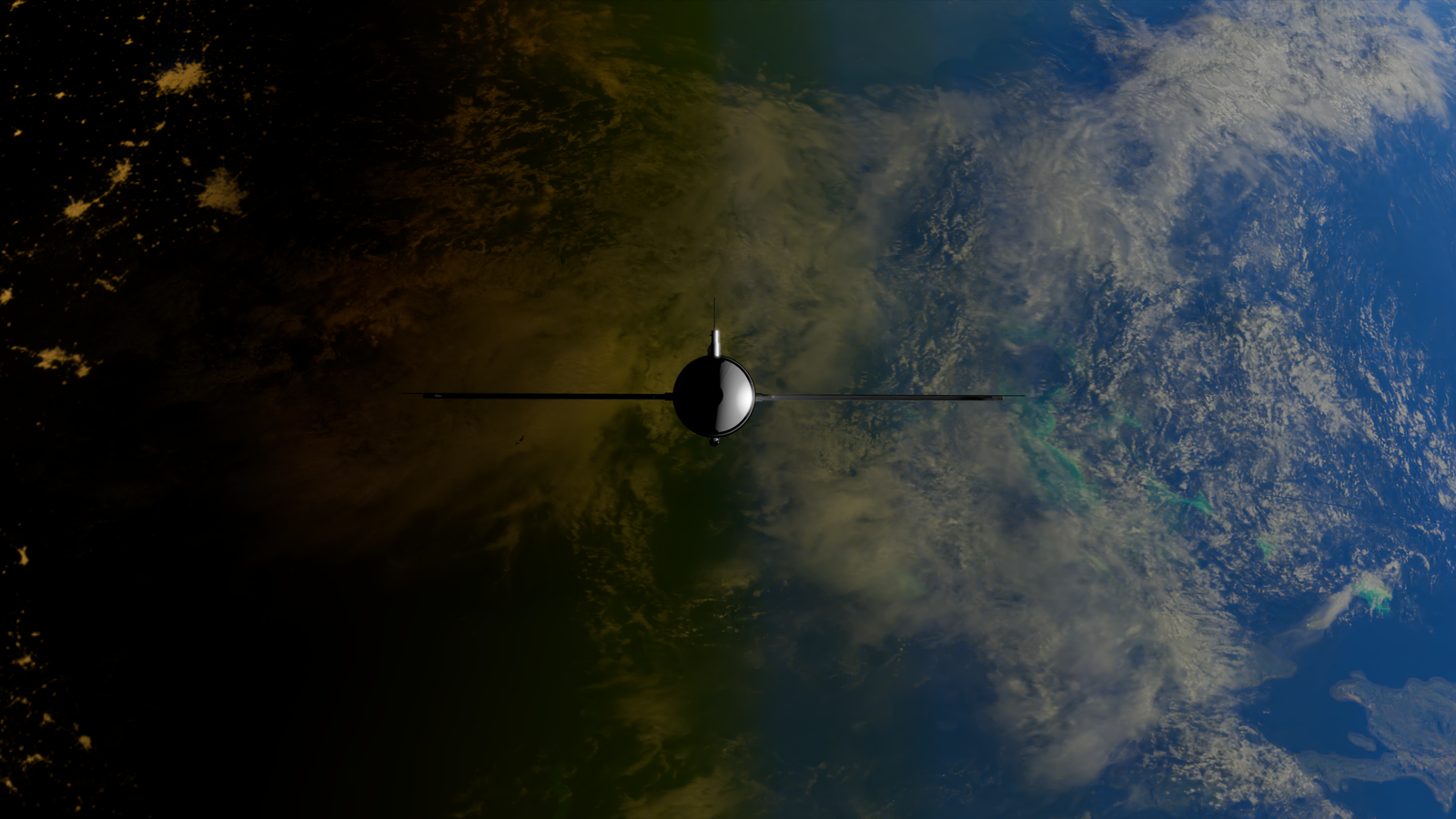
Sputnik 2 itself was a cone weighing over 500 kilograms — six times the mass of Sputnik 1. The pressurized cabin holding Laika was a small cylinder at the base, roughly the size of a domestic washing machine. It contained her, her food and water dispensers, her harness, a carbon dioxide absorber, and the fan that was supposed to keep her cool.
The satellite orbited Earth at an altitude that ranged from approximately 200 kilometers at its lowest point to over 1,600 kilometers at its highest. It transmitted for about seven days on battery power before going silent on November 10, 1957. The empty capsule, with Laika’s remains still strapped inside, continued to orbit for another five months. In April 1958, Sputnik 2 reentered the atmosphere and burned up. She had completed roughly 2,570 orbits, most of them as a corpse.
The dogs who came after
Laika was not the last dog the Soviet program sent up, but she was the last one they intended to lose. The engineers who worked on Sputnik 2 had been forced into a mission they knew was a one-way trip, and the political demand for a revolution-day launch overrode any realistic engineering timeline. When the program returned to canine spaceflight, recovery was the point.
In August 1960, Sputnik 5 carried Belka and Strelka into orbit along with a rabbit, mice, rats, and fruit flies. All of them came home alive — the first living creatures to return from orbit intact. Strelka later had puppies, one of which was gifted by Khrushchev to Jacqueline Kennedy.
Veterok and Ugolyok orbited for 22 days aboard Kosmos 110 in 1966 and landed safely, setting the record for the longest canine spaceflight. That record has never been broken by any dog, and given the direction of human spaceflight, likely never will be. Space Travel has previously looked at the broader history of dogs in orbit and the biomedical work they made possible — work that fed directly into Yuri Gagarin’s flight in April 1961, less than four years after Laika died.
The monument, and the memory
For decades, Laika had no memorial in Russia. The Soviet Union preferred to remember her as a hero who volunteered, in the strange way state propaganda anthropomorphizes animals. The dog on the stamps was calm, purposeful, patriotic. The dog in the capsule was frightened and overheating.
In April 2008, more than 50 years after her flight, a small monument was unveiled at the military research facility in Moscow where she had been trained. It shows a dog standing on top of a rocket. The rocket is shaped like a human hand.
The scientific value of her mission is complicated. She proved that a living creature could survive launch and adapt to weightlessness — the first data point in a chain that led to Gagarin four years later. Science News, in its history of animal death in space, notes that the physiological telemetry from her first hours in orbit was genuinely useful: her heart rate curve, her breathing patterns, her ability to eat under microgravity. But she did not need to die for that. A recoverable capsule, given four more months of development, would have delivered the same data and returned the dog.
Khrushchev did not have four months. He had until November 7.
What remains
The physical craft that carried her is gone, disassembled in the upper atmosphere in April 1958, its molecules now part of the rain that falls somewhere on Earth every day. The photographs remain: Laika in her harness, ears alert, looking up at whoever was holding the camera. Contemporary accounts note that in the days before launch, she was placed in progressively smaller cages to simulate the confinement of the capsule, and that she tolerated it without complaint.
The scientist who took her home to play with his children the night before she flew lived until 1999. He never publicly recanted the mission, but he also never claimed it had gone as planned. Gazenko, who publicly apologized, died in 2007.
The R-7 rocket that lifted her, in modified and updated form, is still flying. Its descendants — the Soyuz family — are the workhorses that have carried cosmonauts and astronauts to the International Space Station for more than two decades. Every crewed Soyuz launch from Baikonur lifts off from a pad within a few kilometers of the one that sent Laika up on a night when the temperature on the Kazakh steppe was already well below freezing, and the temperature inside her capsule was about to become the last thing she ever felt.