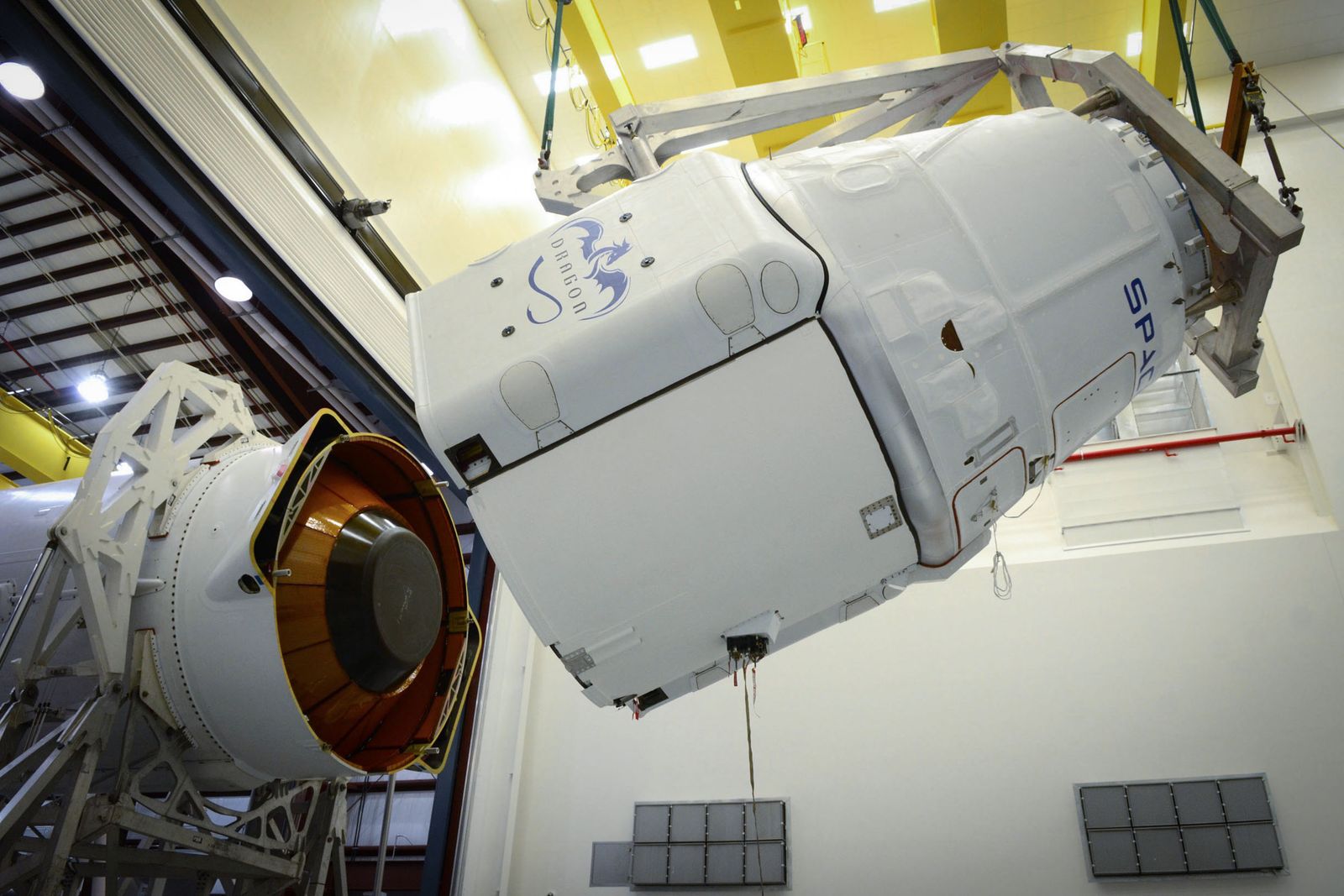
During Apollo 12’s second moonwalk in November 1969, Pete Conrad and Alan Bean descended into Surveyor Crater and cut the television camera from a robotic lander that had spent 31 months on the Moon. After the camera reached Houston, microbiologists reported isolating live Streptococcus mitis from foam inside it.
The result became one of space history’s most memorable survival stories. It also became one of its most disputed, because later examination of the handling procedures found several opportunities for the sample to have been contaminated after returning to Earth.
The camera is now displayed at the Smithsonian Institution’s National Air and Space Museum. What sits behind the glass is both a rare relic of lunar exploration and a warning about how difficult it is to prove an extraordinary biological result without an airtight chain of custody.
A probe waiting in the Ocean of Storms
Surveyor 3 landed on April 20, 1967, after its descent radar became confused by reflective rocks and its main engine failed to shut down at the intended moment. The lander bounced twice before settling on the inner slope of a crater in Oceanus Procellarum.
According to NASA’s Surveyor 3 mission record, it transmitted 6,326 pictures, dug four trenches and performed four bearing tests before its final contact with Earth on May 4. The surface experiments helped confirm that lunar soil was strong enough to support an Apollo Lunar Module.
Apollo 12 was designed to demonstrate that astronauts could land near a predetermined target. NASA’s Apollo 12 history places Intrepid just northwest of Surveyor Crater, 538 feet from the old spacecraft, rather than inside the crater itself.
A later IndustryWeek commentary interpreted that accuracy as a geopolitical demonstration of American targeting capability. That is an argument rather than an official mission conclusion, but it captures why the precision landing attracted attention beyond the scientific community.
The retrieval walk
During their second excursion, Conrad and Bean crossed the crater slope and photographed Surveyor 3 from several angles. They then used cutters to remove its television camera, trenching scoop and other selected components.
A Jet Propulsion Laboratory archive account identifies the returned material as the camera, cable, tubing and scoop. It also records that the camera was kept under quarantine at the Lunar Receiving Laboratory in Houston before being sent to the Hughes Aircraft facility in California for further examination.
The retrieval gave engineers access to hardware that had endured repeated lunar days and nights, hard vacuum, radiation, dust and the effects of a nearby Lunar Module landing. It also created an unusual biological question once samples from inside the camera began producing colonies.
What the microbiologists reported
NASA microbiologist Frederick J. Mitchell and Walter L. Ellis described the result in a 1971 Lunar Science Conference report. They wrote that Streptococcus mitis had been isolated from foam inside the television camera.
Their interpretation was that the camera had been contaminated before launch and that drying conditions during testing and exposure on the Moon had allowed the organism to survive. This was a scientific hypothesis based on the recovered culture, not a direct observation of bacterial cells remaining alive throughout the mission.
Why the result caused such a stir
If the interpretation was correct, a common Earth microorganism had endured more than two years inside hardware on the lunar surface. That possibility carried obvious implications for forward contamination, the accidental transport of Earth life to places where scientists might later search for extraterrestrial biology.
Later experiments have confirmed that some microorganisms can survive substantial exposure to space under the right conditions. A NASA Astrobiology research summary reported that some microbes placed outside the International Space Station survived nearly two years when ultraviolet exposure was limited or eliminated.
Those experiments show that microbial survival in space is possible. They do not establish that the organism recovered from Surveyor 3 had spent 31 months on the Moon.
The contamination problem
In 2011, John D. Rummel, Judith H. Allton and Don Morrison revisited the episode in a paper on lessons for sample-return missions. Their review of the photographic record found multiple opportunities for contamination during the camera’s handling and microbial sampling.
The later authors therefore rejected the popular story as proof that an Earth bacterium had survived the lunar environment. Their conclusion was more cautious: the original culture was real, but the available evidence could not establish when the organism entered the foam.
That distinction changes the story. The Surveyor 3 result is not a demonstrated case of bacteria living on the Moon. It is a case in which a remarkable result could not be separated from the possibility of contamination during examination on Earth.
What the camera really told scientists
The returned hardware remained scientifically valuable even without the bacterial claim. Engineers examined its paint, metal surfaces, electronics and impact marks to understand what prolonged lunar exposure had done to the spacecraft.
A chapter in NASA’s analysis of the returned Surveyor material found no meteoroid damage of consequence to the camera after roughly 950 days of exposure. Investigators concluded that most of the visible craters on its housing came from lunar material accelerated by the exhaust of Apollo 12’s Lunar Module.
The camera therefore provided direct evidence of another hazard: a landing engine could blast lunar dust into nearby equipment at high speed. Its discolored paint and sandblasted surfaces became practical evidence for engineers designing hardware expected to operate near future lunar landings.
A relic in a museum case
The camera remains the best-known Surveyor 3 component returned by Apollo 12, but it was not the only one. Conrad and Bean also brought back the scoop, cable, tubing and other selected material for laboratory analysis.
Its museum value lies partly in that wider story. Surveyor 3 reached the Moon without a crew, waited through 31 months of lunar exposure and was then visited by astronauts who dismantled part of it by hand. No later Apollo crew repeated the same type of encounter with an earlier robotic lander.
The object behind the glass is small and visibly built with 1960s technology. Its importance comes from the questions attached to it: how machines age away from Earth, how rocket exhaust changes a landing site and how easily biological evidence can be compromised during recovery.
Planetary protection began before Apollo 12
The Surveyor controversy did not create planetary protection. NASA’s history of the framework says COSPAR was assigned planetary-protection responsibilities in 1958, while the 1967 Outer Space Treaty made avoiding harmful contamination an international legal obligation.
Surveyor 3 nevertheless became a useful case study in why those safeguards matter. A sample can be collected from another world, returned successfully and still lose much of its evidentiary value if investigators cannot exclude contamination at every stage.
Modern Mars spacecraft are consequently processed under detailed biological-cleanliness requirements. The Mars 2020 landing press kit describes cleanroom assembly, sterile cloths, alcohol wipes, heat treatment and hydrogen peroxide vapor, along with strict limits on the bacterial spores carried at launch.
Thirty-one months of silence
For 31 months, Surveyor 3 sat on the inner wall of its crater as lunar days and nights passed over it. Its camera stopped transmitting, its paint changed and dust struck its surfaces during the arrival of Intrepid.
Then two astronauts walked down the slope, cut the camera free and carried it back to Earth. Scientists opened it and found something growing, but the procedures of the time could not prove whether that organism had crossed space or entered the evidence in Houston.
The camera came home. The bacterial result did too, along with a question that the surviving evidence can no longer settle.