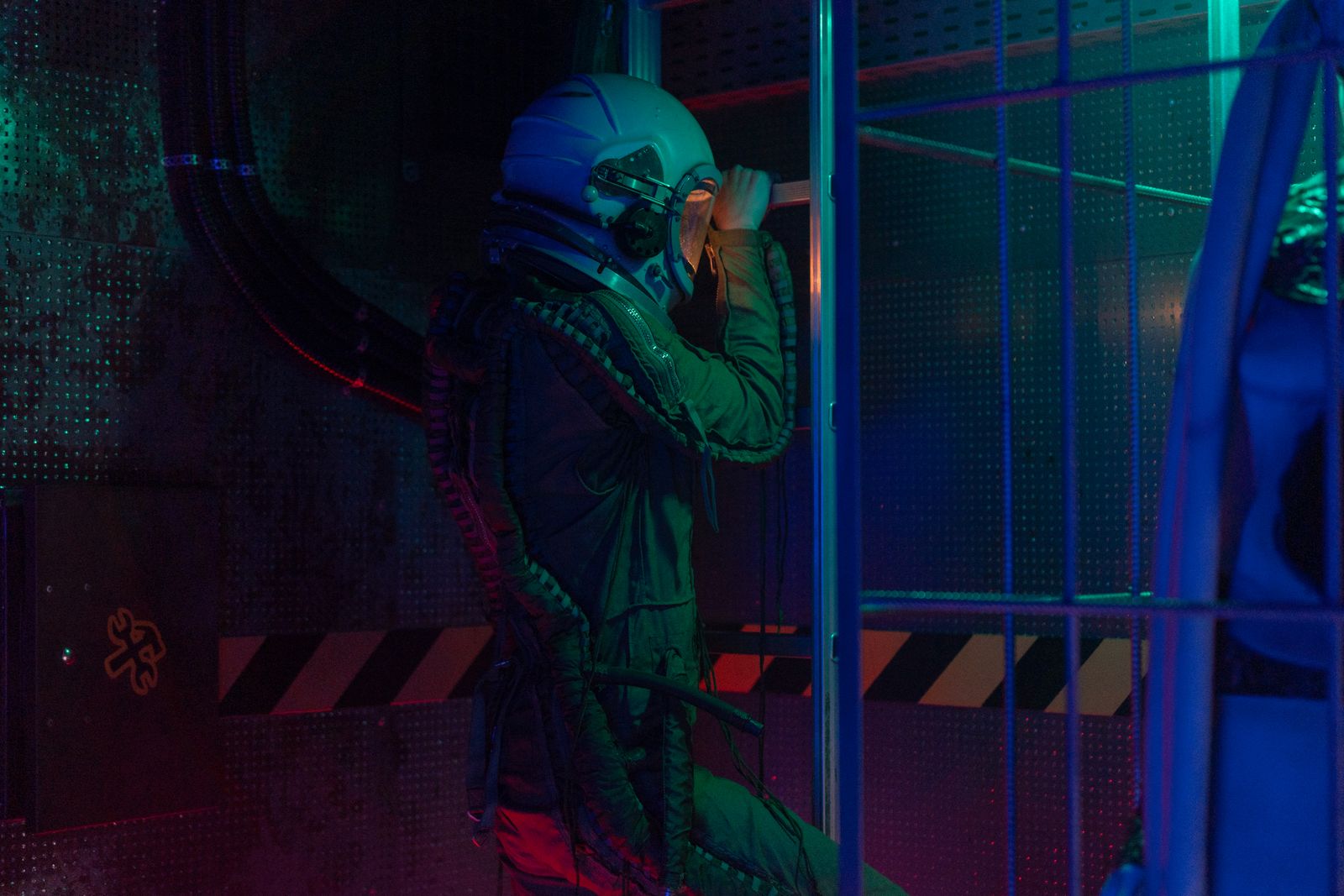
For roughly 21 hours on July 20 and 21, 1969, Michael Collins flew the Apollo 11 command module Columbia in lunar orbit while Neil Armstrong and Buzz Aldrin walked on the surface below. Once per orbit, for close to 48 minutes, Columbia swung behind the Moon and lost all radio contact with Houston. During those passes, with the lunar mass between him and every other human being alive, Collins was farther from another person than anyone had been before him.
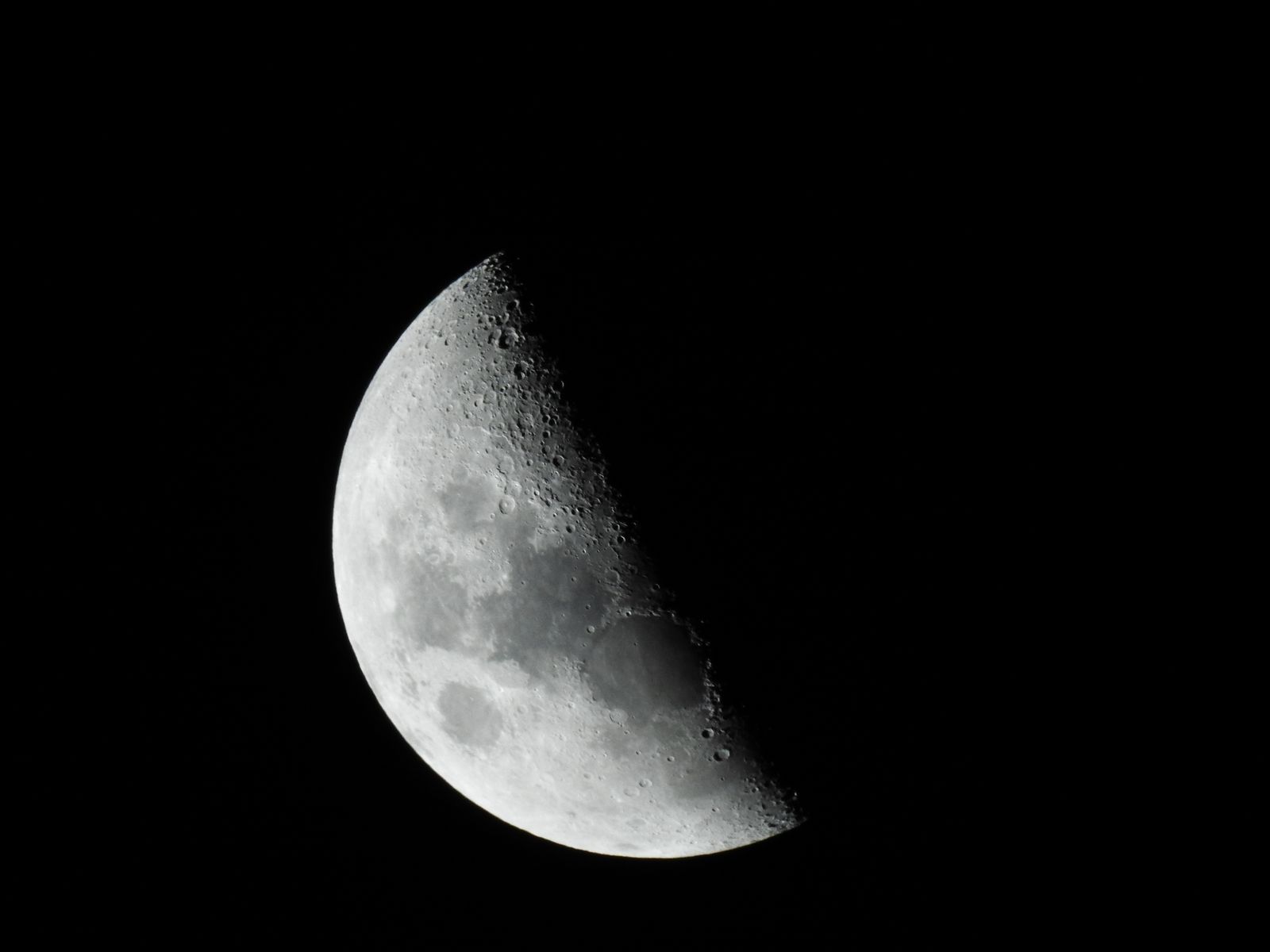
The number depends on how you slice the orbit. Columbia circled the Moon roughly every two hours at an altitude of about 60 nautical miles. On the far side, the Moon’s 3,474-kilometre diameter physically blocked line-of-sight to Earth. No relay satellites existed. The only two humans closer to him than Earth, Armstrong and Aldrin at Tranquility Base, were on the near side, and during the blackout minutes they were as unreachable as Houston.
The arithmetic of loneliness
While he was alone, Collins circled the Moon 14 times, and each of those loops carried him out of contact for almost half an orbit. Multiply it out and the cumulative radio silence over his solo watch comes to roughly 11 hours, taken 47 or 48 minutes at a time. Mission Control’s own narration put it at 47 minutes per revolution.
The distance is easier to state than to feel. On the far side, the nearest human beings were separated from Collins by roughly 3,500 kilometres of solid rock. That is farther than any polar explorer, any submariner, or any castaway has been from other humans. Antarctic researchers at the South Pole are typically within a few hundred kilometres of a colleague. A nuclear submarine crew shares a hull. Collins had a spacecraft the size of a small car and the far side of the Moon outside the window.
What he actually did up there
Collins was not sightseeing. The command module pilot’s job was, in some ways, the most technically loaded of the three Apollo 11 seats. He was responsible for keeping Columbia flight-ready, running navigation checks, photographing the surface, and, most critically, being prepared to rendezvous with the lunar module Eagle when it lifted off from Tranquility Base. If Armstrong and Aldrin failed to launch or missed the rendezvous, Collins would return to Earth alone. He had trained for that contingency, and the account he later wrote in his memoir Carrying the Fire describes the isolation not as fear but as awareness and something close to satisfaction.
His flight plan ran to page after page of separate computer entries. On the far-side passes, with no ground controllers able to help, any problem was his alone to solve. He ran star sightings through the sextant, checked the alignment of the inertial platform, and monitored the systems that would keep him alive on the three-day trip home.
The far side is a real barrier, not a poetic one
Radio signals travel in straight lines. The Moon, 3,474 kilometres across, is opaque to VHF and S-band transmissions. When Columbia passed the lunar limb, Houston’s voice cut off. By Collins’s own written account the cut was abrupt, arriving at the instant he disappeared behind the Moon. The far side had never been seen by human eyes until Apollo 8 in December 1968, and even by July 1969 it remained cartographically thin.
The isolation was not psychological framing. It was geometry. During each blackout, no signal could reach him from Earth, from the lunar module, or from any other spacecraft. The Soviet Luna programme had put hardware in lunar orbit, but nothing was positioned to relay. Collins was, in the most literal sense the phrase allows, unreachable.
He said he wasn’t lonely
The received story is that Collins was the loneliest man in history. He rejected the framing for the rest of his life. In a long interview given at 88, he said he found the press questions about loneliness ridiculous, and described the command module as a happy place to be: a little miniature cathedral, he called it, with the guidance and navigation station where the altar would go. In a profile published for the fiftieth anniversary of the landing, his stated ambition was simply to be left alone about it: his next adventure, he told the reporter, was to find a big rock and hide under it.
He was more anxious, by his own account, about the rendezvous than about the solitude. If Eagle‘s ascent engine failed to fire, or fired badly, Armstrong and Aldrin would be stranded. In that same interview he described the loose-leaf book he carried around his neck, containing 18 variations of the rendezvous and docking, some practised repeatedly in the simulator and some never practised at all because they were only mathematically possible. The ascent engine had exactly one chance to work.
What Houston heard, and didn’t
Mission Control tracked Columbia‘s expected loss-of-signal and acquisition-of-signal times to the second, and a capcom, Bruce McCandless and Ron Evans among them, called him as he came back around the eastern limb. The air-to-ground transcripts, preserved and annotated in NASA’s Apollo journals, show a laconic Collins reporting systems nominal and asking for news of Armstrong and Aldrin on the surface.
That detail is often lost. Collins was not only cut off from Earth on the far side. His link to Tranquility Base was intermittent too. He relayed messages to Eagle when the geometry allowed, including one crucial antenna instruction during the descent, but for much of each orbit Houston was his source of information about whether his crewmates were still alive.
The record, quietly held
Collins was the first human to be that far from every other human. He did not hold the distinction long. The command module pilots of Apollo 12, 14, 15, 16 and 17 each stood the same solo watch, and Al Worden, alone in lunar orbit for three days on Apollo 15 while David Scott and James Irwin worked at Hadley Base, went farther: 3,596.4 kilometres from his nearest living fellow human, a separation that Guinness World Records still recognises as the most isolated any person has been. Collins was first. Worden was farthest.
No human has landed on the Moon since Apollo 17 in December 1972. Humans have gone back to its vicinity: in April 2026 the four-person Artemis II crew flew around the Moon without landing and, during a planned 40-minute loss of signal behind the far side, became the first people since Apollo to experience the blackout Collins knew. Guinness later calculated the greatest separation ever measured between human beings at 419,656 kilometres, on 6 April 2026, between the Artemis II crew near their farthest point and the Tiangong crew passing over the opposite side of Earth.
The souvenirs of the flight
When the three astronauts returned, they became the most famous men on Earth for a stretch. Cartier made three gold models of the lunar module, one for each of them, presented in Paris on behalf of the readers of Le Figaro. Armstrong’s was stolen from the Ohio museum that bears his name in July 2017.
Armstrong’s own archive went to his alma mater. He began donating personal papers to the Purdue Libraries in 2008, and his widow, Carol Armstrong, gave the remainder after his death in 2012. Researchers there can now examine the mission documents, speech drafts and correspondence that surrounded the flight. Collins’s papers and his memoir became a separate, quieter legacy, the record of the man who stayed in orbit.
The Apollo lineage, still writing itself
The instruments Armstrong and Aldrin left at Tranquility Base did not all endure. The passive seismometer ran on solar cells and stopped responding to commands on 25 August 1969, about three weeks after deployment, probably from overheating. The solar wind foil was rolled up and carried home for analysis. Only the laser retroreflector, which needs no power at all, is still in use. The long seismic record came from the sturdier packages left by Apollo 12, 14, 15 and 16, which logged thousands of moonquakes and impacts before Mission Control shut the network down in 1977.
The instrument line continues. NASA’s Lunar Environment Monitoring Station, a suitcase-sized autonomous seismometer suite built at Goddard Space Flight Center, finished hardware development and testing in 2026 and is designed for Artemis astronauts to deploy near the lunar south pole, holding a stable internal temperature through the extremes of the polar day-night cycle. Its two seismometers are the working descendants of the one Aldrin set down while Collins circled overhead.
The Apollo generation also set the operational template that Artemis crews have inherited: the solo command module watch, the rendezvous choreography, the discipline of working through a radio blackout on a fixed clock. What Artemis II showed in April 2026 is that the silence itself has not been engineered away. Relay satellites and lunar navigation infrastructure are being built to shorten it. What has gone is Collins’s particular version of it: alone in the dark, with no one else within 3,500 kilometres.
What he saw out the window
Collins photographed the far side on his passes. The images show a heavily cratered surface with almost none of the dark maria that give the near side its familiar face. From Columbia‘s altitude the horizon curved sharply, and Earth, when it reappeared over the eastern limb, was a small blue-and-white marble. Reacquiring its signal ended each stretch of solitude, the switch flipping the other way.
He died in April 2021, at 90. The obituaries and anniversary features that followed leaned on the same word he had spent five decades rejecting: lonely. He had preferred to describe the far-side passes as something closer to contentment, a job he was glad to have. The Moon between him and everyone else. Fourteen solo orbits, roughly eleven cumulative hours of silence, and then the blue marble again in the window.
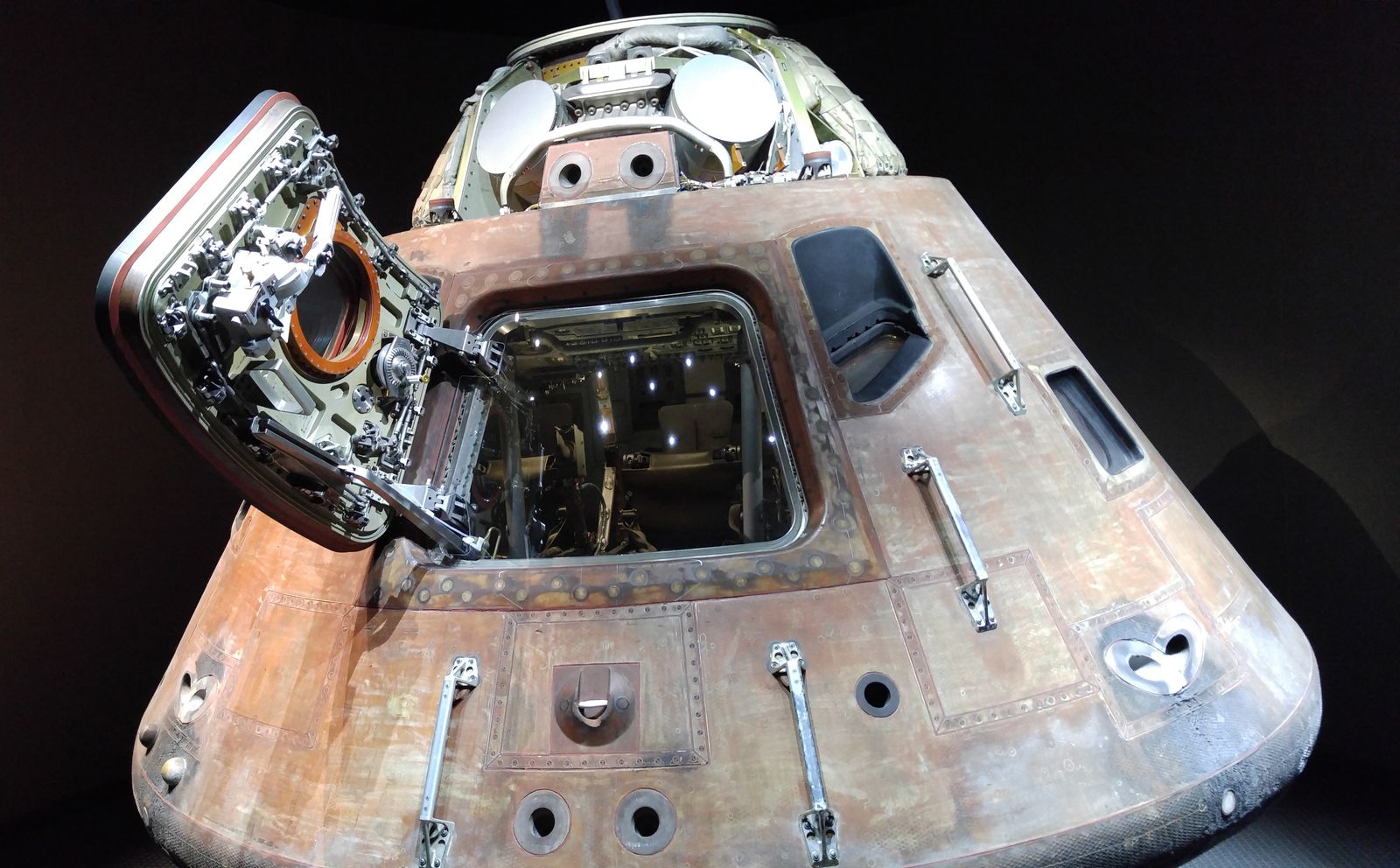
Somewhere in the archives at Purdue, the paper trail remains. On the Moon itself, the descent stage of Eagle is still at Tranquility Base, and the retroreflector Armstrong and Aldrin left behind still bounces laser pulses back to observatories on Earth. Columbia, the module Collins flew alone, sits in the Smithsonian’s National Air and Space Museum in Washington. Visitors walk past it every day. The window Collins looked through is behind glass now, on the near side of everything.