The phenomenon is real, but the scientifically accurate version is narrower than the familiar “tongue-eating louse” story. Cymothoa exigua is a parasitic isopod that enters a fish through the gill chamber, becomes established inside the mouth, causes most of the tongue to degenerate, and attaches itself to the tissue that remains.
The crucial evidence comes from a 1983 paper by zoologists Richard Brusca and Matthew Gilligan. They described the parasite inside spotted rose snapper from the Gulf of California and proposed that its body might serve as a mechanical substitute for the missing tongue. They did not establish that it becomes a fully functional prosthetic for the rest of the fish’s life.
What the original study found
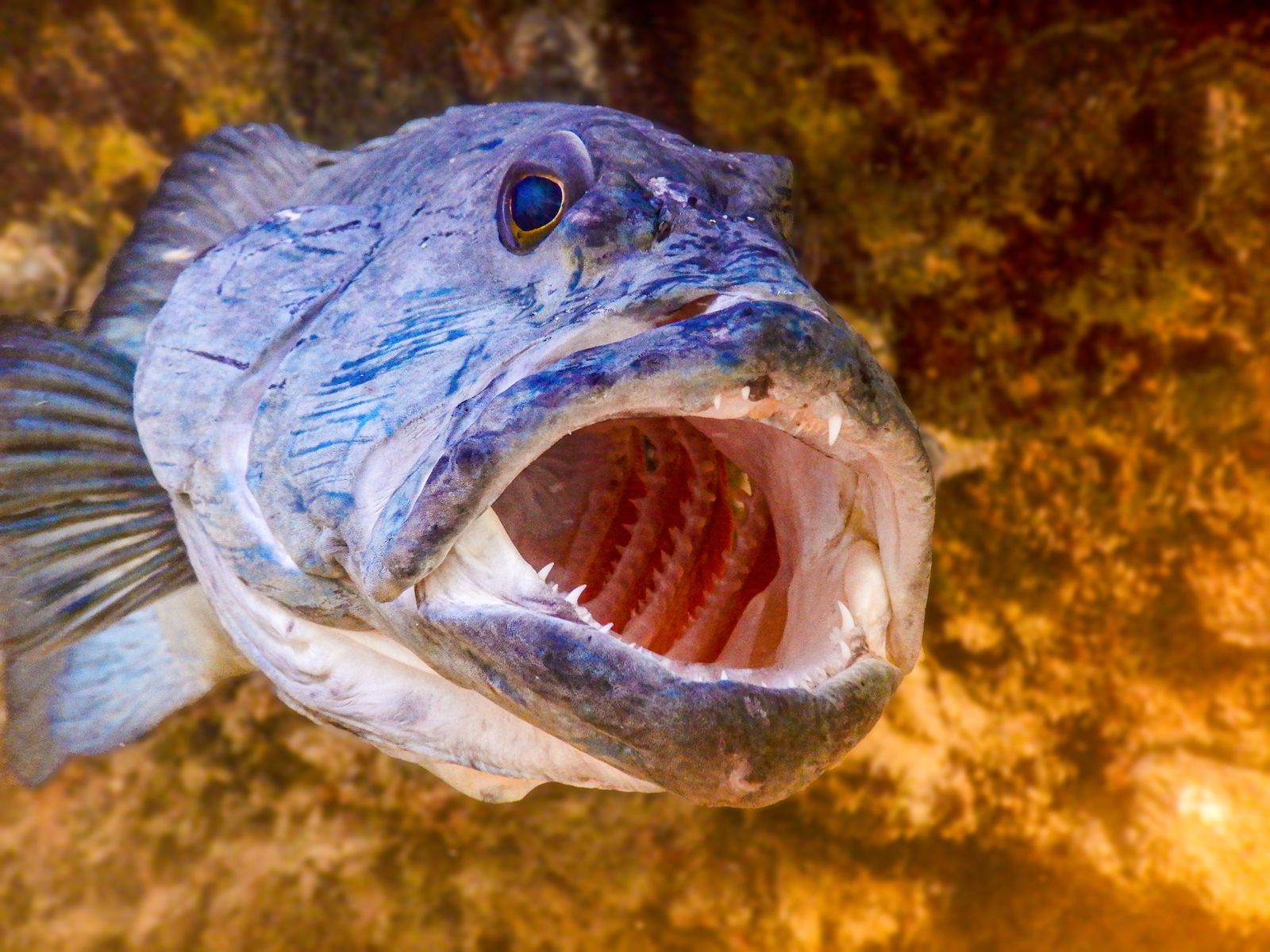
Brusca and Gilligan examined 37 spotted rose snapper collected near Guaymas, in the Mexican state of Sonora, in November 1979. Two carried female C. exigua inside their mouths, and more than 90 percent of the tongue was missing in both fish.
The isopods were attached to the remaining tongue stump and the floor of the mouth using seven pairs of hooked legs. Their curved upper surfaces fitted closely against the fishes’ palates, placing their bodies where the tongue had previously been.
The primary paper does not report the parasite cutting two arteries or physically severing blood vessels. Instead, it discusses blood feeding and reduced circulation at the attachment site as the likely causes of tissue degeneration. “Severing the blood supply” is common popular shorthand, but it is more definite than the evidence presented in the paper.
Does it really become a working tongue?
The two infected fish in the 1983 study appeared healthy and had food in their digestive systems. The researchers found no indication that the infestation had prevented them from feeding or breathing normally.
That observation led Brusca and Gilligan to hypothesise that the isopod could serve as a mechanical replacement for the missing tongue. A fish tongue is not a flexible muscular organ like a human tongue. In many bony fish, it mainly helps hold prey against teeth and other structures in the roof of the mouth while food is processed.
The parasite’s shape and position could allow it to perform some of that mechanical role. However, the study did not directly measure tongue movement, feeding efficiency across a large sample, or the parasite’s performance throughout the host’s remaining life.
A 2025 Guardian overview uses the familiar description that the isopod “takes over the job” of the tongue. The primary literature is more cautious: functional substitution remains a plausible interpretation supported by the fishes’ ability to feed, rather than a fully demonstrated organ-for-organ replacement.
The life cycle needs similar caution
Cymothoa exigua belongs to Cymothoidae, a family of crustaceans that parasitise marine and freshwater fish. Cymothoids generally begin their attached development as males. In mouth-inhabiting species, a male can later become a much larger female, while other males remain around the gills.
The 1983 paper reports that female C. exigua occupy the mouth while males are found on the gills. That supports the broad account of entry through the gill chamber and later sex change, but not every dramatic behavioural detail commonly repeated online.
For example, a National Geographic article describes larvae responding to a host’s scent and swimming upward when a shadow passes overhead. The same article explicitly warns that those observations came from a different tongue parasite infecting Atlantic croakers off Florida and may apply only to that species. They should not be presented as established behaviour of C. exigua.
The fish can survive, but the evidence is limited
The two spotted rose snapper examined in the original paper were in good physical condition. Both had full intestines and visible fat deposits, while one had a substantial piece of fish in its stomach. Those observations support the conclusion that the parasites had not stopped the hosts from feeding.
They do not prove that every infected fish remains healthy or that the parasite imposes no cost. Different cymothoid species occupy different parts of their hosts and can produce different effects. Findings about reduced growth, respiratory stress, or weight loss in fish carrying other cymothoids cannot automatically be assigned to C. exigua.
The original paper also does not establish how long an individual female remains inside a fish. Claims that it stays there for the fish’s entire remaining life, or for a decade or more, require evidence that the cited sources do not provide.
Not every tongue-biter is Cymothoa exigua
Online photographs frequently label any mouth-dwelling isopod as Cymothoa exigua, even when the animal belongs to another species or genus. Host identity, geography, body structure, and attachment position all matter when scientists identify these parasites.
One well-known example is Ceratothoa famosa, a South African tongue-biter found in several seabream species. A 2014 ZooKeys paper by Kerry Hadfield, Niel Bruce, and Nico Smit formally described the species.
The paper records that Smit took a photograph of the parasite inside a Cape white seabream at Tsitsikamma National Park. After the image was posted online in 2004, it appeared in magazines, books, documentaries, news reports, and a film. The authors derived the name famosa from the Latin word for “famous.”
That photograph documents a genuine tongue-biter, but not C. exigua. The distinction changes the species, host, location, and scientific history behind the image.
Is it really the only parasite that replaces an organ?
Brusca and Gilligan described their finding as the first known animal case in which a parasite could be interpreted as structurally and functionally replacing a host organ. They also made clear that the functional role was a hypothesis based on anatomy and the condition of two infected fish.
Other parasites can destroy, occupy, or imitate host tissue, but those processes do not necessarily preserve the lost organ’s normal function. That is why C. exigua continues to be described as the only known example of a parasite replacing a host structure in this particular mechanical sense.
The distinction should not be exaggerated. The isopod does not grow a new fish tongue or behave like a muscular organ. It occupies the correct position, fits against the palate, and may help the fish process food despite the loss of most of its original tongue.
What it means for people
Cymothoid isopods are parasites of fish, not humans. Finding one inside a caught fish can be unpleasant, but it does not mean the fish must automatically be discarded.
An Australian Museum account by marine biologist Melissa Martin states that a parasitised fish is safe to eat and recommends removing the isopod before cooking. Normal seafood handling and thorough cooking still apply.
The precise version is strange enough
Cymothoa exigua does not need embellished arteries, a fixed timetable, or a guaranteed lifelong appointment to be remarkable. It enters through the gill chamber, develops inside the host, causes most of a fish’s tongue to degenerate through blood feeding and reduced circulation, and anchors itself where the missing structure used to be.
A spotted rose snapper can continue feeding with the segmented crustacean pressed against its palate. Whether that makes the animal a true replacement tongue or an exceptionally well-positioned parasite remains partly a matter of interpretation. The evidence supports “may function as a mechanical replacement,” and that is already one of the strangest arrangements known between a parasite and its host.