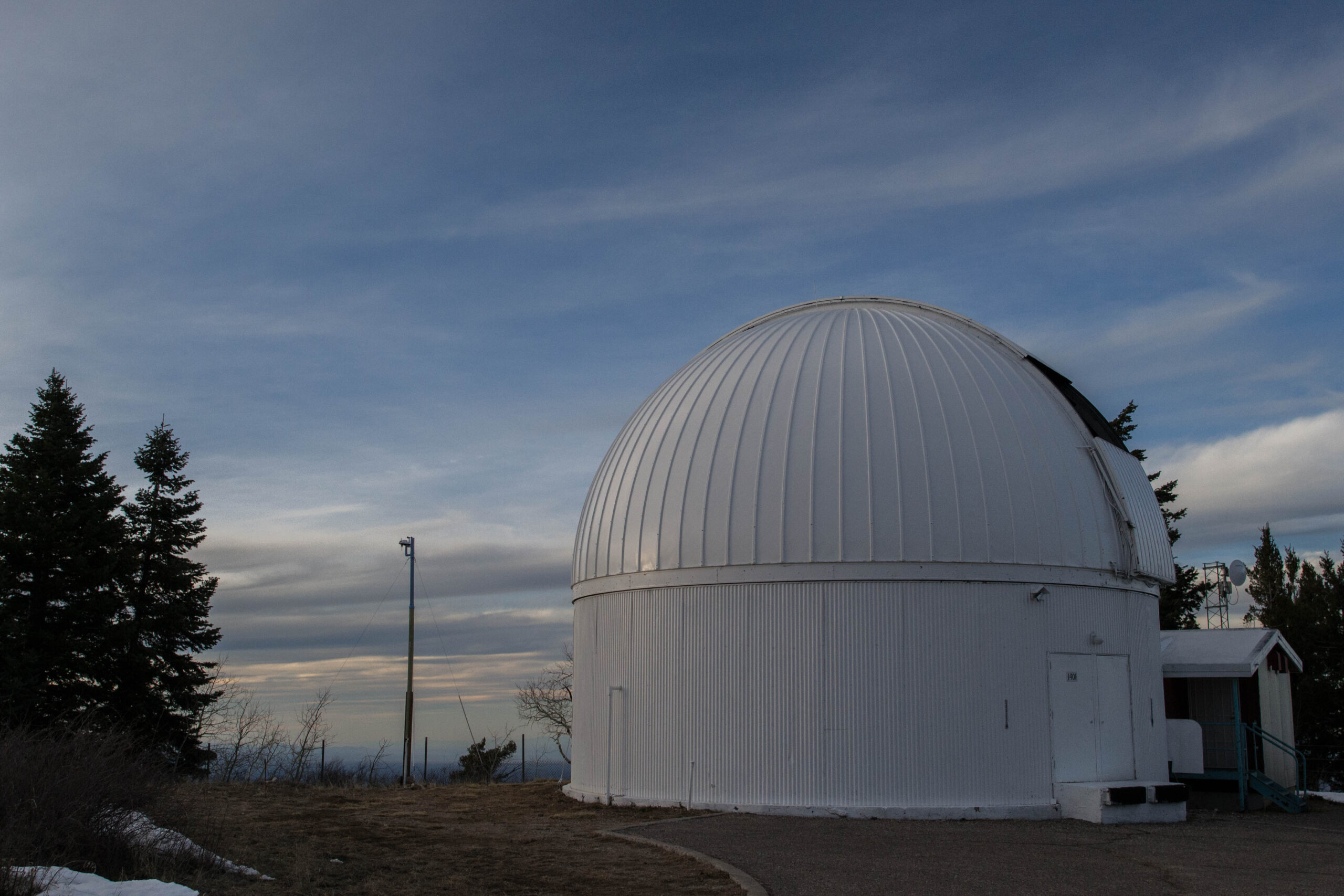
On 6 September 2026, the Catalina Sky Survey logged a faint moving point of light that turned out to be a meter-class asteroid closing on Earth. According to ESA’s updated record for 2026 RW1, it entered the atmosphere over the Indian Ocean roughly seven hours after its discovery observations began.
The European Space Agency’s Near-Earth Object Coordination Centre later reported that the predicted entry point had an uncertainty of less than 100 meters. ESA’s imminent impactors page lists a nominal impact time of 2026-09-06 16:07:15 UTC, an absolute magnitude of H=33.3 and an estimated diameter between 0.6 and 1.3 meters.
Found while it was still in space, tracked to a patch of atmosphere narrower than a city block, and followed all the way to entry, 2026 RW1 was a compact demonstration of how quickly modern impact-prediction systems can work.
Seven hours from detection to the top of the atmosphere
Meter-class impactors are difficult to catch because they reflect very little sunlight and often become detectable only when they are already close to Earth. That leaves observatories and orbit-determination systems working on a timescale measured in hours rather than days or weeks.
2026 RW1 ran that gauntlet. Catalina Sky Survey reported the object, and ESA’s Meerkat system, which monitors incoming observation streams for possible collision trajectories, identified it as an imminent impactor. Aegis then refined the orbit as follow-up astrometry arrived, progressively narrowing the predicted entry corridor.
The result was the sub-100-meter entry-point uncertainty ESA reported. The quoted 0.6 to 1.3 meter diameter is an estimate derived from the object’s absolute magnitude and an assumed albedo range of 0.05 to 0.25, which is why ESA gives a size range rather than a single diameter.
What a meter-class rock does on the way down
Objects around this size generally disintegrate harmlessly in the atmosphere. Travelling at many kilometers per second, they encounter rapidly increasing atmospheric resistance, heat through ablation and can fragment as aerodynamic stresses rise.
Some pieces can survive the luminous part of the trajectory. Once fragments have slowed enough, they enter dark flight and drift through the lower atmosphere under gravity and wind, spreading across an elongated area known as a strewn field. When that happens over land, the predicted footprint can guide meteorite searches.
2026 RW1 came down over the Indian Ocean, so no meteorites could be recovered. But the atmospheric event was not entirely unseen: ESA reports that photographer Richard Young captured the fireball from Broome in Western Australia, hundreds of kilometers from the predicted entry region. That gave the event an observational record as well as a successful pre-impact prediction.
Drawing the landing map before the fireball
Four days after the entry, on 10 September 2026, ESA’s NEOCC described a new system designed for the next small impactor that comes down over searchable ground. Starting from the predicted entry state at 100 km altitude, the model can forecast where surviving meteorite fragments may land before atmospheric entry occurs.
Traditional strewn-field reconstruction often uses fireball observations to work backward from a recorded trajectory and breakup sequence. ESA’s new approach instead starts with the pre-impact orbit, samples the uncertainty in the entry conditions, models atmospheric flight and fragmentation, and incorporates Global Forecast System wind data to estimate how surviving fragments will drift during dark flight.
The system has been integrated into the NEOCC imminent-impactor chain alongside Meerkat and Aegis. ESA reports that it was validated against past impactors including 2008 TC3, 2023 CX1 and 2024 BX1. The underlying method is described by Moscati et al. in a 2026 paper in Icarus.
The payoff of 2026 RW1 is therefore a sequence of unusually precise facts from an unusually small object. Catalina found a roughly one-meter asteroid about seven hours before atmospheric entry, automated orbit refinement narrowed its predicted entry point to less than 100 meters, and the resulting fireball was photographed over the Indian Ocean even though no meteorites could be recovered.
The next time the same prediction chain follows a small impactor toward land, the system can go one step further: turn the incoming orbit into a prospective meteorite landing map before the fireball has even crossed the sky.