
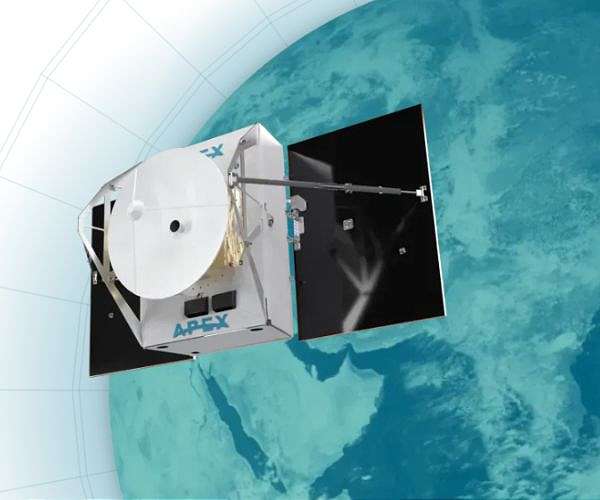
Apex, the Los Angeles-based spacecraft manufacturer, has successfully incorporated a customer payload for Booz Allen Hamilton (NYSE: BAH) into the Aries Serial Number (SN) 1 Call to Adventure Mission. The onboard software developed by Booz Allen enhances its capabilities by running diagnostics and executing computer-vision tasks directly on the spacecraft, which significantly reduces bandwidth demands for space domain awareness (SDA) sensors and facilitates the development of advanced deep-space sensors.
"Ian Cinnamon, CEO of Apex, expressed enthusiasm about the partnership. "We are excited to have Booz Allen as one of our customers on this first Aries mission. We look forward to continuing the collaboration as both companies advance in the space sector," he stated.
The Call to Adventure mission by Apex is distinguished by its capacity to support multiple customers on a single spacecraft. Booz Allen, a major client, has effectively activated its payload. This collaboration underscores the partnership between Apex's rapid bus manufacturing and Booz Allen's space data solutions expertise, catering to both governmental and commercial needs.
"Booz Allen is thrilled to collaborate with Apex, and excited to be part of the successful launch of their first Aries bus," said Michael Johnston, senior vice president at Booz Allen. He highlighted that the joint project enables them to trial space domain awareness AI technologies designed for autonomous operations, aiming to enhance the detection and characterization of space objects.
Apex has also set a record with its first satellite, achieving the fastest design and production of any small satellite to date. The process from initial design to launch took only 12 months for the 200kg Aries, marking a significant acceleration compared to traditional timelines in satellite manufacturing. Apex plans to continue producing additional Aries buses throughout 2024.
The ongoing collaboration supports Booz Allen's efforts to integrate cutting-edge technologies into SDA missions. These technologies are essential for developing autonomous edge compute SDA sensors, which are crucial for critical missions in deep space, including safety-of-flight analyses and conjunction assessments.
