
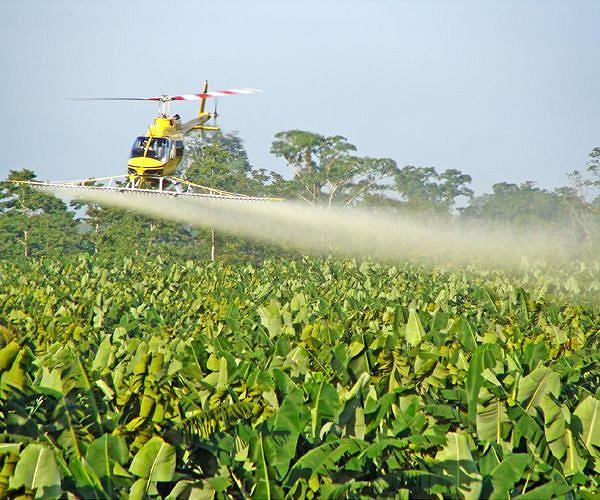
Nectar-eating bats that get most of their nutrition from banana plantations in Costa Rica boast less diverse gut microbiota than their peers living and eating in natural forest habitat.
According to the authors of a first-of-its-kind study — published Thursday in the journal Frontiers in Ecology and Evolution — banana plantations and other monoculture farms are to bats what fast food is to humans.
For bats, a reduction in dietary diversity translates to a reduction in the diversity of bacteria living in their intestines. However, the latest findings suggest not all agricultural operations have the same effect.
"Organic and conventional monoculture banana plantations both provide a very reliable food source for some nectar-feeding bat species," first author Priscilla Alpízar said in a press release.
"However, bats foraging in the intensively managed plantations had a reduced diversity of gut microbes, which could be a sign of gut dysbiosis, an unhealthy imbalance of its microbial symbionts," said Alpízar, a doctoral student at the Institute of Evolutionary Ecology and Conservation Genomics of the University of Ulm in Germany.
Researchers found the guts of bats foraging in the organic banana plantations hosted a greater diversity of bacteria, with their microbiota more closely resembling those of their forest-foraging relatives.
In humans, an imbalance in gut microbiota, or gut dysbiosis, has been linked to a variety of health problems. Studies suggest fast food-rich diets can reduce the diversity of microbes in the human gut, leading to gut dysbiosis.
The latest study, which relied on the analysis of fecal samples, confirms a similar phenomenon is observable in bats.
In addition to sequencing microbiota diversity, researchers measured the body sizes and weight of local bats.
The analysis showed bats foraging in both organic and conventional monoculture banana plantations were bigger and heavier than their forest-foraging peers.
Scientists also found bats eating a fast food diet were without bacteria species linked with fat storage.
"Since bats foraging in banana plantations don't need to fly long distances to look for food, it makes sense that these bats don't need special help from bacteria to store fat," Alpízar said. "However, for forest-foraging bats, fat deposition is important because food is seasonal and widely distributed in patches."
In followup studies, the researchers said they hope to determine whether pesticides also play a role in diminishing microbiota diversity, in addition to further exploring links between changes in gut bacteria and bat health.
"Our study shows that more sustainable agricultural practices can have less of an impact on wildlife," Alpízar said. "Hopefully, our findings can lead the efforts to work together with producers and consumers to find more sustainable and bat-friendlier agricultural practices."
