
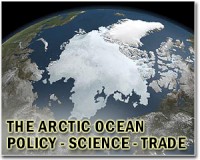
Canada and Denmark announced Wednesday the creation of a task force to try to solve a longstanding territorial dispute over a tiny Arctic island that once provoked a diplomatic feud.
The row over Hans Island, a barren 1.3 square kilometer (0.5 square mile) rock that sits between Ellesmere and Greenland, dates back to 1973 when the border was drawn between Canada and Greenland, part of the Danish kingdom.
The two sides are holding talks this week in Ilulissat, Greenland on the issue.
"The task force will explore options and provide recommendations on how to resolve outstanding boundary issues between the two nations," said a joint statement.
On the surface the spat over a snow-covered uninhabitable island seems absurd, but has become essential for economic development and environmental stewardship of the Arctic.
Danes and Canadians have visited it often over the past four decades to lay claim to it, leading to diplomatic protests, vivid online campaigns and even a Canadian call to boycott Danish pastries.
In 2012, the two nations reached a tentative deal on where to draw the maritime boundary in the Lincoln Sea, a body of water in the far north-eastern Canada.
But the fate of Hans Island and overlapping economic zones was not fully resolved.
With the onset of global warming more ships are expected to sail between Ellesmere and Greenland, as the area opens up to mining, fishing, and oil and gas drilling operations.
Denmark fears that losing the ownership battle would undermine relations with Greenland, while Canada worries that a loss would weaken its negotiating position in a more consequential dispute with the United States over the Beaufort Sea, in far northwestern Canada.
Trump administration moves to lift ban on bear baiting in Alaska
Washington (AFP) May 22, 2018 –
The Trump administration on Tuesday presented a plan to roll back Obama-era rules preventing hunters in some protected zones in Alaska from luring bears with bait including bacon and donuts, and using spotlights at den sites to hunt black bear cubs and sows.
Under former president Barack Obama the National Park Service (NPS) in 2015 had prohibited a number of practices — considered cruel and harmful by animal protection groups — on national preserves in Alaska.
In addition to baiting and use of spotlights, banned methods include hunting wolves and coyotes during their denning season, the use of dogs to hunt bears, and the killing of swimming caribou from motor boats.
The NPS in a statement said reversing the ban on those practices would "establish better consistency" within the state of Alaska, where such methods are allowed in areas not under federal protection.
"This proposed rule will reconsider NPS efforts in Alaska for improved alignment of hunting regulations on national preserves with State of Alaska regulations, and to enhance consistency with harvest regulations on surrounding non-federal lands and waters," the park agency's regional director Bert Frost said in the statement.
The proposed reversal, published Tuesday in the Federal Register, is open for public comment for two months, after which the NPS will make a final ruling.
The Republican Congress has already reversed some regulations adopted under a Democratic majority, including in April 2017 when it lifted a ban on hunting bears in Alaska from a helicopter or airplane.
The Trump administration has made a habit of sparking outrage among animal welfare organizations.
In November 2017 the US government controversially reauthorized American hunters to import lion and elephant safari trophies from Zimbabwe and Zambia.
And in March 2018 Trump's new high-level council dubbed the "International Wildlife Conservation Council" met for the first time.
The panel — created and chosen by Interior Secretary Ryan Zinke, a hunter himself — is chaired by a coal mining tycoon known for his home jammed with stuffed big game animals.
The council is otherwise comprised of big game hunters and professional hunting guides.
