
Elephants take more direct paths through territory frequented by poachers, according to new analysis by researchers in Europe and Africa.
A growing body of research suggests the threat of poachers has a significant effect on the behavior of elephants in Africa. Previous studies have shown elephants increase their walking speeds when traveling from one feeding location to another, especially when passing through particularly dangerous territory. Researchers have also observed elephants living in particularly dangerous places shifting their primary activity from day to night.
For the new study, scientists studied the movement of elephants through northern Kenya's Samburu-Laikipia ecosystem between 2004 and 2014, a time period that featured increasing levels of ivory poaching. GPS tracking data revealed the paths elephants took between national reserves, local conservancies and pockets of inter-tribal conflict, where poaching activity was more common.
Scientists used the tracking data to measure the "tortuosity" of an elephant's path-taking. Less tortuous paths feature greater speeds and fewer, smaller turns. Researchers looked at the tortuosity of an elephant's movements while inside and outside preferred feeding areas.
When walking through areas with high levels of poaching, elephants took faster, straighter paths, or less tortuous paths. As poaching levels increased over time, the data showed tortuosity declined.
"A reduction in path tortuosity implies reduced searching intensity per unit area, which in the long run might have negative implications in the foraging success of elephants in risky landscapes," Festus Ihwagi, a researcher with the non-profit group Save the Elephants, said in a news release. "Changes in path tortuosity can also serve as a useful proxy for changes in levels of illegal killing at the site level."
Ihwagi conducted the research while working toward his PhD at the University of Twente in the Netherlands. Ihwagi hopes the new data analysis techniques — described this week in the Journal of Wildlife Management — can help park rangers and wildlife managers identify changing threat levels. Park rangers already use GPS tracking to make decisions about where to deploy resources to thwart poachers.
"Elephants adapt to their landscape with great sensitivity," said Douglas-Hamilton, a zoologist at the University of Oxford and founder of Save the Elephants. "When the risk is high, they diminish their meandering in search of food and aim to get from one point to the next in safety. By better understanding the decisions that elephants make, we can understand their needs and so help secure their future."
Elephants remain threatened throughout Africa, and poaching is a persistent problem. Earlier this year in Botswana, officials agreed to legalize elephant hunting. It's likely GPS collars on elephants in the Southern African country will register a reduction in tortuosity in the years ahead.
'Hundreds' of elephants being poached each year in Botswana: report
Johannesburg (AFP) June 13, 2019 –
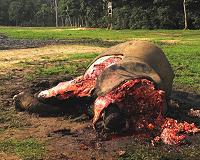
A leading conservation group has warned of surging elephant poaching in parts of Botswana and estimated nearly 400 were killed across the country in 2017 and 2018, according to a report published Thursday, adding to conservation concerns.
The Elephants Without Borders research in the scientific journal "Current Biology" will likely increase pressure on Botswana, which last month sparked sparked controversy by lifting its ban on hunting saying it would help control a booming population that was damaging farmers' livelihoods.
Thursday's report noted a 593 percent increase in fresh elephant carcasses in the north of the country since 2014, with many of these found clustered in five northern "hotspots".
"This evidence suggests that ivory poaching on the scale of hundreds of elephants per year has been occurring in northern Botswana since 2017 or possibly earlier," the report said.
EWB last year said it had identified nearly 90 elephants thought to have been poached after an aerial survey, a number that was vigorously contested by the government.
The expanded study published on Thursday estimated that some 385 elephants were killed for their tusks between 2017 and 2018, with 156 confirmed as being poached last year alone.
EWB founder Dr Michael Chase, a co-author of the report, said the latest research was "indisputable and supports our warning that elephant bulls are being killed by poaching gangs".
Botswana officials were not available for comment on the latest research.
The country, which has the largest elephant population in Africa, has previously been a haven for elephants with "little poaching reported" the report said, noting that researchers had not observed any poached carcasses in a 2014 survey.
But its 2018 survey over a 94,000 square kilometre (36,000 square miles) area found 94 recent carcasses and 62 older ones that researchers verified as having been poached.
The researchers did however find that elephant populations had remained broadly stable between 2014 and 2018, at around 122,700.
Last month, Botswana President Mokgweetsi Masisi lifted the country's five-year ban on elephant hunting, citing increasing "conflicts between humans and elephants".
This decision provoked an outcry from environmental protection organisations.
Botswana's abundant wildlife has made it a popular luxury safari destination and tourism is the second fastest growing sector of the country's economy after diamond mining.
