
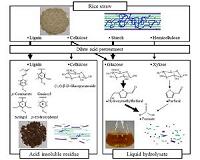
For the first time, researchers at Kobe University and RIKEN successfully elucidated the biochemical and biofuel-producing materials contained in rice straw. Future applications include using these materials in species of rice with high starch content, as well as reducing costs and increasing the efficiency of biochemical and biofuel production. The results of the study will be published in the American science journal PLOS ONE.
In order to produce chemicals and fuels such as bioethanol from biomass in rice and wheat, unnecessary components must be eliminated during preprocessing using diluted sulfuric acid, and the resulting sugars must be fermented by microorganisms. The research team focused on rice straws, the most abundant disposable biomass source in Japan.
Thirteen species of rice straw maintained at the Graduate School of Agricultural Science at Kobe University were preprocessed using technologies developed over the course of bio refinery research spearheaded by the Graduate School of Engineering, which yielded 47 types of structural materials.
Changes to these materials were analyzed at RIKEN using NMR techniques. In addition, the concentrations of sugars and acids obtained after preprocessing were analyzed and tested for correlations with the abundances of the 47 types of structural materials. The results demonstrated that after preprocessing, cellulose and glucose were contained in the solids and fluids, respectively, and that glucose levels were influenced by starch levels.
In this study, the chemical ingredients of rice straws were clarified for the first time via integrated analytical techniques that utilized the collection of rice species at the Graduate School of Agricultural Science at Kobe University, the bio refinery research of the Graduate School of Engineering, and NMR techniques at RIKEN. These results open the possibility for efficient production of biochemical and biofuels in the future.
