
The Environmental Protection Agency on Thursday proposed stricter standards for air quality by lowering ground-level ozone standards, saying the current levels do not protect public health. The EPA's proposal, which is to be put to a public debate over the next three months, suggests lowering the level of acceptable ozone to 0.070 to 0.075 parts per million. Its current eight-hour ozone standard is 0.08 ppm.
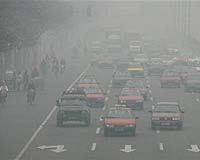
Ozone is the main component of smog, which can harm the lungs and is particularly dangerous for those with lung disease or asthma, the EPA said in a statement.
"Based on science, the current standard is insufficient to protect public health," EPA administrator Stephen Johnson told a news conference.
One expert said the 0.070 ppm level was equivalent to around 140 micrograms per cubic meter. In France, a primary ozone alert would be sent out at 180 micrograms per cubic meter.
The ozone is a pollutant that is the product of reactions in the presence of sunlight between elements such as car exhaust, gas vapors, industrial emissions and chemical solvents.
The EPA said the United States has been able to lower ozone levels by 21 percent since 1980.
However, the proposal faces resistance from some industrial lobbies which want ozone standards to stay as they are.
Source: Agence France-Presse
