
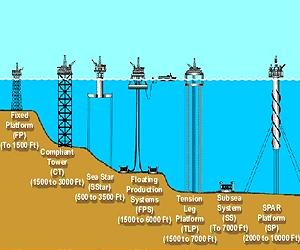
The European parliament rejected Thursday calls to ban deepwater drilling in Europe's waters after a giant US Gulf oil spill, although Scottish lawmakers fear a hollow victory.
While European lawmakers voted to tighten security restrictions and increase compensation to be paid by companies under any repeat of the US Deepwater Horizon tragedy, they came out against a moratorium awaiting detailed inquiry results in America.
The narrow victory, by 323 to 285, is not binding, but just days from legislative proposals by the European Commission expected to seek just such a ban, it sends a clear political signal to the EU's day-to-day executive.
The bloc's energy commissioner Guenther Oettinger came out in favour of a ban in the summer.
Far and away the European Union's biggest oil reserves are found off Scotland in the North Sea and one Scottish National Party lawmaker said acceptance of a ban would mean "disaster" for Scotland's economy.
The SNP — in government in Edinburgh and seeking independence from Britain, which retains powers over certain areas including oil — said the "victory may be short-lived."
"We have all been horrified by the Gulf of Mexico disaster and lessons clearly need to be learnt," said Ian Hudghton in a statement.
"But it was ridiculous to suggest that Scotland's oil industry, with its first-rate safety record, should be jeopardised by such a knee-jerk reaction."
Green rival Michele Rivasi, however, said the "exponential" increase in drilling, and consequent risk, had left existing security measures "insufficient," and repeated the call for a temporary moratorium.
Eleven workers died and some 205 million gallons of oil flowed into the Gulf after an April 20 explosion aboard the BP-leased Deepwater Horizon oil rig. The broken well was eventually plugged.
It wreaked havoc on crucial fishing and tourism industries, destroying hundreds of miles of the region's fragile coastal ecosystems.
The US Justice Department is investigating the spill, which could open BP up to criminal charges and more substantial civil liabilities.
Last month, the US interior department said new rules will toughen requirements for safety equipment, well control systems, and blowout prevention practices on offshore oil and gas operations, as well as act to stem the potential for human error.
Share This Article With Planet Earth
