
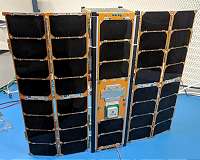
Fleet Space Technologies' has successfully launched its Centauri I nanosatellite aboard the Indian Space Research Organisation's (ISRO) PSLV-C43 mission from the Satish Dhawan Space Centre at Sriharikota, Andhra Pradesh.
Centauri I is the third commercial satellite launched in the past three weeks by the global IoT startup, after having deployed two CubeSats, Proxima I and II, with Rocket Lab on 11 November. The Proxima I and II satellites are successfully completing their duties, laying the groundwork for the Centauri launches as planned.
Centauri I is a 3U nanosatellite, designed by Fleet Space Technologies and built by Pumpkin Space Systems. The nanosatellite will form a constellation of Low Earth Orbit (LEO) satellites powering a global network of connected sensors and devices to revolutionise industries. Just one satellite has the ability to cover 90 per cent of the Earth.
Fleet Space Technologies fourth satellite, Centauri I, is scheduled to launch aboard SpaceX's Falcon 9 SSO-A mission.
On the news, Flavia Tata Nardini, Co-founder and CEO, Fleet Space Technologies, said: "To launch our third satellite within three weeks is exhilarating! To have successfully deployed three nanosatellites within matter of weeks is no mean feat and showcases the tredmondus work of our team and launch partners.
"We're proud to announce the success of our first CubeSat launches of Proxima I and II with Rocket Lab only weeks ago. Our newly deployed CubeSats are carrying out their expected duties, ultimately laying the foundations for today's successful Centauri I mission.
"Nanosatellite technology and miniature rockets are democratising access to space, enabling startups to power the next industrial revolution. As we deploy our constellation of nanosatellites, we're bringing our vision to life by connecting millions of sensors to help businesses solve the world's greatest challenges.
"The successful Rocket Lab and ISRO missions are an enormous milestone for Fleet Space Technologies, as we bring our vision of building the global digital nervous system to life," added Nardini.
