
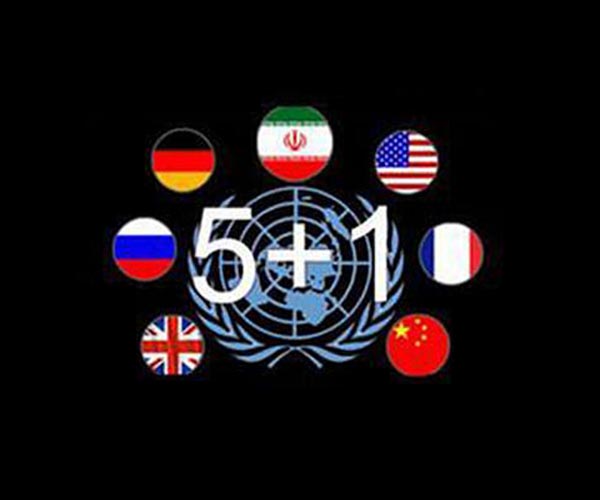
World powers and Iran on Friday eyed potential progress towards securing Washington's return to the 2015 nuclear deal, as they agreed fresh talks next week involving shuttle diplomacy with US officials.
Participants in the accord over Tehran's nuclear ambitions — including China, France, Germany, Russia, and Britain — said their officials would meet in-person on Tuesday in Vienna, the European Union said after a video conference.
The US will not take part directly in the main negotiations since former leader Donald Trump withdrew from the deal in 2018, but the EU said its mediator will hold "separate contacts" with officials from Washington in the Austrian capital.
The painstakingly negotiated accord saw Iran granted relief from international sanctions in exchange for accepting limits on its nuclear programme aimed at easing fears it could acquire an atomic weapon.
New US President Joe Biden has promised to rejoin the agreement on condition Iran first returns to respecting commitments it abandoned in retaliation for Trump pulling out and reimposing swingeing sanctions.
Tehran says Washington has to end the sanctions before it will make any moves to get back in line, and is refusing to hold direct negotiations with the US.
Iranian Foreign Minister Mohammad Javad Zarif insisted the aim of the talks was to "rapidly finalise sanction-lifting and nuclear measures for choreographed removal of all sanctions, followed by Iran ceasing remedial measures".
"No Iran-US meeting. Unnecessary," he wrote on Twitter.
US State Department spokesman Ned Price called the Vienna talks a "healthy step forward" and said that Washington "remains open" to a direct encounter with Tehran.
He cautioned that "these remain early days, and we don't anticipate an immediate breakthrough as there will be difficult discussions ahead".
– 'Substantial work ahead' –
EU diplomat Enrique Mora, who chaired the talks, described Friday's virtual meeting as "positive", but warned there was much left to do to revive the deal.
"Substantial work ahead for a key opportunity to bring JCPOA back to life," he tweeted.
A senior EU official said Brussels — which acts as coordinator — hoped to see a final agreement on a US return to the deal within the next two months.
The official said two groups of experts from the remaining participant countries would work simultaneously, with one focused on US sanctions and the other on rolling back Iran's breaches.
German Foreign Minister Heiko Maas said it was "good that all the relevant actors would meet in Vienna next week".
"We have no time to waste. A treaty that is fully respected once again would be a plus for security throughout the region," he said.
Russian diplomat Mikhail Ulyanov said "the impression is that we are on the right track but the way ahead will not be easy and will require intensive efforts. The stakeholders seem to be ready for that".
"Possible US return to JCPOA apparently will require Washington's full compliance with the nuclear deal," he wrote on Twitter.
In 2018, then US president Trump dramatically withdrew from the pact and reimposed crippling economic sanctions on Tehran. The following year, Tehran announced it would start breaking limits agreed on nuclear activity.
The remaining participants in the deal have scrambled in recent years to salvage it from total collapse as Tehran has made good on its threat.
Iran insists that its nuclear programme is for civilian use.
France urges Iran to be 'constructive' at nuclear talks
Paris (AFP) April 3, 2021 –
French Foreign Minister Jean-Yves Le Drian on Saturday called on Tehran to be "constructive" during talks with world powers next week in Vienna.
The European Union is pushing to bring US President Joe Biden's administration back into the nuclear accord to limit Tehran's ambitions.
The United States will not take part directly in the discussions, which will also involve China, Germany, Russia, and Britain.
But for the first time since former leader Donald Trump pulled out of the Iran agreement in 2018, a US delegation will be present.
The 2015 nuclear accord saw Iran granted relief from international sanctions in exchange for accepting limits on its programme aimed at easing fears it could acquire atomic weapons.
Biden has promised to rejoin the agreement on condition that Iran first returns to respecting commitments it abandoned in retaliation for Trump pulling out and reimposing swingeing sanctions.
Le Drian spoke to his Iranian counterpart Javad Zarif on Saturday and "welcomed the coming resumption in Vienna of discussions on the nuclear dossier".
He also "encouraged Iran to be constructive in the discussions … to identify in the coming weeks what needs to be done for a full return to respecting the agreement," Le Drian said in a statement.
"France will take part in a pragmatic and at the same time demanding way.
"I called on Iran to refrain from any further violation of its current commitments in the nuclear field likely to damage the dynamics of a resumption of discussions," he added.
Iranian Foreign Minister Zarif tweeted that during the conversation he "called on France to honour its commitments under the accord, and to cease abiding by illegal sanctions imposed by the US".
Tehran says Washington has to end sanctions before it will make any moves to get back in line and has refused to hold direct negotiations with the US.
US State Department spokesman Ned Price called the Vienna talks a "healthy step forward" and Washington "remains open" to a direct encounter with Tehran.
