From satellite imaging to mission simulations, aerospace engineering generates massive amounts of visual data. Rendering these datasets – whether for communication, analysis, or public outreach – pushes even high-end workstations to their limit. As spacecraft designs become more complex and Earth-observation data expands, traditional single-machine rendering is no longer efficient.
This is where the modern render farm steps in.
What a Render Farm Is – and Why It Matters for Space Industries
A render farm is a distributed cluster of high-performance servers designed to process 3D scenes, simulations, and visual assets in parallel. Instead of one computer sequentially calculating each frame, hundreds of nodes compute simultaneously.
For aerospace researchers, engineers, and visualization teams, this means:
+ rapid generation of mission animations
+ faster processing of volumetric atmospheric simulations
+ high-resolution renders of spacecraft models
+ immediate iteration cycles during design reviews
+ increased accuracy in visual data representation
The shift toward distributed rendering mirrors a broader trend: moving computation closer to cloud-scale infrastructure rather than relying on local hardware.
Why Space Visualization Requires Massive Compute Power
Aerospace graphics and scientific visualizations are computationally heavy because they often include:
+ complex lighting representing solar conditions
+ particle systems for dust, plasma, or atmospheric scattering
+ volumetric cloud and terrain data from satellites
+ high-resolution Earth or planetary textures
+ advanced physics simulations for fluid, plasma, or orbital mechanics
A single frame can take anywhere from minutes to hours on a local workstation. For a full mission animation, that can stretch into days or weeks.
In research environments where time is critical, such delays are unacceptable.
Render Farms Enable Real-Time Scientific Communication
Space organizations increasingly rely on real-time or near-real-time visuals for public outreach, mission briefings, and engineering communication. Cloud-based render farms allow them to:
+ process cinematic-quality animations rapidly
+ update visualizations immediately when mission parameters change
+ avoid delays caused by limited local hardware
+ offload rendering while teams focus on analysis, design, or simulation work
This infrastructure effectively decouples visualization output from local computational limitations.
GarageFarm.NET: A Render Farm Built for Large-Scale Scientific Renders
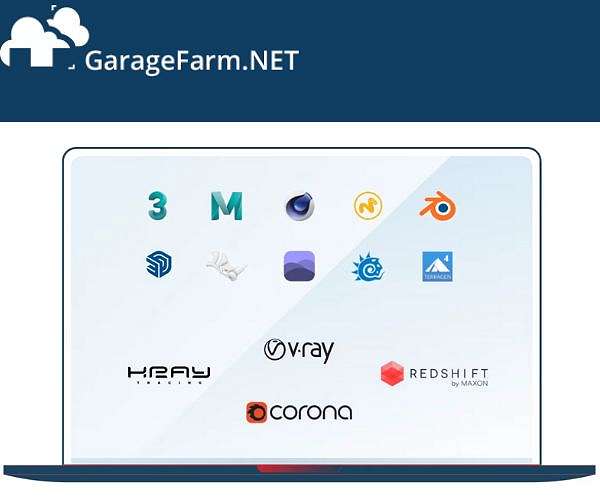
GarageFarm.NET is one of the render farms frequently adopted by designers and researchers working with Blender and other 3D software. Its distributed architecture is well-suited for aerospace visualization, providing:
+ large-scale CPU and GPU clusters
+ automated scene validation and error detection
+ support for massive datasets and high-resolution outputs
+ pay-as-you-go pricing that fits academic and research workflows
+ global cloud-based access – ideal for distributed teams
+ human support 24/7 for technical troubleshooting
For space-related rendering, where scenes can include thousands of objects and immense texture sets, horizontal scaling is essential. GarageFarm.NET handles this load while giving teams near-instant turnaround.
Aerospace is Moving Toward a Cloud-First Rendering Model
As satellite constellations expand and private launch companies accelerate development cycles, visualization needs continue to grow. Data from space is only becoming heavier – especially with multi-spectral, high-zoom, and volumetric imaging.
The transition is clear:
+ Local rendering → too slow for modern aerospace workloads
+ Cloud rendering → scalable, distributed, and cost-efficient
Render farms are quickly becoming the backbone of visualization pipelines across space agencies, private aerospace firms, and research institutions.
Conclusion
A render farm is more than a convenience – it's a requirement for any organization producing high-fidelity aerospace simulations or mission visuals. As space exploration becomes more ambitious and data-rich, cloud rendering offers the speed and scalability needed to keep pace.
GarageFarm.NET gives technical artists, space researchers, and simulation engineers access to the computational power required to transform massive datasets into actionable, visual insights.