
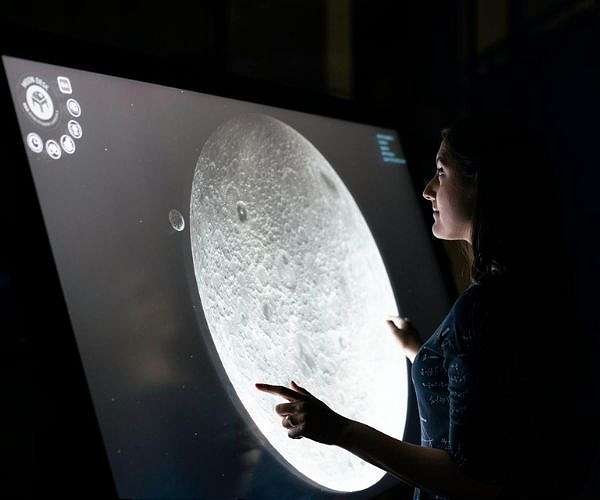
Even since you were a child, space research was a great idea for your future. We've all imagined looking a bit deeper into our universe. Can you think of a more exciting profession than the one that explores our planet's origins and life beyond it? Space research gives you a chance to contribute to something monumental.
The global space economy depends on the advancement in satellite technology, space tourism, and lunar exploration missions. Young researchers and students are an important part of that growth. NASA and ESA drive most of the activity, but the surge isn't limited to them. SpaceX, Blue Origin, and Rocket Lab also offer programs for young researchers. Thanks to this evolving environment, a young student's childhood dream can come true.
But how do you get involved in space research? When you have access to enough information, it can actually be easy!
Why Students Should Consider Space Research
It won't be easy to reach a balance between academics and career preparation. You'll still have to complete all those essays and research papers for your regular studies. Working on space-related projects is exciting, but it also takes time and dedication. This is where EduBirdie becomes an option. Students can get support from a team of writers, who specialize in technical writing. As a student, you can focus on hands-on research, but your academic work will still be ready on time. So if you were worried about achieving all goals if you get involved in space research, you should know that you can always get help.
Exploring galaxies is not the only interest of these programs. It's about solving real-world problems. Think about monitoring climate change with satellite data! How about developing communication technologies? Young researchers can make an impact not just on science, but on society too.
How to Get into Space Research
1. Apply for Academic Programs
Many universities feature programs in astrophysics, aerospace engineering, and planetary science.
MIT is famous for its aerospace engineering program. It offers courses like propulsion systems and space systems architecture and design.
The researchers from California Institute of Technology (Caltech) founded NASA's Jet Propulsion Laboratory. This institute offers programs in planetary science and astrophysics.
The University of Cambridge has courses in astrophysics. The main difference is that they focus on observational and theoretical knowledge.
If you can't attend such a program in person, online learning is a great option. Coursera offers many courses, including Introduction to Engineering Mechanics from the Georgia Institute of Technology. edX features high-quality programs from MIT, including the Principles of Manufacturing MicroMasters program.
2. Get into Internships
If you're more of a "hands-on experience" type of person, internships are the way to go. Young scientists can work directly on projects that contribute to real-world space exploration.
Nasa's Internship Programs accept high-school, undergraduate, and graduate students. Depending on the program, you can work on exciting projects, such as CubeSats, propulsion systems, and planetary data analytics.
The European Space Agency has programs for young graduate trainees. They cover fields like spacecraft design, robotics, and space debris monitoring.
SpaceX and Blue Origin also offer internships. They introduce students to commercial spaceflight and rocket engineering.
The Indian Space Research Organization offers research fellowships. Through them, you can explore satellite technology development, remote sensing, and planetary exploration missions.
University labs are a great starting point, too. Many universities have space-focused research labs, which accept students to work as research assistants.
Planetary Science Labs are available at Berkeley, Wesleyan University, and several others. European universities, such as Constructor University and London's UCL, also have planetary science labs.
Robotics and AI labs are also exciting. Cornell's AIR Lab, for example, is focused on developing autonomous robots that work with human teams.
3. Network for Mentorship Opportunities
Connections are just as important as knowledge! Through networking, you can unlock opportunities for mentorship. That's a good way to start building your career and stay updated about findings in the field.
Start by connecting with professors, researchers, and professionals. Some of them are directly involved in space-related projects. They can be key figures for aspiring students. If you develop an ongoing relationship with a researcher, you can get good recommendation letters, gain insights into research, or maybe secure a position on a project.
When a professor gives you a chance to join their research group, do it! It's a good way to get hands-on experience with the tools and methodologies of space science.
You should be open to reaching out. Professionals in space agencies or private companies can get you closer to your career path. They will also inform you about skill requirements.
4. Get Competitive
If you want to show your skills and get practical experience, then nothing beats competitions and challenges. Competitions inspire you to solve real-world problems. They require innovation and critical thinking. Teamwork is essential, too!
NASA Space Apps Challenge is the first opportunity to explore. It's a global hackathon that addresses challenges related to Earth and space science. You'll work in teams to develop creative solutions.
CubeSat Design competitions are offered by several universities. You'll build CubeSats used for research or technology demonstrations. You'll challenge your skills in systems engineering, programming, and hardware design.
Overview
Students play an important role in space research. They bring fresh perspectives and creativity. Their ambition to solve complex challenges is inspiring. There are tons of opportunities to get involved in space research. You should only choose and take that first step. Explore academic programs, join competitions, and connect with experts. Here's the key to success: start small and stay curious. The results will come!
