
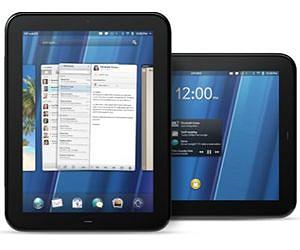
Hewlett-Packard said Tuesday it plans one last production run of the TouchPad, which has become a hot seller following a price cut and the announcement the company was killing the tablet computer.
Citing disappointing sales, HP, the world's largest personal computer maker, announced on August 18 that it was ending production of the TouchPad, its rival to Apple's iPad, after just seven weeks on the market.
HP also said it was halting production of phones based on the webOS mobile operating system acquired from Palm last year for $1.2 billion.
The Palo Alto, California-based HP also announced that it was cutting the price of the most basic model of the TouchPad from $399 to just $99.
The tablet computer has been flying off the shelves ever since.
"Since we announced the price drop, the number of inquiries about the product and the speed at which it disappeared from inventory has been stunning," HP said in a blog post on Tuesday.
"Despite announcing an end to manufacturing webOS hardware, we have decided to produce one last run of TouchPads to meet unfulfilled demand," HP said.
"We don't know exactly when these units will be available or how many we'll get, and we can't promise we'll have enough for everyone," HP said. "We do know that it will be at least a few weeks before you can purchase."
HP also announced on August 18 that it was exploring a spinoff of its PC unit in a historic shift away from the consumer market.
CNN buys iPad news reader Zite
Washington (AFP) Aug 30, 2011 –
US cable television network CNN announced Tuesday that it has bought Zite, a Canadian company that makes a personalized news reader for the iPad.
CNN did not say how much it paid for the San Francisco- and Vancouver-based Zite, which was launched in March, but technology blog All Things Digital put the purchase price at $20 million to $25 million.
CNN said Zite will be a wholly owned subsidiary of the Atlanta-based Cable News Network and will operate as a separate, stand-alone business.
"Zite represents the next generation of content discovery and personalized publishing, and CNN wants to help lead in that space," CNN digital manager KC Estenson said.
"We think we can advance the industry in a meaningful way that helps content creators expand their businesses while growing the distribution of a product that people already love," Estenson said in a press release.
Like other iPad news aggregators such as Flipboard, Pulse, Taptu and AOL's Editions, Zite uses algorithms to take a reader's interests and behavior into account in serving up their pages.
Zite's technology can "help CNN's websites and apps serve more personalized content, making our current digital services even better," CNN said.
Zite chief executive Mark Johnson said the acquisition by CNN "gives us the capital to grow Zite's business and continue to innovate in the space."
CNN said Johnson will continue to run Zite's day-to-day operations while Zite founder Ali Davar will remain as executive director.
Shortly after its launch, Zite was accused of copyright infringement by The Washington Post, Dow Jones, Time Inc. and other news organizations and told to stop displaying their articles.
Instead of directing a reader to the websites of the news organizations, where they display online advertising, Zite had been showing some articles reformatted in a pop-up window without ads.
After receiving the "cease-and-desist" letter, Zite began linking directly to the websites of the complaining publications.
