
Despite a painful start weeks ago, international talks to save the Iran nuclear deal have entered the New Year with positive signals emerging, including the EU saying Friday that a deal remained possible.
There has been a marked shift in tone since the current round began in November, even if the Western powers complain how slow the process is at a time when Iran accelerates its nuclear work.
"There's a better atmosphere since Christmas — before Christmas I was very pessimistic," European Union foreign policy chief Josep Borrell said Friday.
"Today I believe reaching an accord is possible," even within the coming weeks, he said after an informal meeting of EU foreign ministers in Brest, France.
Iran's foreign ministry spokesman said earlier this week that efforts by "all parties" to revive the 2015 nuclear agreement had resulted in "good progress" during the Vienna talks.
And Russian Deputy Foreign Minister Sergei Ryabkov said that the negotiations had "accelerated" and that "the chances of reaching a solution have risen".
But French Foreign Minister Jean-Yves Le Drian, speaking next to Borrell on Friday, reiterated his view that the talks were progressing "much too slowly to be able to reach a result".
France currently chairs the EU's rotating presidency.
Continuous negotiations to salvage the nuclear deal resumed on 29 November after they were suspended in June as Iran elected a new, ultraconservative president.
– 'Modest progress' –
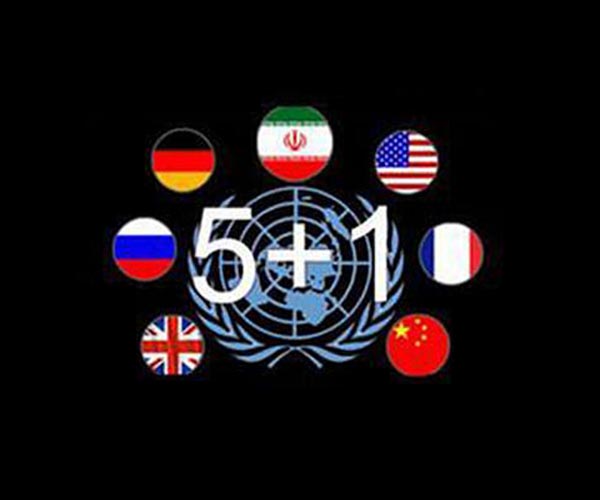
The 2015 deal — agreed by Iran, the United States (under Democratic president Barack Obama), China, Russia, Britain, France and Germany — offered Tehran sanctions relief in exchange for curbs on its nuclear programme to ensure it would not develop atomic weapons.
But Republican president Donald Trump pulled the US out in 2018 and reimposed biting sanctions, prompting Tehran to begin rolling back on its commitments.
Determined to revive the deal, Trump's successor Joseph Biden, a Democrat who was Obama's vice president, sent an American delegation to Vienna to participate indirectly in the talks.
European diplomats have been shuttling between the talks venue at a luxury hotel and where the US team is based.
US State Department Ned Price said on Wednesday that although there had been "modest progress in recent weeks" this was "not sufficient" to secure a return to the deal.
The main aims of the talks are to take the US back into the so-called Joint Comprehensive Plan of Action (JCPOA), and bring Iran back into line with the limits the deal laid down on its nuclear activities.
– 'No guarantee' –
Among the outstanding bones of contention between Iran and Western powers are "sanctions relief, guarantees that the US will never again renege,… (and) the degree to which Iran has to roll back its nuclear program," according to Ali Vaez, Iran specialist at the International Crisis Group.
He said that when it comes to verifying sanctions have been lifted, this will be "possible in two areas: Iran's oil exports and its ability to repatriate the generated oil revenues and frozen assets".
But the subject of future US actions is trickier as "there is no guarantee that any US administration can provide that would bind the hands of its successor," he said.
But Vaez said the Biden administration "can and should provide assurances that companies that engage the Iranian market are immune to US penalties as long as Iran is in compliance with the deal."
When it comes to dealing with the physical evidence of Iran's increased nuclear activity, "the West wants Iran to destroy its advanced centrifuges" and the uranium enriched above JCPOA limits "will either have to be shipped to Russia or blended down".
A European diplomat told AFP that while Iran was resisting the idea of destroying centrifuges, "putting them under seal or a range of intermediate solutions" were also on the table.
– Pressure from hawks –
While the various delegations haven't set a deadline for success, Secretary of State Antony Blinken said Thursday that there were only "a few weeks left" to save the deal, pointing to the increases in uranium enrichment Iran has been undertaking.
Blinken said that in the case of the talks failing, the US was "looking at other steps, other options" with its allies.
Vaez said new UN sanctions could be an option but US hawks, mainly among the Republicans, opposed to the deal want a campaign of economic and diplomatic pressure backed up by the option of military action.
Julia Masterson from the Arms Control Association think tank said the deal can be restored if both sides "are creative and flexible."
Nuclear deal with Iran 'possible': Borrell
Brest, France (AFP) Jan 14, 2022 –
EU foreign policy chief Josep Borrell said Friday that a renewed deal with Iran on curtailing its nuclear programme remained "possible" as talks in Vienna advance in a "better atmosphere".
"We're arriving at the end of a long process… there's a better atmosphere since Christmas — before Christmas I was very pessimistic. Today I believe reaching an accord is possible," he said after an informal meeting of EU foreign ministers.
He said a final deal could be concluded "in the coming weeks".
"I still maintain the hope that it would be possible to remake this agreement and have it function as it did before the American withdrawal," he added.
Iran's foreign ministry spokesman echoed that sentiment earlier this week, saying that efforts by "all parties" to revive the 2015 nuclear agreement with world powers had resulted in "good progress" during the Vienna talks.
But Borrell spoke alongside French Foreign Minister Jean-Yves Le Drian, who reiterated his view that the talks are progressing "much too slowly to be able to reach a result".
"We now have to conclude and come to a decision: Either the Iranians want to complete this, in which case we have the impression that there will be flexibility in the Americans' stance.
"Or they don't want to complete this, and in that case we will be faced with a major proliferation crisis," Le Drian said.
"There will be nothing more to negotiate if nothing happens," he warned.
Negotiations to salvage the nuclear deal resumed in late November after they were suspended in June as Iran elected a new, ultraconservative government.
The 2015 deal — agreed by Iran, the US, China, Russia, Britain, France and Germany — offered Tehran sanctions relief in exchange for curbs on its nuclear programme to ensure it would not develop atomic weapons.
But then-US president Donald Trump withdrew the US in 2018 and reimposed biting sanctions, prompting Tehran to begin rolling back on its commitments.
Moscow welcomes 'progress' on Iran nuclear deal
Moscow (AFP) Jan 14, 2022 –
Russia said Friday it was cautiously optimistic over "progress" made at negotiations to restore the landmark 2015 nuclear deal between Iran and several world powers.
Foreign Minister Sergei Lavrov said during an annual press conference he was "optimistic" about the direction of talks.
"There's real progress. There's real desire — primarily between Iran and the United States — to understand specific concerns and how these concerns can be considered in the general package" of documents, Lavrov said.
The 2015 deal between Iran and world powers — the United States, France, Britain, Russia, China and Germany — offered Tehran relief from crippling sanctions in return for curbs on its nuclear programme.
But the unilateral US withdrawal from the agreement in 2018 under former president Donald Trump prompted Tehran to walk back on its commitments.
Talks to restore the accord began last year but stopped in June, when Iran elected ultraconservative President Ebrahim Raisi. They resumed in November.
"They are making good progress at the moment, touch wood. We think they will come to an agreement," Lavrov said.
After a rocky start, Iran said Monday that the talks had seen "relatively satisfactory progress".
However, this week France said the discussions were "too slow" and the United States warned that there were only "a few weeks left" to save the accord.
