
Earth's tropical rain belt, the driver of life-sustaining monsoons and vibrant ecosystems, has been a stable feature of the global climate. However, a recent study published in *Geophysical Research Letters* reveals that this critical system was significantly less stable during the early Eocene – the hottest epoch in the last 65 million years. The findings offer valuable insights into how modern global warming could disrupt the delicate balance of tropical climates.
The Early Eocene: A Greenhouse World
About 50 million years ago, the early Eocene experienced extreme volcanic activity that released vast amounts of greenhouse gases, pushing carbon dioxide levels to over 1600 ppmv – more than six times preindustrial levels. This surge in greenhouse gases drove global temperatures up by 9-23 C, creating a greenhouse climate that transformed the planet's ecosystems.
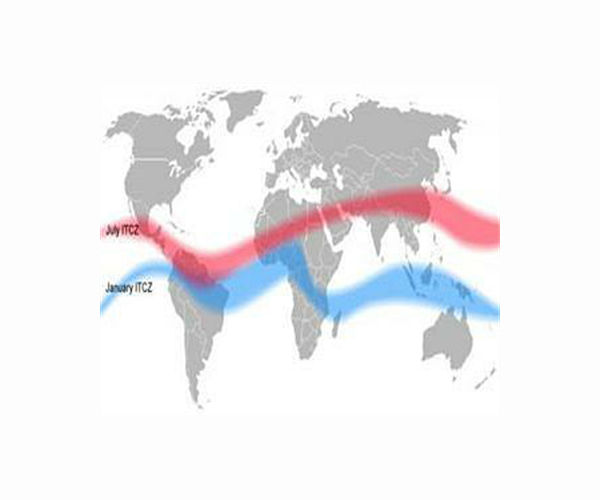
A team of researchers from the Institute of Atmospheric Physics at the Chinese Academy of Sciences reconstructed these ancient conditions using advanced climate simulations. Their findings showed a troubling trend: intense warming expanded subtropical dry zones while shrinking tropical wet regions. This disruption was tied to a significant reduction in the seasonal shifts of the Intertropical Convergence Zone (ITCZ) – a critical band of heavy rainfall and cloud cover that migrates between hemispheres with seasonal changes.
The Mechanism Behind the Contraction
The ITCZ's movement is governed by a delicate balance between solar radiation and latent heat flux – energy transferred into the atmosphere when ocean water evaporates. In today's climate, cooler ocean temperatures stabilize this process, allowing the ITCZ to swing toward the summer hemisphere.
"In the early Eocene, much warmer oceans made evaporation far more sensitive to wind speed," explained Dr. REN Zikun, the study's lead author. "This heightened sensitivity amplified wind-driven differences in surface evaporation between hemispheres, disrupting the balance with solar heating. The result was a reduced seasonal reach of the ITCZ and a contraction of tropical wet zones."
Lessons for a Warming World
The study's findings are a stark reminder of the risks posed by modern greenhouse gas emissions. Should current trends persist, atmospheric carbon dioxide levels could mirror those of the early Eocene, potentially triggering similar disruptions to tropical rain patterns.
"The deep-time history of Earth provides critical evidence of how greenhouse gases reshape the global climate," said Prof. ZHOU Tianjun, the study's corresponding author. "While the Eocene's changes unfolded over millennia, human-driven warming could force these shifts at an unprecedented pace. This underscores the urgent need for mitigation efforts to limit greenhouse gas emissions."
Research Report:Enhanced "Wind-Evaporation Effect" Drove the "Deep-Tropical Contraction" in the Early Eocene
