
Drawing inspiration from the Japanese art of Kintsugi, scientists are pioneering a novel strategy to enhance plasma stability in fusion reactors. A recent study published in Nature Communications details this groundbreaking approach, which turns magnetic field imperfections into a tool for improving plasma performance, a critical component in developing fusion energy.
Joseph Snipes, Deputy Head of the Tokamak Experimental Science Department at the U.S. Department of Energy's Princeton Plasma Physics Laboratory (PPPL) and co-author of the study, emphasized the significance of their method. It offers a way to manage plasma instabilities both at its core and edges simultaneously-a feat that marks a significant advancement in fusion research.
Led by PPPL physicist Seong-Moo Yang, the research team, including experts from the U.S. and South Korea, has validated a systematic method to adjust magnetic error fields-previously seen as detrimental-for the first time. This method enhances plasma stability under various conditions, promising a substantial step forward for fusion power generation.
Error fields stem from minute imperfections in the magnetic coils of tokamaks, the devices that contain plasma. These imperfections have long been viewed as obstacles, potentially disrupting fusion reactions. However, the team's approach of applying corrective magnetic fields has shown promise in maintaining core stability while addressing edge instabilities, without compromising the plasma's overall integrity.
This innovative method of error field correction, as explained by SangKyeun Kim, a PPPL staff research scientist and co-author, is akin to preventing a balloon from bursting by intentionally creating a minor leak. It ensures the plasma's stability by allowing a controlled release of plasma, thus avoiding disruptions.
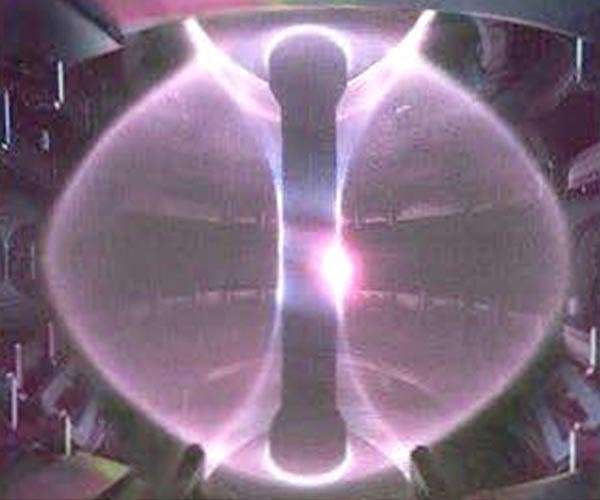
The research, conducted using the KSTAR tokamak in South Korea, demonstrates the potential of tailored error fields in stabilizing both the core and edge of the plasma. This balance is crucial for achieving the desired temperature and density within the plasma, necessary for efficient fusion reactions.
Looking ahead, the team is developing an AI-enhanced version of their control system to streamline and expedite the process. Joseph Snipes highlighted the complexity of their models and the need for real-time adjustments in plasma control, underscoring the role of AI in future advancements.
The collaboration involved researchers from the Korea Institute of Fusion Energy, Columbia University, and Seoul National University, highlighting the global effort in pushing the boundaries of fusion technology. This research not only paves the way for more efficient and reliable fusion power plants but also underscores the innovative spirit driving the fusion community forward.
The study received support from the U.S. Department of Energy, the Ministry of Science and ICT, the National Research Foundation of Korea, and Seoul National University, among others.
Research Report:Tailoring tokamak error fields to control plasma instabilities and transport
