
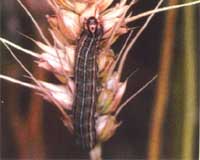
The United Nations' Food and Agriculture Organization warned Wednesday that Liberia could soon face a second wave of crop-destroying caterpillars as the pests reproduce.
"We are at the stage where many of the pests are getting to the pupa stage. At this stage they go into the soil, they are there for about seven to 12 days, before the adults' moths will emerge," FAO spokesman Winfred Hammond told a press conference.
Adult moths can reproduce quickly and lay some 1,500 eggs within a week which can mature into the voracious caterpillars, known as army worms, in only a few days.
"The farming production for this year is at serious risk if we do not consider these factors and find a solution that will tackle the problem from the roots," Hammond said.
"The need may be more but we are preparing en emergency request of about 1.2 million dollars (912,000 euros)."
The FAO has brought two etymologists from Sierra Leone and Ghana who are experts on army worms in order to help Liberia prevent the pests from coming back.
The expert from Sierra Leone, Ibrahim Shamie, warned that a new infestation was inevitable.
"The second emergence will be devastating. We had the experience in Sierra Leone, in 1979, about 30 years ago," he said. "When the second emergence occurs, that will be the biggest population."
Liberia has declared a state of emergency and called on the international community to help it deal with the plague, but authorities said Wednesday that they had not received substantial financial help so far.
According to reports, the army worms have already passed into neighbouring Guinea.
Liberia's other neighbour, Sierra Leone, announced Monday it had started a massive drive sending chemicals and spraying personnel to the border districts to keep the invading insects at bay.
