
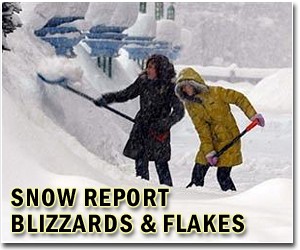
A massive storm dumped snow, ice and sleet across a huge swathe of the US Tuesday, grounding thousands of flights and bringing a wintry blast to 100 million people, or a third of the country.
The storm stretched for more than 3,000 kilometers (2,000 miles) from Texas to the northeastern state of Maine, and forecasters warned it could be several days before it abated.
Blizzard, winter storm and freezing rain warnings were issued for more than half of the 50 US states, and tornadoes and major thunderstorms were also predicted along the southern end of the storm in Louisiana and Mississippi.
Officials warned the public to stay at home rather than try to brave the crippling and potentially record-breaking storm.
High winds and freezing rain turned roads into deadly ice rinks and knocked down trees and power lines. Forecasts warned of dangerously cold temperatures, blinding snow and massive drifts as high as six to eight feet (1.8 to 2.4 meters.)
"Lurking behind this impressive winter storm is a powerful shot of Arctic air as a frigid surface high drops down from central Canada," the National Weather Service warned.
Wind chills were forecast to drop to 30 to 50 below zero Fahrenheit (minus 34 to minus 45 Celsius) in Colorado, Wyoming, the Dakotas, Kansas, Idaho and even parts of Texas.
States of emergency were declared in Illinois, Indiana, Missouri and Oklahoma and the National Guard was called out to help rescue stranded motorists.
Emergency warming shelters were also set up for the thousands of people whose homes lost power.
"A storm of this size and scope needs to be taken seriously," said FEMA Administrator Craig Fugate, who warned that "it's critical that the public does its part to get ready."
Fugate urged residents in storm affected regions to "check on your neighbors, especially the elderly and young children — those who can be most vulnerable during emergencies."
Schools and government offices were closed and roads across the region became impassable.
Snow had already piled up to as much as six to 12 inches (15 to 30 centimeters) in parts of Oklahoma, Texas, Wisconsin, Minnesota and Missouri by 9:00 am (1500 GMT), the National Weather Service reported.
Nearly 6,000 flights were canceled by Tuesday afternoon — about 20 percent of US air traffic — and airlines protectively canceled another 2,700 flights on Wednesday, according to travel website FlightAware.
Dallas-Fort Worth International Airport, a major hub, was closed briefly Tuesday morning due to the ice storm and delays were averaging about three hours once it reopened.
Most of the airlines at Chicago's O'Hare International Airport — one of the busiest in the world — said they "will have limited or no operations" Wednesday after canceling over 1,300 flights Tuesday, the airport said.
Chicago was expected to be among the hardest hit with up to two feet (60 centimeters) of snow and officials warned plows would not be able keep the streets clear, making side streets impassable.
Gusts up to 60 miles (95 kilometers) per hour could also lead to flooding along the lake shore as waves build up to 25 feet (7.6 meters).
The weather service said the "dangerous, multifaceted and life-threatening winter storm" with high winds and heavy snowfall would make travel "impossible" at times.
The agency also warned that shoveling sidewalks during such a significant snowfall can be deadly, noting that more than 40 people died of heart attacks in the aftermath of a 1999 blizzard in Chicago.
"Do not underestimate the task at hand," it said.
The city of Tulsa, Oklahoma, was reported at a near standstill Tuesday after a record 13 inches (33 centimeters) of snow was blown into deep drifts and collapsed the roof of a local casino.
"There are hundreds and hundreds of cars stranded in the city, from private to emergency vehicles," Paul Strizek of the city's public works department told the Tulsa World.
St. Louis, Missouri, was another major trouble spot as snow fell over a thick sheet of ice and sleet. One woman was reported killed when her car spun out of control on a rural Missouri highway.
Share This Article With Planet Earth
