
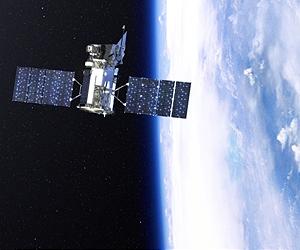
NASA said Thursday it was planning to launch the Glory satellite in late February to help scientists study the effect of aerosols on the Earth's climate.
After Glory's launch on February 23, it will join a fleet of satellites known as the "A-Train" that observe Earth and send data back to scientists.
State of the art sensors and monitors will be on board Glory to improve measurement of aerosols, airborne particles that can affect climate by reflecting or absorbing solar radiation.
"Glory is going to help scientists tackle one of the major uncertainties in climate change predictions identified by the United Nations' Intergovernmental Panel on Climate Change: the influence of aerosols on the energy balance of our planet," said Michael Freilich, director of NASA's Earth Science Division.
"This mission also marks the first satellite launch under President (Barack) Obama's climate initiative that will advance the United States' contribution to cutting-edge and policy-relevant climate change science."
The satellite will fly in low-Earth orbit at an altitude of 704 kilometers (438 miles), and is expected to collect data for about three years.
Share This Article With Planet Earth
