
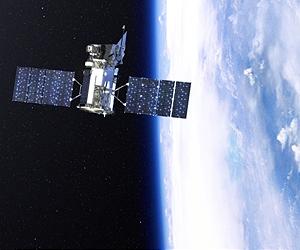
NASA was poised to launch its Earth observation satellite, Glory, early on Friday after technical problems delayed its initial effort last month.
The satellite was set to propel into orbit aboard a four stage Taurus-XL rocket from Vandenberg Air Force Base in California at 2:09 am local time on the US west coast, or 1009 GMT.
The launch window is very brief — just 48 seconds — but NASA said the weather forecast was 100 percent favorable.
Glory is carrying instruments that will measure aerosols in Earth's atmosphere and aims to provide scientists with data on how those tiny particles are affecting the planet's climate.
The satellite also aims to study how the Sun interacts with the atmosphere.
"Both aerosols and solar energy influence the planet's energy budget — the amount of energy entering and exiting Earth's atmosphere," NASA said.
"An accurate measurement of these impacts is important in order to anticipate future changes to our climate and how they may affect human life."
NASA delayed the launch on February 23 due to an unexpected reading in a ground control interface with the launcher less than 15 minutes before takeoff.
The Glory satellite and the Taurus rocket were both built by the Virginia-based Orbital Sciences Corp.
The satellite itself weighs 1,164 pounds (528 kilograms), and carries two main instruments, the Aerosol Polarimetry Sensor and the Total Irradiance Monitor which will be directed at the Sun.
Glory will initially set on an orbital course of 340 nautical miles above the Earth, before employing an "on-board propulsion system to raise its orbit to 438 nautical miles," Orbital said.
There, it will join what is known as the "A-Train" of Earth-observing satellites sent up by NASA.
The five already there — Aqua, Cloudsat, Calipso, Parasol and Aura — fly in formation, crossing the equator every afternoon. Glory will be the sixth member of the group.
Share This Article With Planet Earth
