
In a remarkable stride towards more practical quantum computing, a collaborative research effort led by the University of Tokyo, alongside Johannes Gutenberg University Mainz (JGU) in Germany and Palacky University Olomouc in the Czech Republic, has unveiled a novel photonic approach to quantum computing that inherently integrates error correction capabilities into physical qubits. This breakthrough, recently detailed in the journal *Science*, signifies a pivotal advancement in the quest for a scalable and reliable quantum computing paradigm.
Quantum computing has long been heralded for its potential to surpass conventional computing power, leveraging the principles of quantum mechanics to process complex computations at unprecedented speeds.
Central to this technology are qubits or quantum bits, which, unlike the binary bits of classical computing that represent either 0 or 1, can embody both states simultaneously through quantum superposition. However, this very feature renders qubits extremely sensitive to external perturbations, posing a significant challenge for error correction and the attainment of reliable quantum computations.
Traditionally, quantum computing efforts, particularly by leading entities such as Google and IBM, have concentrated on superconducting qubit systems that necessitate near-absolute-zero temperatures for operation. The research team's approach diverges by utilizing photons-fundamental particles of light-as the basis for qubits, enabling operation at room temperature and promising faster processing capabilities inherent to light-based systems.
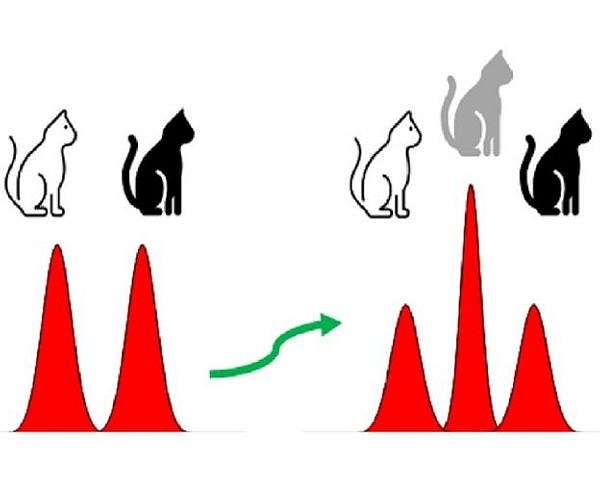
The novelty of the team's method lies in its departure from generating individual photons as qubits through multiple light pulses. Instead, they employ a laser-generated light pulse comprising several photons, which is then converted into a quantum optical state capable of intrinsic error correction.
"Our laser pulse was converted to a quantum optical state that gives us an inherent capacity to correct errors," explained Professor Peter van Loock of Mainz University. This innovation paves the way for simplifying quantum computing architecture by obviating the need for the complex generation and entanglement of multiple physical qubits to form a single logical qubit for error correction.
Although the experimentally produced logical qubit at the University of Tokyo did not yet achieve the requisite quality for the necessary level of error tolerance, the research signifies a substantial step forward. It demonstrates the feasibility of transforming non-universally correctable qubits into correctable ones using cutting-edge quantum optical methods.
This development not only marks a unique conceptual advancement but also aligns with the long-standing collaboration between Akira Furusawa's experimental group in Japan and Peter van Loock's theoretical team in Germany, a partnership extending over two decades.
Research Report:Logical states for fault-tolerant quantum computation with propagating light
